

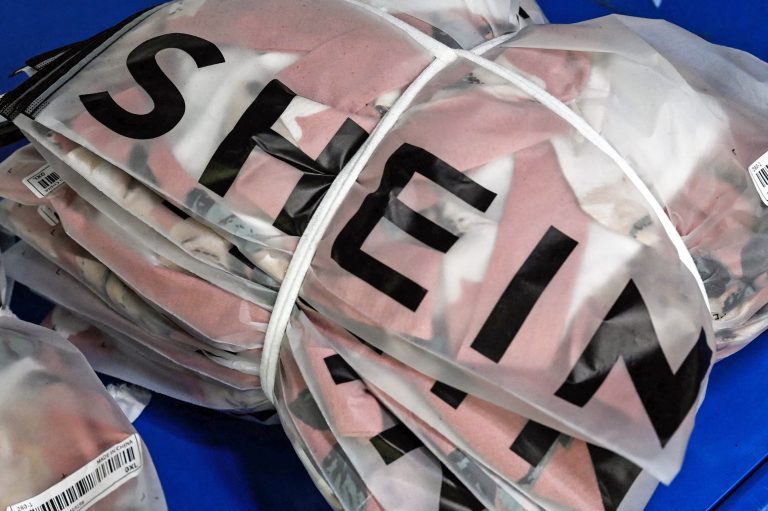
Shares of online fast-fashion retailer Shein ended almost unchanged in Hong Kong on Tuesday, in a muted debut that underscored investor concerns over slowing growth, rising trade costs and the weakening of the low-price advantage that helped propel the company to global prominence.
Shein shares closed at HK$48.50, compared with the HK$48.56 offer price, after falling as much as 10% earlier in the session. The closing price gave the company a market value of about $26.3 billion, a steep decline from its peak valuation of nearly $100 billion in 2022.
The lack of a first-day gain is notable in Hong Kong’s IPO market, where sought-after new listings can attract intense retail demand and generate substantial opening-day gains. Shein’s retail tranche was subscribed 5.63 times, while its international offering was 2.59 times subscribed, levels that indicate demand but fall well short of the exceptionally high oversubscription seen in some recent technology and robotics offerings.
Register for the next Tekedia Mini-MBA.
Register for Tekedia AI in Business Masterclass.
Join Tekedia Capital Syndicate and co-invest in great global startups.
The performance suggests investors are no longer willing to value Shein primarily on its extraordinary historical growth. Instead, they are assessing whether the company can preserve its business model as governments on both sides of the Atlantic dismantle the trade arrangements that helped make ultra-cheap cross-border fashion commercially viable.
Founded in China in 2012 and headquartered in Singapore since 2021, Shein spent years presenting itself as a global company while pursuing listings in the United States and Britain. Those efforts failed amid regulatory scrutiny, political concerns and opposition from Chinese authorities.
Its Hong Kong listing represents the culmination of a roughly four-year effort to access public markets and gives existing shareholders a route to liquidity after the company’s private-market valuation fell dramatically.

“As a new company listed in Hong Kong, we will continue to innovate, optimize, and cooperate with our supply chain partners for mutual benefit and win-win results,” Reuters quoted Shein Chief Financial Officer Leigh Gui as saying at the opening ceremony.
Shein’s central challenge is that the regulatory environment is increasingly targeting the very economics that made its model successful.
The company built its global business around inexpensive products shipped directly to consumers, allowing it to exploit low-value parcel exemptions and avoid some of the costs associated with conventional retail distribution.

The United States ended its de minimis duty exemption for e-commerce shipments worth less than $800 last year, while the European Union has also moved to impose fees on low-value packages. Higher tariffs, customs charges and logistics costs directly threaten Shein’s ability to maintain prices that have made it one of the world’s most recognizable fast-fashion platforms.
“Daily active users in Europe have fallen around 45% since the EU scrapped its duty exemption on small parcels, and Temu has seen a similar drop,” said Josh Gilbert, lead analyst for Asia-Pacific at eToro.
“This is less a Shein problem, but more so the end of an era for cheap cross-border shipping. The brand’s reach is unquestionable, but a large share of that loyalty has always belonged to the price tag.”
That matters for investors because Shein’s competitive advantage has not simply been its brand or fashion selection. Its model has been built around speed, massive product variety, and exceptionally low prices. If tariffs and shipping costs force prices higher, the company risks losing customers to competitors that operate through different supply-chain structures.
Shein’s financial performance is already showing the strain. Net income fell 39% last year, while the company swung to a loss in the first quarter. It has also warned that its first-half operating margin would be slightly below the first-quarter level because of higher customs duties, tariffs, fees and logistics costs in Europe and the Middle East.
Investors Question Valuation
The weak debut also indicates that Shein’s lower valuation may not yet be sufficient to compensate investors for the risks surrounding the business.
Charu Chanana, chief investment strategist at Saxo, said the stock was valued at about 15 times forward earnings, more than twice the multiple for PDD, the owner of rival Temu.
“I think the weak debut shows that even after the huge valuation reset, investors still don’t see Shein as obviously cheap,” Chanana said.
Investors are therefore being asked to pay a premium for a company facing greater uncertainty over growth, trade policy and regulation.
That is a significant change from the environment that produced Shein’s enormous private-market valuation. At its peak, investors were betting that the company’s algorithm-driven merchandising model and global reach could produce sustained rapid growth. The Hong Kong debut instead places a public-market value on a business that is entering a period of structural adjustment.
Shein Looks Beyond Ultra-Cheap Fashion
The company is responding by attempting to diversify its business rather than relying exclusively on its own ultra-low-cost clothing.
Shein has expanded its third-party marketplace, allowing other merchants to sell through its platform, and acquired U.S. apparel brand Everlane in May. The strategy could help the company build a broader retail ecosystem and reduce its dependence on the economics of shipping individual low-value parcels directly to consumers.
But diversification also introduces new challenges. Marketplace operations require Shein to compete with established e-commerce platforms, while branded fashion carries different cost structures and potentially weaker margins than the highly optimized fast-fashion model that made Shein successful.
The company also continues to face regulatory scrutiny. Shein has disclosed an ongoing investigation by the U.S. Federal Trade Commission that could result in significant penalties. The European Commission is examining issues including the sale of potentially illegal products, the potentially addictive design of its platform and the transparency of its recommendation systems.
Those investigations add another layer of uncertainty to a company already dealing with higher trade costs.
IPO Is Also About Existing Investors
The Hong Kong offering is considered not simply a mechanism for raising fresh capital. The transaction provides liquidity and helps restructure the ownership of a company whose early investors entered at substantially higher valuations.
Shein has agreed to make cash payments totaling about $3.5 billion and make share adjustments for some preferred shareholders.
The IPO itself represents only about 6.6% of Shein’s enlarged share capital. Cornerstone investors bought roughly one-fifth of the offering and are subject to a six-month lock-up, leaving only about 5% of the company freely tradable.
That relatively small public float can amplify price movements because a limited number of shares are available to trade. It also means Tuesday’s muted performance should not be interpreted as a complete verdict on Shein’s market value, particularly while a substantial portion of the shareholder base remains locked in.
Existing investors participating in the offering included Michael Bloomberg’s family office Willett Advisors, French investor Xavier Niel, Microsoft, Reliance Industries, Marcelo Claure’s Claure Group and SoftBank’s Vision Fund.
“This IPO is not just a fundraising event, it is also, and probably more of, a capital-structure event,” said Jianggan Li, CEO of consultancy Momentum Works.
Shein now has to prove that it can preserve the combination of low prices, rapid product turnover and global reach that drove its extraordinary expansion while absorbing a regulatory and cost environment that is becoming increasingly hostile to ultra-cheap cross-border e-commerce. Analysts see the flat Hong Kong debut as an indication that investors want evidence that Shein can make that transition before assigning the company a valuation closer to its former private-market heights.