

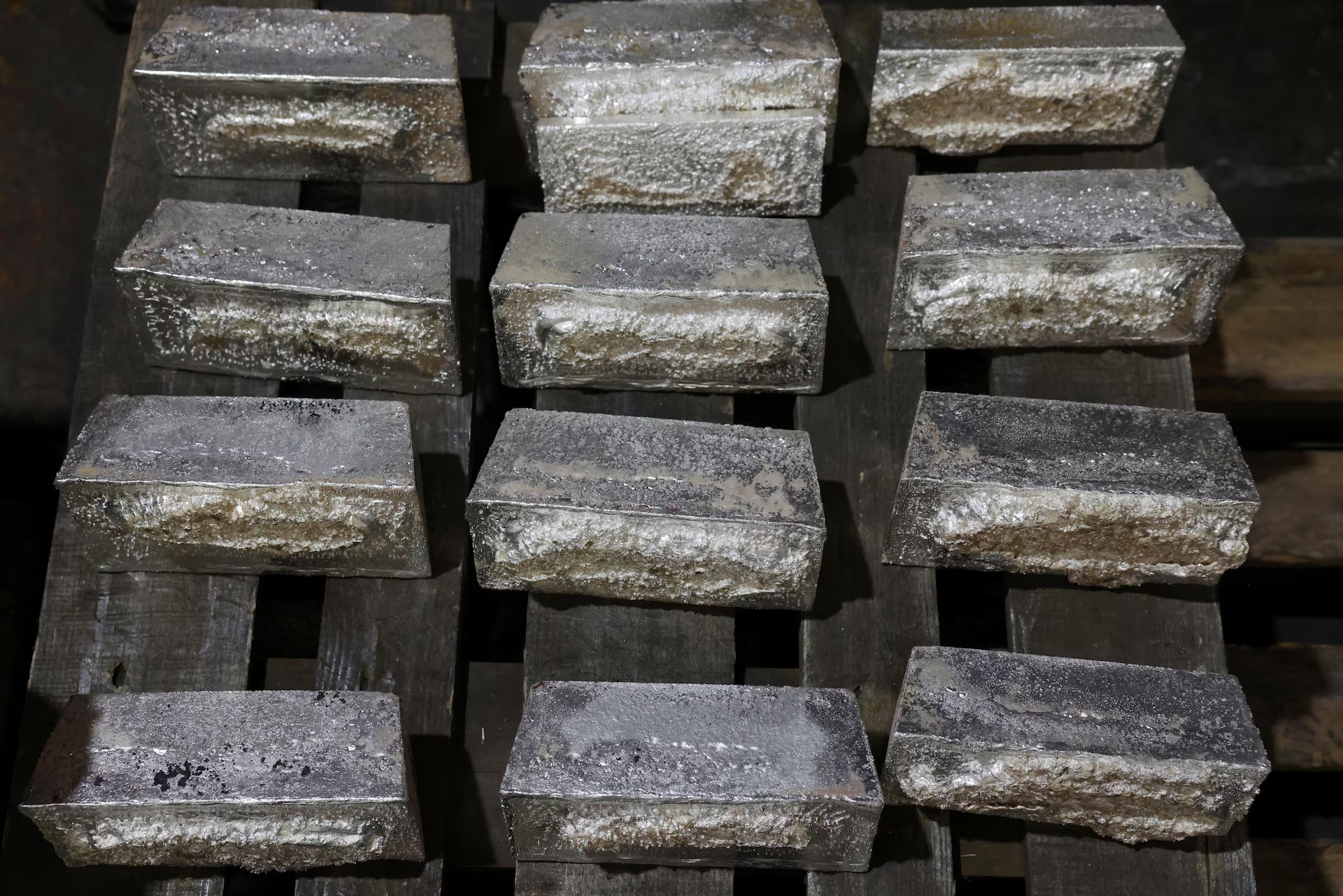
Silver’s surge past $76 an ounce on Friday marked a decisive escalation in what analysts increasingly describe as a broad-based precious metals supercycle, with gold, platinum and palladium all hitting record or multi-year highs as investors positioned for easier U.S. monetary policy, a weaker dollar and sustained geopolitical uncertainty.
Spot silver jumped 6% to $76.24 per ounce by midday in New York, after touching an intraday peak of $76.46. The move extended silver’s extraordinary rally to about 164% so far this year, far outpacing most asset classes. Unlike earlier silver rallies that were driven largely by speculative flows, this surge is being underwritten by structural supply constraints and a sharp expansion in industrial demand tied to energy transition technologies.
Silver inventories have been drawn down steadily as mine supply struggles to keep pace with consumption from solar panel manufacturing, electronics and advanced batteries. Industry data show several consecutive years of market deficits, while new mining projects have lagged due to underinvestment, permitting delays and declining ore grades.
Register for Tekedia Mini-MBA edition 20 (June 8 – Sept 5, 2026).
Register for Tekedia AI in Business Masterclass.
Join Tekedia Capital Syndicate and co-invest in great global startups.
Register for Tekedia AI Lab.
Silver’s designation as a U.S. critical mineral earlier this year has further elevated its strategic importance, drawing interest from institutional investors and sovereign buyers who previously focused almost exclusively on gold.
Gold, meanwhile, reinforced its role as the anchor of the precious metals complex. Spot prices rose 1.2% to $4,533.43 per ounce after earlier hitting a fresh record of $4,549.71, while February U.S. futures climbed to $4,566.50. The metal is now poised for its strongest annual gain since 1979, a year defined by runaway inflation and deep economic uncertainty.
The current rally is being fueled by a different, but equally powerful, mix of forces. Expectations that the Federal Reserve will begin cutting interest rates again in 2026 have gained traction, with futures markets pricing in two reductions, potentially starting around mid-year. That outlook has been amplified by speculation that President Donald Trump could appoint a more dovish Federal Reserve chair, a move investors believe would reinforce a shift toward looser financial conditions.

“Expectations for further Fed easing in 2026, a weak dollar and heightened geopolitical tensions are driving volatility in thin markets,” said Peter Grant, vice president and senior metals strategist at Zaner Metals.
He added that while some year-end profit-taking is possible, momentum remains firmly to the upside. Grant said silver could test $77 and even $80 an ounce before the end of the year, while gold’s next technical target sits near $4,686, with $5,000 increasingly seen as achievable in the first half of next year.
The U.S. dollar index is on track for a weekly decline, a key tailwind for precious metals. A softer dollar lowers the cost of gold and silver for non-U.S. buyers and typically encourages reserve diversification by central banks. Official sector purchases remain a crucial pillar of support for gold, with emerging market central banks continuing to add to reserves as part of a longer-term effort to reduce exposure to dollar-denominated assets.

Geopolitical risks have added another layer of demand. Ongoing conflicts, trade tensions and uncertainty around global supply chains have reinforced gold’s appeal as a hedge against political and economic shocks. Investors have also increased allocations through exchange-traded funds, reversing periods of outflows seen earlier in the tightening cycle.
In physical markets, the rapid price appreciation is beginning to reshape buying behavior. In India, the world’s second-largest gold consumer, local dealers reported discounts widening to the highest levels in more than six months as retail buyers pulled back in the face of record prices. In China, however, discounts narrowed sharply from last week’s five-year highs, suggesting bargain-hunting and restocking by wholesalers as prices stabilized at elevated levels.
Platinum delivered one of the most dramatic moves of the session, surging nearly 10% to $2,438.92 per ounce after earlier setting a record at $2,454.12. Palladium climbed more than 13% to $1,910.13. Both metals have benefited from tightening supply expectations, particularly in South Africa and Russia, as well as renewed investor interest after years of underperformance relative to gold.
All major precious metals are headed for solid weekly gains, with platinum posting its strongest weekly rise on record. Analysts caution that thin year-end liquidity could exaggerate price swings in the near term. Still, the underlying narrative of constrained supply, easing monetary policy and persistent geopolitical risk suggests that the rally is being driven by more than seasonal factors.
Currently, precious metals are increasingly being treated not just as defensive hedges, but as core assets positioned at the intersection of macroeconomic uncertainty, industrial transformation and shifting global power dynamics. The perception is expected to extend to 2026.