

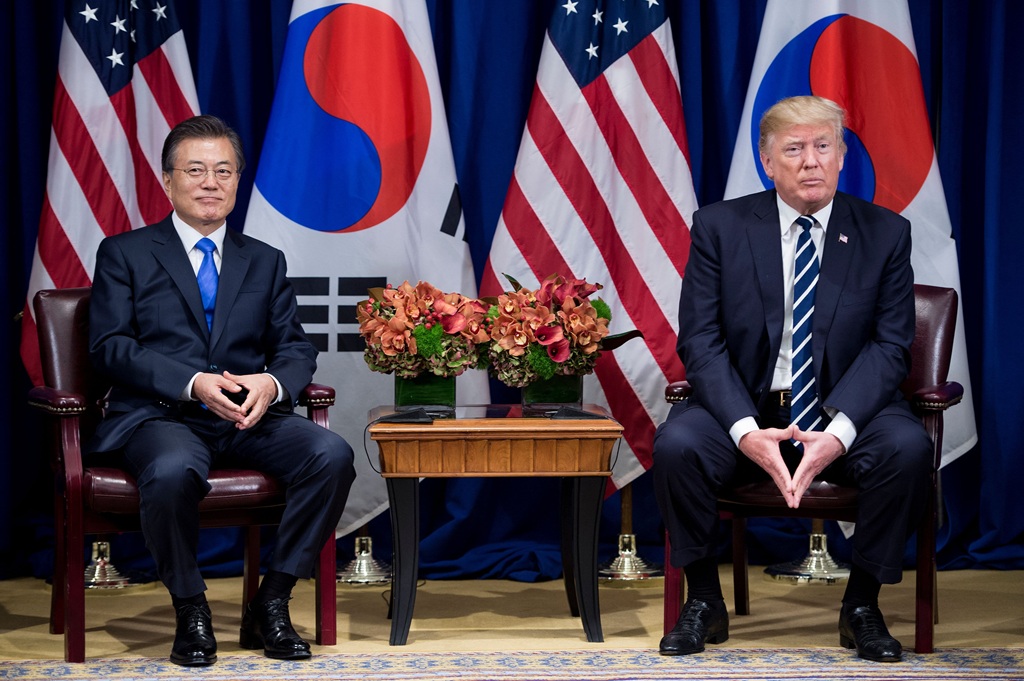
South Korea’s parliament has passed a special bill establishing a state-run investment corporation to oversee Seoul’s planned $350 billion investment in the United States, creating the legal framework needed to implement a key economic commitment made to Washington during recent trade negotiations.
The legislation, approved on Thursday, will create a government-financed entity tasked with managing and deploying the investment package, according to reports from Yonhap News Agency.
The corporation will be responsible for executing projects linked to the large-scale investment program pledged as part of Seoul’s effort to secure more favorable “reciprocal” tariff rates from the administration of Donald Trump.
Register for Tekedia Mini-MBA edition 20 (June 8 – Sept 5, 2026).
Register for Tekedia AI in Business Masterclass.
Join Tekedia Capital Syndicate and co-invest in great global startups.
Register for Tekedia AI Lab.
The investment plan allocates $150 billion to shipbuilding and another $200 billion to projects across strategic sectors, with annual spending capped at about $20 billion.
Tariff Tensions Shaping Investment Strategy
The move comes amid trade tensions between Washington and Seoul, which have increasingly shaped industrial and investment policy in Asia’s fourth-largest economy. In January, Trump threatened to raise tariffs on South Korean goods to 25%, up from the 15% rate agreed under a bilateral trade arrangement signed in July 2025.
“South Korea’s Legislature is not living up to its Deal with the United States,” Trump wrote at the time on Truth Social, signaling frustration in Washington over delays in implementing elements of the agreement.

South Korea’s government moved to accelerate legislative approval for the investment vehicle after the warning, reflecting concerns that renewed tariffs could hit exports to one of its most important markets. Trade with the United States remains central to South Korea’s manufacturing economy, which is heavily reliant on exports ranging from semiconductors and automobiles to ships and industrial machinery.
The investment plan has unfolded against a shifting legal backdrop in the United States. Last month, the U.S. Supreme Court struck down a large portion of Trump’s tariff measures, forcing the administration to rework its trade enforcement strategy. In response, the White House imposed new duties of 10% under Section 122 of U.S. trade law, a provision that allows temporary tariffs to address trade imbalances.
South Korean officials say the ruling added uncertainty for exporters, but have indicated that the broader trade framework with Washington remains intact.

“Although the ruling increased uncertainties surrounding exports to the US, the overall export conditions secured through the Korea-US tariff agreement will largely remain intact,” Industry Minister Kim Jung-kwan said in February.
The investment program is also designed to deepen South Korea’s industrial presence in the United States, particularly in sectors considered strategically important.
Shipbuilding, which will receive $150 billion under the plan, has become a focal point as Washington seeks to rebuild maritime industrial capacity and reduce reliance on foreign shipyards.
South Korea already ranks among the world’s leading shipbuilding powers, with companies such as Hyundai Heavy Industries, Samsung Heavy Industries, and Hanwha Ocean dominating global orders for complex vessels, including LNG carriers. Expanding investment in U.S. shipyards could help bridge American capacity gaps while securing long-term commercial opportunities for South Korean industrial groups.
The remaining $200 billion earmarked for strategic sectors is expected to span advanced manufacturing, energy infrastructure, and emerging technologies, areas where Washington has been encouraging foreign investment to strengthen domestic supply chains.
Rising Trade Scrutiny
The legislation also arrives as Washington intensifies scrutiny of major trading partners. The U.S. recently launched investigations under Section 301 of the Trade Act targeting 16 economies, including South Korea. The probe could open the door to new tariffs if the United States determines that those countries have engaged in unfair trade practices.
Section 301 gives the U.S. government authority to impose duties or other trade restrictions on imports from nations judged to have violated international trade norms.
For South Korea, the new state-run investment vehicle is expected to serve both economic and diplomatic objectives: channeling large-scale capital into the U.S. economy while helping stabilize trade relations with a critical export market. Economists say the initiative reflects a broader shift in global trade dynamics, where strategic investment and industrial cooperation increasingly serve as tools to ease tariff tensions and secure market access.
The $350 billion program, if successfully delivered, would rank among the largest overseas investment commitments ever made by the South Korean government.