

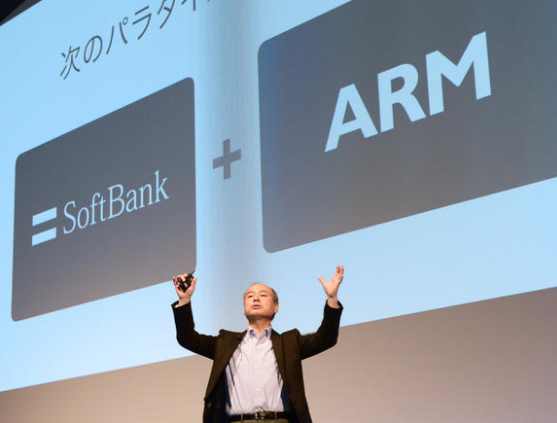
South Korea has taken another step in its push to become a global Artificial Intelligence heavyweight, signing a sweeping agreement with SoftBank’s Arm Holdings to strengthen the country’s semiconductor and AI sectors.
The deal, announced Friday by a presidential policy adviser, underscores Seoul’s determination to raise its profile in advanced chip design and secure talent needed for a future heavily driven by AI.
Kim Yong-beom, the adviser who briefed reporters, said the memorandum of understanding includes a plan for Arm to establish a chip design school inside South Korea. The initiative is designed to train about 1,400 high-level chip design specialists, filling a gap that has long dogged Asia’s fourth-largest economy. The country has built a dominant position in memory chips through giants such as Samsung Electronics and SK Hynix, yet it has struggled to grow equally strong system-semiconductor and fabless industries.
Register for Tekedia Mini-MBA edition 20 (June 8 – Sept 5, 2026).
Register for Tekedia AI in Business Masterclass.
Join Tekedia Capital Syndicate and co-invest in great global startups.
Register for Tekedia AI Lab.
Officials say that weakness could become an obstacle as global AI competition intensifies.
Arm, a British chip and software company controlled by SoftBank, earns revenue by licensing chip architectures used in everything from smartphones to servers. Its role in the global semiconductor ecosystem expanded even further as AI companies began building models on increasingly complex computing stacks. Korean officials believe that having Arm embed a chip design curriculum locally could accelerate the country’s transition from a memory-centric industry to one capable of competing across the full semiconductor value chain.
The agreement came after SoftBank CEO Masayoshi Son met South Korean President Lee Jae Myung on Friday. According to Kim, Son told the president that demand for chips will rise sharply as AI advances. Son also pointed to a serious weakness that South Korea will have to confront: energy supply. He said the country does not have enough energy capacity to support the scale of AI developments coming down the line.

Son has become one of the highest-profile evangelists of hyper-advanced AI. On Friday, he repeated his view that AI will surpass human intelligence, going far beyond the boundaries set by current systems. He said so-called Artificial Superintelligence would be “10,000 times smarter than people” and argued that it no longer made sense to believe humans could control, instruct, or manage AI. Instead, he urged societies to focus on learning how to coexist with this next phase of machine intelligence.
The meeting with Son fits into a string of high-level conversations Seoul has held with global tech giants as it tries to vault into the top tier of AI powers. President Lee has also met OpenAI CEO Sam Altman and Nvidia CEO Jensen Huang in recent months, signaling a coordinated strategy to intertwine South Korea’s industrial base with the world’s leading AI companies.
South Korea’s biggest firms are already building out relationships tied to AI infrastructure. In October, Samsung Electronics and SK Hynix signed letters of intent to supply memory chips for OpenAI’s data centers, supporting the company’s Stargate project. Stargate is a private initiative backed by SoftBank and Oracle that aims to build massive next-generation data centers for AI workloads.

Son is expected to meet SK Group Chairman Chey Tae-won later on Friday to discuss semiconductor and AI cooperation, according to the Donga Ilbo newspaper. SK Group declined to comment on the report.
The AI race in Korea has also attracted Nvidia, whose chips currently underpin most state-of-the-art AI models. In late October, Nvidia said it would supply more than 260,000 of its most advanced AI chips to the South Korean government as well as major Korean corporations, including Samsung Electronics. The move was welcomed by Seoul, which sees access to cutting-edge chips as essential for its domestic tech ecosystem.
The Arm deal lands at a moment when global tech alliances have become as important as domestic industrial policy. Seoul’s ambition to be one of the world’s top three AI powers depends not only on innovation at home but also on tapping global expertise and stitching itself into the worldwide supply and development chain. Arm’s chip design school is intended to create a local generation of engineers who can contribute to advanced architectures rather than simply manufacture components invented overseas.
The deal also diversifies the country’s partnership portfolio. For decades, South Korea’s semiconductor sector focused on scaling memory and competing with Taiwan’s TSMC in high-end fabrication. The new agreement, combined with Seoul’s outreach to companies like OpenAI, Nvidia, and Oracle, marks a shift toward a broader strategy that blends infrastructure, design capability, data-center development, and AI model research.
Officials are framing the agreement with Arm as a foundational step. Kim said the training programme would support long-term ambitions that hinge on building a balanced semiconductor ecosystem able to produce chips tailored for next-generation AI systems, rather than only memory modules. Analysts expect this kind of development to become critical as AI models multiply in size, energy demands climb, and countries fight to secure both talent and core intellectual property.