

Global financial markets were rattled by a sharp wave of selling that swept across Asia, triggering an emergency trading halt on South Korea’s stock exchange after benchmark indices plunged 10%.
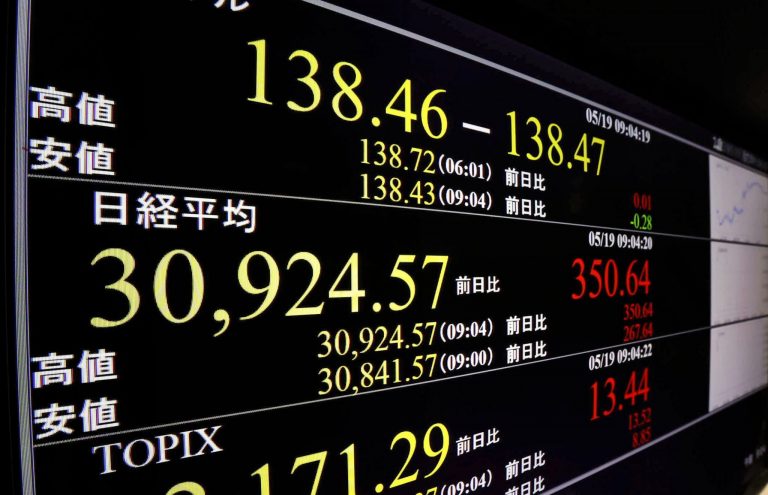
At the same time, Japan’s Nikkei 225 fell 3.5%, reflecting growing investor anxiety over a combination of economic uncertainty, geopolitical tensions, and concerns about global monetary policy.
The dramatic selloff marked one of the most volatile trading sessions in the region in recent years. South Korea’s exchange activated market-wide circuit breakers designed to prevent panic-driven trading after the benchmark index breached the 10% decline threshold.
Such measures temporarily suspend trading activity, giving investors time to reassess market conditions and reducing the risk of disorderly market behavior.
Register for the next Tekedia Mini-MBA.
Register for Tekedia AI in Business Masterclass.
Join Tekedia Capital Syndicate and co-invest in great global startups.
The decline in South Korean equities was broad-based, affecting technology firms, industrial manufacturers, financial institutions, and export-oriented companies. Major corporations that are heavily dependent on international demand faced significant pressure as investors worried about slowing global growth and weakening trade activity.
South Korea’s economy is deeply integrated into global supply chains, making its stock market particularly sensitive to shifts in international economic sentiment. Japan’s Nikkei also experienced heavy selling, though its losses were less severe than those seen in Seoul.
The 3.5% decline reflected concerns about the outlook for Japanese exporters, many of which rely on strong demand from overseas markets. Investors also reacted to fluctuations in currency markets, rising bond yields, and uncertainty surrounding future interest-rate decisions by major central banks.

Several factors appear to have contributed to the market turmoil. Investors remain focused on the possibility that major central banks, particularly the U.S. Federal Reserve, may maintain a restrictive monetary stance for longer than previously anticipated. Higher interest rates increase borrowing costs and reduce liquidity in financial markets, often weighing on risk assets such as equities.
Second, geopolitical risks continue to cast a shadow over investor sentiment. Ongoing tensions in key regions, concerns about global trade routes, and uncertainty surrounding energy markets have increased fears of supply disruptions and slower economic growth.
These risks have encouraged many investors to reduce exposure to equities and move toward safer assets. Third, concerns about corporate earnings have intensified. As businesses face higher financing costs and uncertain demand conditions, analysts have begun revising earnings forecasts downward for several sectors.

Technology and manufacturing companies, which play a dominant role in both South Korean and Japanese markets, have been particularly vulnerable to these reassessments. The selloff also highlights the interconnected nature of modern financial markets.
Weakness in one major market can quickly spread across regions as institutional investors rebalance portfolios and respond to shifting risk perceptions.
Asian markets often serve as an early indicator of broader global sentiment, meaning developments in Seoul and Tokyo are likely to be closely monitored by investors in Europe and North America. Despite the severity of the declines, market experts note that circuit breakers and other safeguards are designed precisely for moments like these.
Temporary trading halts help restore order and provide participants with an opportunity to evaluate information more carefully rather than making decisions driven by fear. Investor attention will remain focused on economic data releases, central-bank communications, and geopolitical developments.
Whether the selloff proves to be a short-term correction or the beginning of a deeper market downturn will depend largely on how these factors evolve in the coming weeks. The sharp declines in South Korea and Japan serve as a reminder that global markets remain highly sensitive to uncertainty and rapidly changing economic conditions.