

I shared this in Tekedia Capital WhatsApp Group
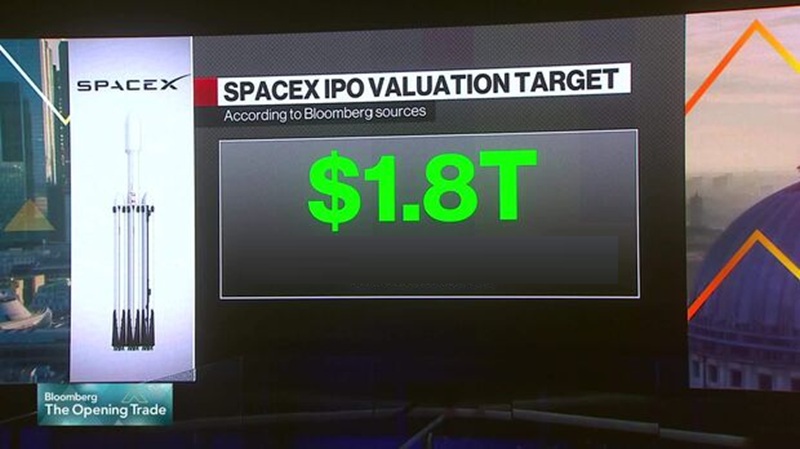
Greetings. Many members keep asking whether a SpaceX IPO at a valuation of roughly US$1.8 trillion would be a good buy. My simple answer is: probably not.
Forget the emotions. Forget the excitement of being able to say, “I own SpaceX.” Markets do not reward bragging rights; they reward compounding. Investing is ultimately about where you enter and what return can reasonably be generated from that entry point.
Register for the next Tekedia Mini-MBA.
Register for Tekedia AI in Business Masterclass.
Join Tekedia Capital Syndicate and co-invest in great global startups.
SpaceX is a remarkable company. It has transformed the economics of space launch, built a dominant satellite business, and created technological capabilities that few organizations in human history have matched. But a great company does not automatically become a great investment at every price.
Consider the numbers. SpaceX reportedly generated less than US$20 billion in revenue last year. Meanwhile, Nvidia is approaching US$300 billion in annual revenue and is producing extraordinary profits. Yet Nvidia’s valuation is around US$5 trillion. Google’s parent, Alphabet, is generating roughly US$440 billion in annual revenue and still trades below that level.
The question therefore is not whether SpaceX is great. The question is whether a company with roughly US$20 billion in revenue can justify a US$1.8 trillion valuation and then compound sufficiently from there to generate venture-style returns.

This is where accounting and business fundamentals matter. During my ICAN days, one lesson repeatedly drilled into us was that numbers eventually matter. Narratives can move markets for a period, but over time, financial performance must support valuation.
For SpaceX to move meaningfully beyond US$1.8 trillion, it would need massive growth in revenue and cash generation. If investors are looking for a 5x return, the implied valuation approaches levels that would exceed the combined value of many of the world’s largest technology companies. That is a difficult proposition, even for an exceptional business.
Tesla benefited from a unique combination of retail enthusiasm, policy incentives, EV credits, and a broad consumer market. SpaceX operates in a different environment. It must largely win through execution, contracts, infrastructure, communications, and commercial expansion. The path is real, but it is harder.

Good People, if I had fresh cash and wanted exposure to the future, I would seriously consider Alphabet. In many ways, Alphabet may be the greatest venture capital company in the world. Through its ecosystem, infrastructure, research, cloud platform, AI investments, and strategic holdings, it has positions across many of the technologies shaping the future.
SpaceX is an extraordinary company. But at a US$1.8 trillion entry valuation, I struggle to see where the alpha comes from. As investors, we must separate admiration for a company from the economics of an investment.
Those are two very different things.
Comment #1: ” Well, as for me and my household, we only want to own disruptive startups that are valued not more than a few hundred million dollars. Anything valued over a trillion dollars is a weighted elephant that will slow us down. We love taking smart risks, and riding the waves into the unicorn stratosphere.”
Comment #2: “My brother can you explain this principle?”
My Response: Let me help here because Chairman did not fully address the specific point you raised. What he was essentially saying is this: if SpaceX comes to the public market at a valuation of, say, US$1.8 trillion while generating roughly US$20 billion in annual revenue, the market may initially support that valuation because of excitement, scarcity, and the extraordinary reputation of the company. But history teaches us that IPOs often experience what I call the “effervescence effect”, similar to those chemistry experiments in secondary school where gas bubbles rapidly escape during a reaction involving carbonates or bicarbonates [God bless Mr Ekeabu and Mr Udeagu Jr, my Chemistry teachers]. Markets behave the same way. Excitement creates bubbles of enthusiasm, and after that phase, valuations frequently settle to more sustainable levels.
So, let us assume the optimistic scenario where SpaceX successfully maintains a US$1.8 trillion valuation after listing. The next question becomes: where does the return come from? Ultimately, valuation growth must be supported by business growth. Today, companies in the US$4–5 trillion category typically require hundreds of billions of dollars in annual revenue and extraordinary profitability. If SpaceX is generating approximately US$20 billion today, moving to US$200 billion or more in revenue within three years would be exceptionally difficult, even for a company of its quality.
This means that even if SpaceX reaches a US$4 trillion valuation within a few years, which itself is an aggressive assumption, the investor only realizes roughly a 2x return from a US$1.8 trillion entry point. To achieve a 5x return, SpaceX would need to approach a valuation close to US$9 trillion. That would exceed the combined scale of many of today’s largest technology giants and is difficult to justify within a short investment horizon.
The key lesson is this: do not focus solely on how great the company is. Focus on where you are entering. A great company does not automatically make a great investment. Investment returns are determined by the relationship between entry price and future value creation. From the framework we teach at Tekedia Mini-MBA and which we will deepen in our Nigeria Capital Market Masterclass starting June 15 https://school.tekedia.com/course/market/ ), investors generally fall into three categories:
Income Chasers seek dividends and predictable cash distributions. SpaceX does not fit that profile because it is focused on growth and reinvestment rather than income generation.
Value Pickers look for assets trading below intrinsic value. SpaceX does not fit that profile either because it is one of the most sought-after private companies in the world and is unlikely to be offered at a discounted valuation.
Growth Makers pursue substantial appreciation, often targeting 5x, 10x, or greater returns. The challenge here is that for SpaceX to generate that level of return from a multi-trillion-dollar starting point, it would need to create value equivalent to several of the world’s largest public companies combined.
So Chairman’s point was not that SpaceX is not a great company. Quite the opposite. The point is that at a sufficiently high entry valuation, even a phenomenal company may struggle to deliver the level of alpha that growth-oriented private investors typically seek.
---
Connect via my
LinkedIn |
Facebook |
X |
YouTube
The foundation of every investment lies in understanding basic arithmetic. It is not about shiny stuff or big sounding numbers, rather knowing what the unit economics looks like. If a unit appears high at a high valuation, your expected returns is already subdued, even when there’s exceptional growth. Moving from $10M valuation to $500M has no similarities with moving from $1T to $7T, the former is delivering 50x, the latter is delivering 7x. There is a higher probability for $10M company achieving $500M valuation than a $1T company achieving $7T. When you don’t get in early, you are there to pick crumbs or carry the empty can.
Anyway, there’s Dangote Refinery IPO coming at $50B, which feels like it has influence of $1T, that is where to queue up.