

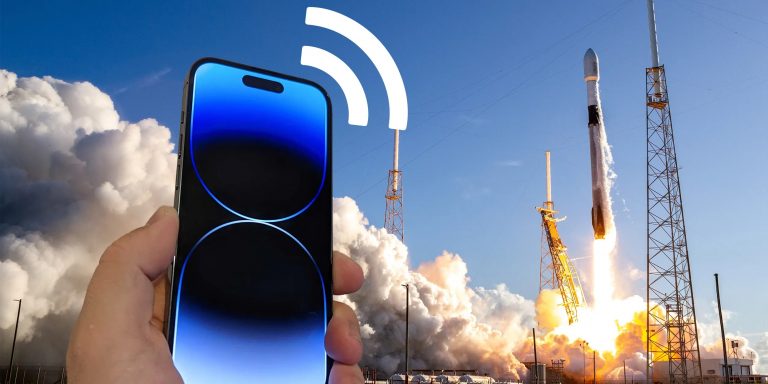
SpaceX is in discussions to acquire Boost Mobile or gain access to its network, according to a report from The Washington Post, as the company seeks to launch its own mobile phone service and challenge the major U.S. wireless carriers.
Elon Musk, SpaceX’s chief executive, met last month with Charlie Ergen, chairman of Boost Mobile’s parent company EchoStar, to discuss a potential deal. The talks center on either purchasing Boost outright or securing the ability to use its existing infrastructure.
Boost currently operates as a mobile virtual network operator with roughly 7.4 to 7.5 million subscribers across Boost Mobile and Gen Mobile, primarily relying on capacity leased from AT&T and T-Mobile.
Register for the next Tekedia Mini-MBA.
Register for Tekedia AI in Business Masterclass.
Join Tekedia Capital Syndicate and co-invest in great global startups.
The company formerly operated a 5G network covering over 80% of the American population. However it is no longer a facilities based mobile network operator, having shut down its network on November 15, 2025 and instead became an MVNO hosted on AT&T’s wireless network.
SpaceX’s latest move would support broader plans for Starlink Mobile, a hybrid service that combines the company’s satellite constellation with terrestrial cellular networks.
The tech giant has already invested heavily in spectrum, including a large purchase from EchoStar last year and additional low-band licenses intended to improve indoor coverage.

Satellite signals alone struggle to reach phones reliably inside buildings and in dense urban areas, making ground-based network access essential for a competitive consumer offering.
SpaceX previously approached AT&T, T-Mobile, and Verizon about leasing capacity on their networks but was turned down. Industry observers note that any transfer of Boost’s existing leasing agreements would likely require approval from those carriers, creating a potential obstacle.
Without such consent, the value of an acquisition could be limited mainly to Boost’s customer base, brand, and operational systems rather than immediate access to towers and spectrum.

If completed, the deal would give SpaceX an established subscriber foundation and distribution channels, accelerating its entry into the roughly $230 billion U.S. wireless market.
It would also position Starlink as a potential fourth major player alongside the three dominant carriers. SpaceX and EchoStar have not publicly commented on the report.
The negotiations reflect Musk’s stated ambition to fundamentally reshape mobile connectivity by integrating satellite technology with traditional cellular infrastructure, an approach he has described as introducing entirely new strategic elements that existing industry players have not fully anticipated.
Outlook
The potential acquisition could mark a significant turning point in the U.S. telecommunications industry, particularly as SpaceX seeks to bridge the gap between satellite connectivity and traditional mobile networks.
By gaining access to Boost Mobile’s subscriber base, brand, and existing carrier relationships, the company could accelerate Starlink Mobile’s commercial rollout without having to build an entirely new customer distribution network.
However, the success of the proposed deal will depend largely on whether SpaceX can secure regulatory approvals and maintain access to the existing network agreements with AT&T and T-Mobile.
Without those arrangements, acquiring Boost could offer fewer immediate infrastructure advantages than anticipated, potentially increasing the time and investment required to establish a competitive mobile service.
Beyond the acquisition itself, SpaceX’s ability to integrate satellite connectivity with terrestrial networks could introduce a new competitive model for the wireless industry.
Traditional carriers may face growing pressure to rethink their coverage strategies, particularly in rural and underserved areas where satellite technology could provide an alternative to conventional cellular infrastructure.
Nevertheless, competing directly with AT&T, T-Mobile, and Verizon will require more than satellite coverage. Pricing, network reliability, data speeds, indoor connectivity, and customer experience will ultimately determine whether Starlink Mobile can attract and retain millions of subscribers.
The outcome of the negotiations could therefore shape not only SpaceX’s expansion into telecommunications but also the future competitive landscape of the U.S. wireless market.