

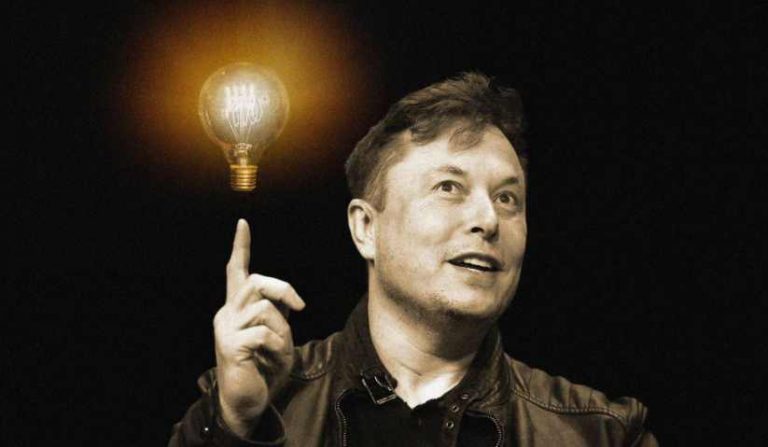
SpaceX’s long-awaited stock market debut is shaping up to be far more than a traditional initial public offering. With the company targeting a staggering $1.75 trillion valuation, investors are being asked to place a premium not only on the future of the space economy but also on Elon Musk’s ability to keep delivering transformative businesses at an unprecedented scale.
The blockbuster listing, expected to be the largest IPO in history, arrives at a pivotal moment for global capital markets. According to market watchers who spoke to CNBC, it will serve as a key test of investor appetite for mega-cap technology offerings following a prolonged period in which private companies remained outside public markets while accumulating enormous valuations.
Investors’ willingness to embrace a company whose valuation metrics sit far above those of some of the world’s most dominant technology firms has been a huge source of debate. Based on current projections, SpaceX is seeking a price-to-earnings multiple approaching 100 times earnings, compared with roughly 20 to 25 times for Nvidia and around 10 times for Apple.
Register for the next Tekedia Mini-MBA.
Register for Tekedia AI in Business Masterclass.
Join Tekedia Capital Syndicate and co-invest in great global startups.
That valuation gap highlights the extraordinary expectations embedded in SpaceX’s stock. Investors are not paying for today’s launch business or satellite operations alone. They are effectively betting on the emergence of entirely new industries ranging from global broadband and space logistics to orbital computing infrastructure and potentially interplanetary commerce.
The IPO also comes amid regulatory changes that have made it easier for giant newly listed companies to gain rapid inclusion in major equity benchmarks. Nasdaq recently adjusted listing rules that could accelerate SpaceX’s path into the Nasdaq-100, potentially triggering substantial institutional demand from index-tracking funds.
However, governance concerns remain a major point of contention.

Unlike most large public companies, SpaceX is expected to debut with Musk retaining approximately 80% to 85% of voting control. Such a structure would leave outside shareholders with limited influence over strategic decisions, board appointments, and long-term corporate direction.
For some investors, that concentration of power is precisely the attraction. Musk’s track record at companies such as Tesla and SpaceX has created a perception that founder control can enable long-term decision-making without the pressure of quarterly market expectations.
Yet others view it as a significant risk.

Matt Calkins, chief executive of Appian, described the IPO as essentially “a referendum on Elon and how much faith investors have in this individual entrepreneur.”
“I think they’ve got a lot, because he’s done a lot, and they’re betting on his ability to open up new markets, but that is highly speculative,” Calkins told CNBC’s “Squawk Box Europe” on Thursday.
“I wouldn’t want to invest [and] I wouldn’t want to guess either way on an IPO like this.”
“We’re at an early stage where there’s tremendous uncertainty, and a lot of the investments are going to be based on personal belief. It’s just too early to be financially wise about things like that.”
His comments capture a broader concern among market participants: SpaceX’s valuation may be driven as much by confidence in Musk’s vision as by conventional financial metrics.
Ben Ritchie, head of developed market equities at Aberdeen Investments, echoed that concern, describing the IPO as a test of investors’ “willingness to embrace a new model of public equity ownership: high valuation, limited governance rights, and faith in a founder-driven vision.”
“That combination has worked before. But at this scale?” he asked.
Despite those concerns, bullish investors argue that focusing on current earnings misses the bigger picture.
Analysts at New Street Research estimate SpaceX shares could rise about 22% within a year, implying a valuation of roughly $2.3 trillion. Their analysis assumes continued dominance across launch services, satellite communications, and emerging space infrastructure markets.
“The space opportunity is large and diversified and will play out over more than a decade,” the analysts said.
“With that in mind, we propose an alternative top-down approach to estimate the enterprise value the space opportunity could represent in 2040, and to actualize it back to today.”
“Based on our low-end market growth assumptions, our $2.3 trillion valuation assumes [SpaceX] win 75% of this market.”
“If… the whole opportunity grows to our high-end estimate and SpaceX wins 50% share, it would imply a fair value of $330/share.”
Those projections highlight the enormous assumptions underpinning bullish forecasts. SpaceX is no longer being valued simply as a rocket company. Investors are increasingly viewing it as a platform business spanning satellite broadband, artificial intelligence infrastructure, defense technology, and future space-based services.
Recent disclosures about the company’s plans for orbital AI data centers have added another layer to that narrative. Management argues that space-based computing infrastructure could eventually alleviate power and cooling constraints faced by terrestrial AI data centers, creating a potentially lucrative new market.
Still, skeptics warn that projecting decades into the future carries substantial uncertainty.
James Dow, professor of finance at London Business School, cautioned that the company’s long-term valuation remains deeply linked to Musk himself.
“The valuation of SpaceX depends on what it’s going to be doing in 20 years,” he told CNBC’s “Squawk Box Europe” on Thursday.
“But, in 20 years, Musk will be quite elderly and I don’t know what he’ll be doing.”
SpaceX’s valuation “is inevitably very tied up with him [Musk], so I think that’s perhaps one of the biggest risks,” he added.
That observation may ultimately define the debate surrounding the IPO. Investors are not merely assessing launch revenues, satellite subscriptions, or future AI infrastructure opportunities. They are evaluating whether one entrepreneur can continue shaping multiple industries simultaneously over the coming decades.
Analysts expect the outcome to have implications far beyond SpaceX. Strong demand could reinforce confidence ahead of other mega-listings expected this year, including IPOs from OpenAI and Anthropic. A disappointing reception, meanwhile, could raise questions about whether public markets are willing to support trillion-dollar valuations built primarily on future technological possibilities.
However, Friday’s debut represents one of the most consequential tests of investor optimism in recent financial history, with the market effectively deciding how much a founder’s vision is worth.