

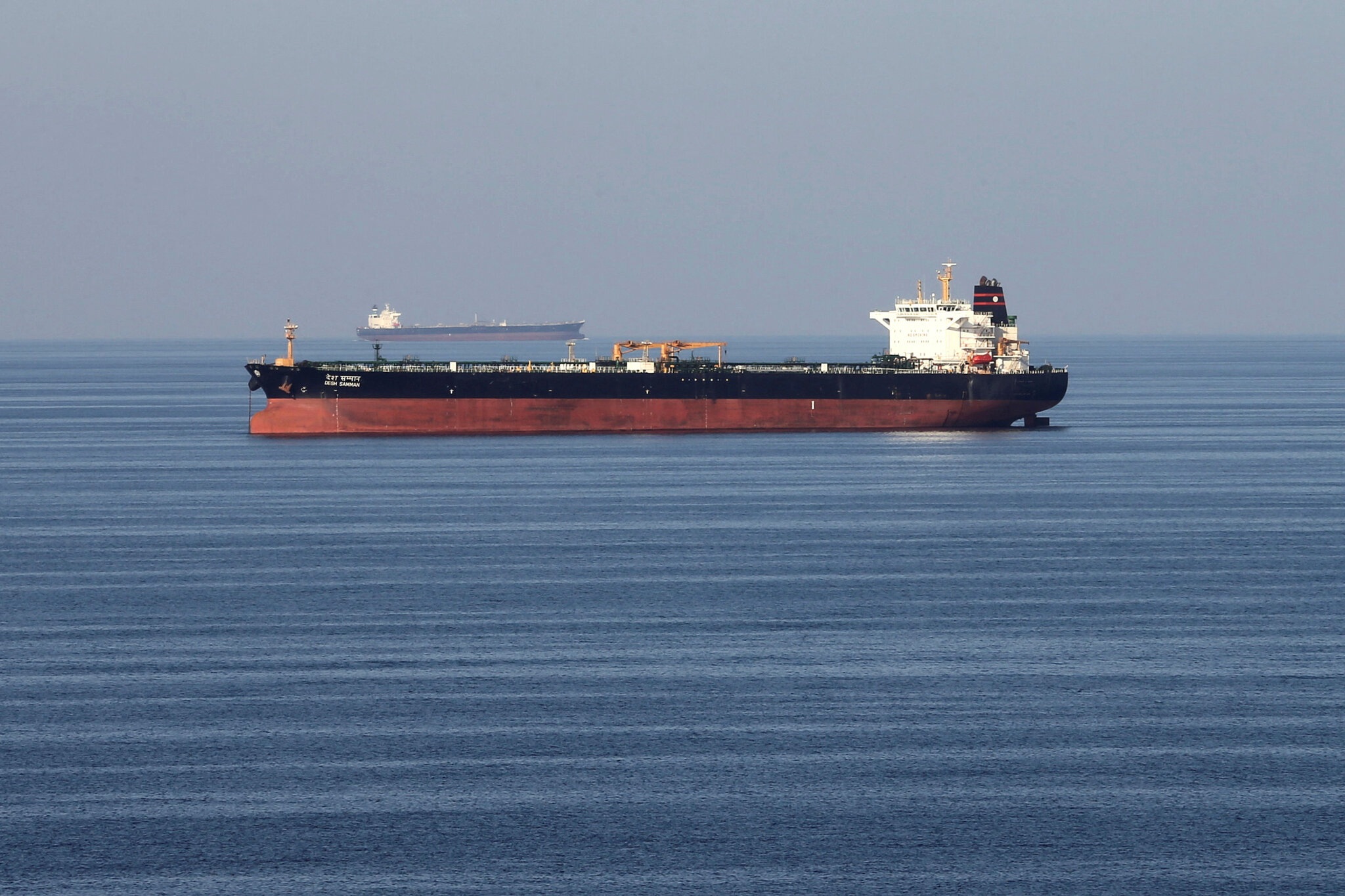
The widening Iran conflict has triggered a rapid deterioration in maritime security across the Gulf, prompting major marine insurers to cancel war-risk cover, stranding vessels near the Strait of Hormuz, and sending oil shipping costs to fresh multi-year highs.
The escalation has already pushed global crude prices up 9% and is raising the prospect of sustained disruption to one of the world’s most critical energy arteries.
At least three oil tankers have been damaged in the past 24 hours, one seafarer has been killed, and roughly 150 vessels — including crude and liquefied natural gas carriers — were reported anchored in or near the Strait on Sunday, according to shipping data. The paralysis underscores how quickly geopolitical risk can translate into supply-chain fragility.
Register for Tekedia Mini-MBA edition 20 (June 8 – Sept 5, 2026).
Register for Tekedia AI in Business Masterclass.
Join Tekedia Capital Syndicate and co-invest in great global startups.
Register for Tekedia AI Lab.
The Strait of Hormuz handles about one-fifth of global oil consumption. Cargoes from Saudi Arabia, the United Arab Emirates, Iraq, Iran, and Kuwait transit the narrow waterway daily, alongside refined fuels and LNG shipments destined primarily for Asia. Any interruption, even temporary, carries immediate consequences for energy-importing economies.
The latest disruption follows U.S. and Israeli strikes on Iran that began on Saturday. Tehran has responded with retaliatory attacks that have sharply increased risks to commercial shipping in surrounding waters.
Insurers Withdraw War-Risk Protection
Marine insurers have responded with swift risk containment measures.

Companies including Gard, Skuld, NorthStandard, London P&I Club, and American Club issued notices dated March 1 stating that cancellations of war-risk cover would take effect from March 5. The exclusions apply to Iranian waters, the Gulf, and adjacent areas.
Skuld said it was working on a buy-back option that could allow policyholders to reinstate cover under revised terms, suggesting the industry may shift toward sharply higher premiums rather than a complete withdrawal over time.
Japan’s MS&AD Insurance Group told Reuters it had suspended underwriting a range of war-risk policies covering waters around Iran, Israel, and neighboring countries.

War-risk insurance is typically a prerequisite for vessels entering high-threat areas. Lenders and charterers often require proof of cover. Without it, ships may be contractually barred from sailing, and crews may refuse deployment. Even where insurers are willing to reinstate coverage, premiums can rise dramatically — sometimes calculated as a percentage of hull value per voyage — adding millions of dollars to operating costs.
Freight Rates Climb to Six-Year Highs
Freight markets were already tight before the escalation. The benchmark Middle East-to-Asia crude route, known in the tanker market as TD3C, has nearly tripled since the start of 2026.
Brokers pegged spot rates for hiring a very large crude carrier (VLCC) on the key Middle East-to-China route early Monday near Worldscale 225, equivalent to at least $12 million per voyage and roughly 4% higher than Friday.
“TD3C rates were rising exponentially before the attacks and will continue to remain elevated as countries scramble to meet their energy needs,” said Emril Jamil, a senior analyst at LSEG.
The spike reflects several reinforcing pressures: heightened war-risk premiums, reluctance by shipowners to enter the Gulf, vessels waiting at anchor, and longer turnaround times due to security protocols. Reduced effective fleet availability tends to amplify rate volatility in the spot market.
Oil Market Shock and Supply Risk Premium
The 9% jump in oil prices on Monday pinpoints not only immediate disruption but also a rising geopolitical risk premium. Even if physical exports continue, the perception of vulnerability in the Strait can drive speculative buying and stockpiling by refiners and governments.
The market is particularly sensitive to Hormuz because there are limited alternatives. While some Gulf producers have pipeline capacity that bypasses the Strait, total diversion capability is insufficient to handle full export volumes. Any sustained closure or restriction would tighten global supply significantly.
Higher crude prices feed directly into transportation fuels and petrochemical inputs, affecting sectors ranging from aviation to plastics manufacturing. For energy-importing economies in Europe and Asia, the shock threatens to push up inflation at a time when many central banks are calibrating policy toward stabilization.
LNG and Broader Trade Implications
Liquefied natural gas cargoes transiting the Strait are also at risk. Asian buyers, including Japan and South Korea, rely heavily on Gulf LNG. If shipping insurance remains constrained or freight costs escalate further, LNG benchmarks could rise in tandem with crude.
Beyond hydrocarbons, container traffic and bulk carriers in the wider Gulf region face elevated insurance premiums and security delays. The effect may extend to global supply chains, particularly for goods moving between Asia, Europe, and the Middle East.
If shipowners avoid the Gulf, charterers may source more crude from the United States and West Africa. Those longer voyages would absorb more vessel days, tightening tanker supply globally and supporting freight rates across multiple routes.
Such shifts can alter trade flows for months. Increased Atlantic Basin exports to Asia would reshape tanker positioning and could raise shipping costs even after Gulf tensions ease, depending on how long risk premiums remain embedded in contracts.
The Strait of Hormuz has long been viewed as a strategic chokepoint. The anchoring of 150 vessels evidences how quickly security deterioration translates into operational standstill.
If hostilities persist and insurers maintain exclusions, the combined effect of higher oil prices, surging freight rates, and elevated insurance premiums could materially tighten effective supply. That dynamic risks reinforcing inflationary pressures globally, increasing energy import bills, and complicating monetary policy decisions.
For now, markets are pricing a significant but not catastrophic disruption. The trajectory will depend on whether attacks expand further, whether naval escorts are deployed to stabilize shipping lanes, and whether insurers judge risk conditions sufficient to restore coverage.
However, the immediate signal from energy and shipping markets is that the Strait of Hormuz crisis has moved from a geopolitical flashpoint to an economic shock with global reach.