

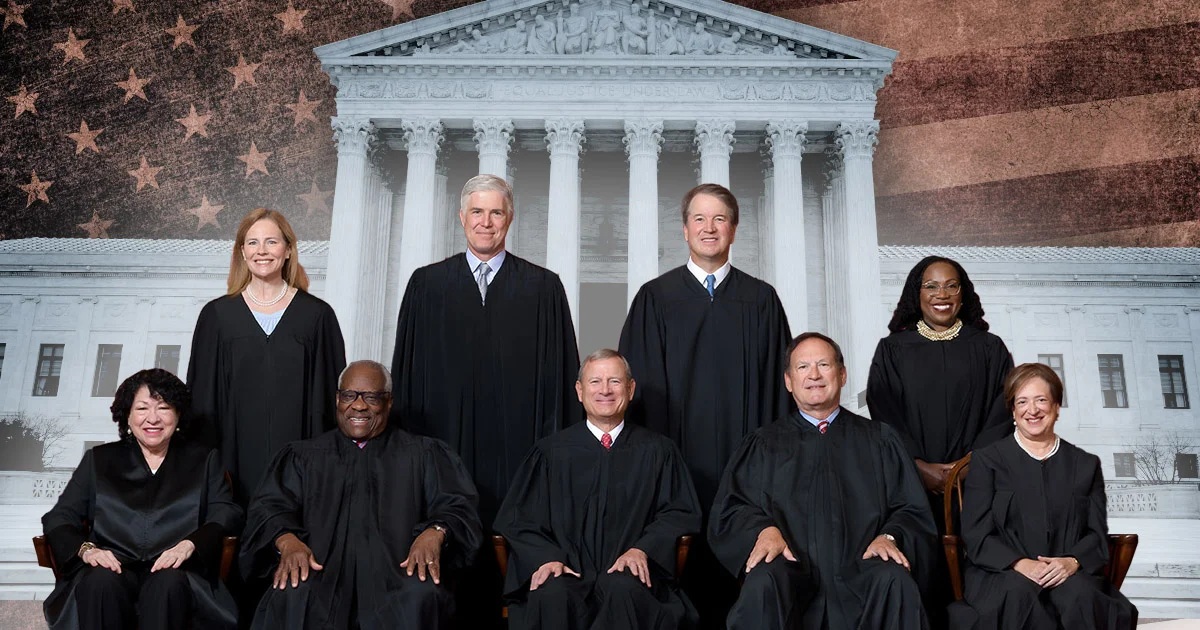
In a 6-3 decision on Friday, the U.S. Supreme Court invalidated the International Emergency Economic Powers Act (IEEPA) as a legal basis for President Donald Trump’s sweeping import tariffs, delivering a major blow to the administration’s trade policy and opening the door to massive refunds for importers who paid duties under the challenged regime.
Chief Justice John Roberts authored the majority opinion, joined by Justices Sonia Sotomayor, Elena Kagan, Amy Coney Barrett, Ketanji Brown Jackson, and Neil Gorsuch. Justices Clarence Thomas, Samuel Alito, and Brett Kavanaugh dissented.
The ruling held that IEEPA, a 1977 law granting the president authority to regulate international commerce during national emergencies, does not extend to unilateral imposition of broad import taxes absent a direct, imminent foreign threat. Roberts wrote that Trump’s use of IEEPA for “reciprocal” tariffs—levied to match or exceed foreign duties—and emergency declarations tied to issues like fentanyl trafficking and national security claims exceeded congressional intent and constituted an unconstitutional overreach of executive power.
Register for Tekedia Mini-MBA edition 20 (June 8 – Sept 5, 2026).
Register for Tekedia AI in Business Masterclass.
Join Tekedia Capital Syndicate and co-invest in great global startups.
Register for Tekedia AI Lab.
“The statute was designed for targeted responses to foreign crises, not as a blank check for indefinite trade wars,” the majority opinion stated.
Dissenters argued that IEEPA’s broad language affords the president necessary flexibility in economic statecraft, with Thomas writing that the majority’s interpretation “undermines the executive’s ability to protect American interests in a dangerous world.”
How the Ruling Triggers Potential $175–$179 Billion in Refunds
The decision dismantles the legal foundation for tariffs collected under IEEPA since February 2025, when Trump began imposing duties on a wide array of imports. According to estimates from the Penn-Wharton Budget Model (PWBM), produced at Reuters’ request, this could lead to refunds totaling $175–$179 billion for duties paid by importers over the past year.

PWBM’s forecast is based on a detailed, ground-up model incorporating tariff rates by product and country across 11,000 import categories and 233 trading partners. The model calculates approximately $500 million in daily IEEPA-based revenue, leading to the cumulative $179 billion figure through early 2026.
A cross-check using historical U.S. Customs and Border Protection (CBP) assessment data as a share of total Treasury customs receipts yielded a similar $175–$176 billion range. CBP’s last published IEEPA assessment (December 14, 2025) stood at $133.5 billion, with net collections typically lower after adjustments, protests, and refunds.
If upheld (pending potential appeals or stays), importers could file claims with CBP for refunds on duties paid since the tariffs’ inception. The process would involve administrative reviews, potentially stretching over months or years, but the sheer volume could overwhelm CBP systems and create logistical challenges.

A $175 billion refund would exceed the combined fiscal 2025 outlays of the Department of Transportation ($127.6 billion) and Department of Justice ($44.9 billion), representing a significant fiscal outflow for the Treasury. Administration officials, including Treasury Secretary Scott Bessent, have expressed confidence in covering refunds through existing cash balances ($850 billion projected at end-March 2026, $900 billion at end-June).
Bessent told Reuters in January that the Treasury is prepared, but the ruling could force a pivot to alternative tariff authorities (e.g., Section 232 national security tariffs or Section 301 unfair trade practices) to restore duties. White House spokespeople indicated the administration is reviewing options to minimize disruptions.
Economic and Market Implications
The ruling could reshape U.S. economic dynamics:
- Inflation Relief: IEEPA tariffs added an estimated 0.5–1% to core inflation since 2025 by raising import costs. Their removal could ease price pressures, benefiting consumers and import-dependent industries (electronics, autos, apparel).
- Currency and Trade Flows: A tariff unwind might weaken the U.S. dollar (down 0.8% in after-hours trading on Friday), making U.S. exports more competitive but potentially increasing import volumes. Global supply chains could see short-term disruptions as importers adjust.
- Fiscal Impact: The $175–$179 billion refund would represent a one-time hit to federal revenues, potentially widening the deficit unless offset by new tariffs or spending cuts. CBO estimates had projected $300 billion in annual tariff revenue over the next decade; a partial loss could force fiscal recalibrations.
- Sector Winners and Losers: Import-heavy sectors (retail, manufacturing) stand to benefit from lower costs, while domestic producers (steel, aluminum) previously protected by tariffs may face increased competition.
- Markets reacted swiftly: U.S. stock futures rose modestly Friday evening, with import-reliant companies like Walmart (+1.2%) and Apple (+0.9%) leading gains. Treasury yields dipped slightly, reflecting potential inflation relief. The dollar weakened against major currencies, boosting commodity prices like oil (+1.4%) and gold (+0.6%).
Political Ramifications
The decision is a major setback for Trump’s “America First” trade agenda, which relied heavily on IEEPA for broad tariffs on allies and adversaries alike. Midterm elections loom in November 2026, and the ruling could energize critics who argue tariffs raised consumer costs without delivering promised manufacturing resurgence.
Trump has vowed to fight the decision, posting on social media: “The Supreme Court has just handed China and our enemies a win. We’ll fix this FAST with new tools!”
The administration has signaled contingency plans, potentially invoking other statutes like Section 232 (national security) or Section 301 (unfair practices) to reimpose duties. However, these alternatives may face their own legal challenges and could take months to implement.