

NVIDIA is dramatically expanding its footprint in Taiwan, with CEO Jensen Huang unveiling plans for a sprawling new campus and a tenfold surge in annual spending on the island, underscoring how central Taiwan has become to the global artificial intelligence supply chain.
Speaking in Taipei on Wednesday, Huang said Nvidia’s annual spending in Taiwan is expected to jump to as much as $150 billion, up sharply from roughly $10 billion to $15 billion annually just four or five years ago.
“Now we’re spending $100 billion, going to $150 billion in Taiwan each year,” Huang said.
Register for the next Tekedia Mini-MBA.
Register for Tekedia AI in Business Masterclass.
Join Tekedia Capital Syndicate and co-invest in great global startups.
The announcement marks one of the largest foreign corporate investment commitments tied to Taiwan’s semiconductor ecosystem and highlights Nvidia’s accelerating transformation from a chip designer into the central orchestrator of the global AI infrastructure economy.
As part of the expansion, Nvidia plans to build a new office and engineering complex called Constellation in northern Taipei. The campus, expected to open in 2030, will accommodate about 4,000 employees, roughly four times Nvidia’s current Taiwan workforce.
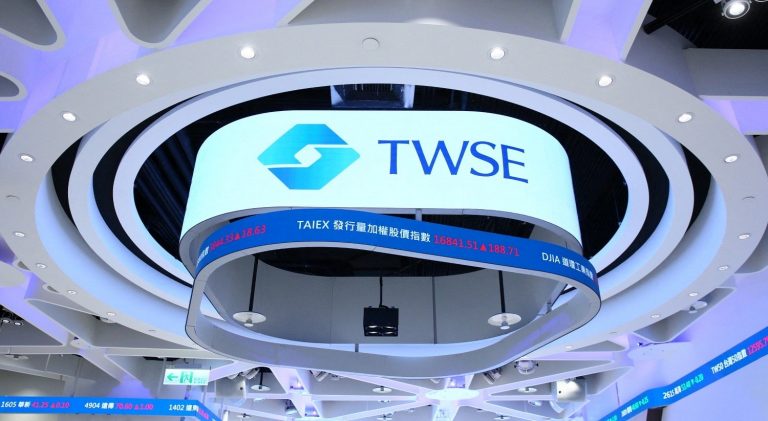
The investment announcement sent the Taiwan markets sharply higher. Taiwan’s Taiex index climbed 1.7% to a record close on Wednesday, driven by gains in semiconductor and AI-linked stocks. Shares of TSMC rose 1.3%, while MediaTek surged 8.8% and Delta Electronics gained 7.2%.

The scale of Nvidia’s spending plan is striking even by Silicon Valley standards. A $150 billion annual outlay in Taiwan would exceed what many global technology companies generate in yearly revenue and approach the scale of sovereign-level industrial investment programs.
It also rivals Nvidia’s own massive U.S. AI infrastructure initiative. Earlier this year, the company announced plans to help create $500 billion in AI infrastructure value in the United States over four years through partnerships with domestic manufacturers, averaging about $125 billion annually.
The Taiwan push illustrates the degree to which Nvidia remains deeply tied to the island’s semiconductor ecosystem despite mounting geopolitical tensions and Washington’s efforts to diversify advanced chip manufacturing away from Asia.

Taiwan remains indispensable to Nvidia because TSMC manufactures the company’s most advanced AI processors, including the GPUs powering data centers used by hyperscalers, governments, and AI startups worldwide. Nvidia is expected to surpass Apple this year as TSMC’s largest customer.
The company’s growth trajectory has become almost unprecedented in modern corporate history. Nvidia reported a record $81.6 billion in quarterly revenue for the period ended April 26 and forecast another $91 billion for the current quarter, fueled largely by relentless demand for AI accelerators and infrastructure systems.
Yet the Taiwan expansion also comes as Nvidia faces intensifying pressure in China, once one of its most important growth markets. Revenue from Taiwan surged more than 50% year over year in the latest quarter, while revenue from mainland China and Hong Kong was cut in half amid tighter U.S. export restrictions and growing Chinese efforts to build domestic semiconductor alternatives.
Chinese chip stocks fell sharply on Wednesday after Huang’s remarks reinforced investor concerns about Nvidia’s deepening alignment with Taiwan’s AI supply chain. Shares of Semiconductor Manufacturing International Corporation, China’s largest contract chipmaker, declined alongside other domestic AI chip developers, including Cambricon and Hygon.
The market reaction also reflected the intensifying technology rivalry between Washington and Beijing.
Earlier this week, Huawei Technologies announced advances in a new semiconductor engineering approach called “LogicFolding,” which it said could eventually be used in future Ascend AI processors and smartphone chips. China is increasingly investing in homegrown semiconductor capabilities as U.S. restrictions continue limiting access to Nvidia’s most advanced AI hardware.
Huang, however, made clear that Nvidia still sees Taiwan as the heart of the global AI economy.
“Taiwan is the epicenter of the AI revolution,” he said.
The Nvidia chief also emphasized the company’s growing focus on what he calls “physical AI,” where AI software is integrated directly into robotics, manufacturing systems, and industrial automation.
“AI combined with hardware is going to transform manufacturing,” Huang said. “In Taiwan, our partners will benefit from all our technologies that will transform manufacturing.”
Nvidia has a broader ambition to move beyond selling chips into becoming the foundational infrastructure layer for the AI economy, spanning cloud computing, robotics, autonomous systems, and industrial automation. The company’s expansion provides another powerful signal that the island remains central to the future of advanced computing, even as geopolitical risks around the Taiwan Strait continue to dominate strategic discussions in Washington and Beijing.