

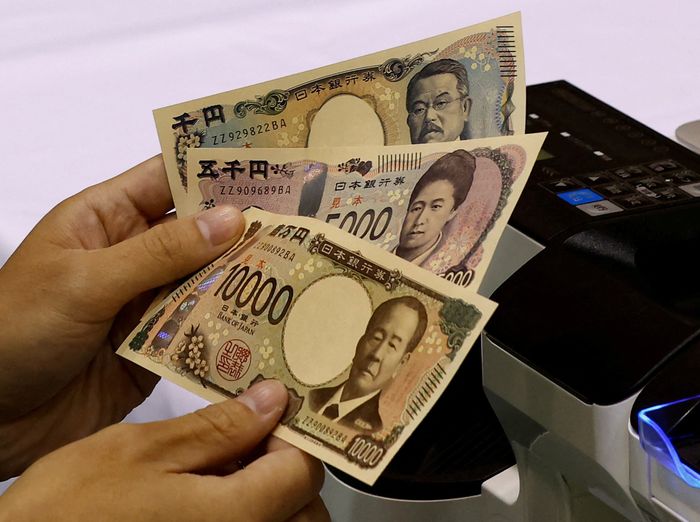
Japanese Prime Minister Sanae Takaichi has defended her government’s spending and investment agenda, saying efforts to strengthen Japan’s economic competitiveness will ultimately support confidence in the yen, even as the currency remains weak and investors remain concerned about the country’s fiscal trajectory.
In a recorded interview aired by Nippon Television on Thursday, Takaichi said her government was not pursuing policies aimed at manipulating the exchange rate and had instead focused on increasing Japan’s economic supply capacity through investment in crisis management and growth industries.
“Our economic policy is not aimed at manipulating exchange rates,” Takaichi said.
Register for the next Tekedia Mini-MBA.
Register for Tekedia AI in Business Masterclass.
Join Tekedia Capital Syndicate and co-invest in great global startups.
“My administration aims to boost Japan’s growth potential by increasing the economy’s supply capacity through bold investment in crisis management and growth areas,” she said. “Such efforts would strengthen Japan’s global competitiveness, thereby helping ensure market confidence in the yen.”
Takaichi also said she had raised the yen’s undervaluation with U.S. President Donald Trump when the two met last month. The disclosure comes after Trump himself expressed concern about the weak yen during their recent summit, while U.S. Treasury Secretary Scott Bessent has also signaled support for a stronger yen consistent with Japan’s economic fundamentals.
The currency issue has become complicated for Tokyo. The Bank of Japan has raised its policy rate to 1.25%, a 31-year high, yet the yen has continued to weaken against the dollar. The currency moved beyond ¥158 per dollar on Thursday after the latest BOJ meeting summary showed disagreement over the pace of further tightening.

That divergence reveals the difficulty facing Japanese policymakers: higher interest rates are intended to support the yen and contain inflation, but faster monetary tightening could also raise government borrowing costs and weigh on an economy that Takaichi wants to support through higher investment.
The government’s fiscal plans are at the center of that tension.
Budget requests for the fiscal year beginning next April have reached about ¥143 trillion ($903 billion), close to pandemic-era levels. The figure does not necessarily represent the final budget because ministries submitted requests before the government determines which programs will ultimately receive funding.

Takaichi sought to reassure investors that the record requests would not automatically translate into a similarly large final budget.
“We will set clear priorities,” she said. “This is part of our broader effort to reform the budget process. Within that framework, we will review both spending and revenues, while keeping a close eye on tax revenue trends.”
She said the government would set spending in line with its objective of steadily reducing Japan’s debt-to-GDP ratio and would “appropriately manage” the volume of new bond issuance.
“Let me be clear,” she added. “We will secure funding in responding to fiscal needs.”
The problem for the bond market is that the government’s growth agenda is arriving at the same time as borrowing costs are rising.
Japan’s 10-year government bond yield recently reached 3% for the first time in three decades, while the Finance Ministry is preparing for a sharp increase in debt-servicing costs. The ministry has requested ¥36.6 trillion for debt servicing in fiscal 2027, up 17% from the current year’s ¥31.28 trillion, using an assumed interest rate of 3.8%.
That has created a feedback problem for policymakers. Higher yields increase the cost of servicing Japan’s enormous public debt, while concerns about larger deficits and additional bond issuance can themselves push yields higher.
The market is already sensitive to that possibility. Takaichi’s government has faced scrutiny over plans to temporarily reduce the consumption tax on food and increase defense spending, with investors seeking greater clarity over how those measures would be financed.
Takaichi did not repeat a pledge she made last month to target a cap of ¥40 trillion on new bond issuance next fiscal year, adding another element of uncertainty around the eventual financing mix.
Yen Weakness Exposes The Policy Trade-Off
The yen’s weakness is particularly problematic because Japan remains heavily exposed to imported costs. A weaker currency raises the yen value of energy, food, and other imported goods, feeding into domestic inflation and reducing the purchasing power of households.
At the same time, allowing the yen to strengthen through more aggressive BOJ tightening could conflict with Takaichi’s emphasis on investment-led growth.
The latest BOJ meeting summary illustrates that tension. Several policymakers argued that rates should move higher or closer to the bank’s estimated neutral level because of upside inflation risks. But two board members dissented from September’s rate increase, while a Cabinet Office representative urged the BOJ to consider the cumulative effects of previous hikes on economic activity.
Markets interpreted those comments as evidence that further rate increases could face resistance from the government, contributing to renewed yen weakness.
The development leaves fiscal policy and monetary policy pulling in different directions. Takaichi wants to increase investment and expand Japan’s productive capacity, while the BOJ is trying to normalize interest rates after years of ultra-loose monetary policy. Meanwhile, the government needs to reassure bond investors that higher spending will not produce an uncontrolled increase in borrowing.
Takaichi’s argument is that stronger growth can ultimately provide the foundation for a stronger currency. Her government is also trying to reduce reliance on supplementary budgets by incorporating more spending into the regular annual budget process, a move intended to improve transparency around fiscal policy.
But investors are likely to focus on the numbers that emerge from that process rather than the stated objective alone. The ¥143 trillion in requests is only a starting point, while the eventual size of the budget, new bond issuance, tax revenue, and the government’s response to higher interest costs will determine how markets assess Japan’s fiscal position.
The distinction is expected to be equally important for the yen. Takaichi’s message is that competitiveness and productive investment, rather than direct currency management, should provide the basis for restoring confidence. The immediate market test, however, will be whether Japan can pursue that growth agenda while convincing investors that debt issuance and inflation will remain under control.
With the yen still under pressure and bond yields at multi-decade highs, Japan’s attempt to combine faster growth with fiscal restraint is becoming a driver of both domestic markets and the broader global rates.