

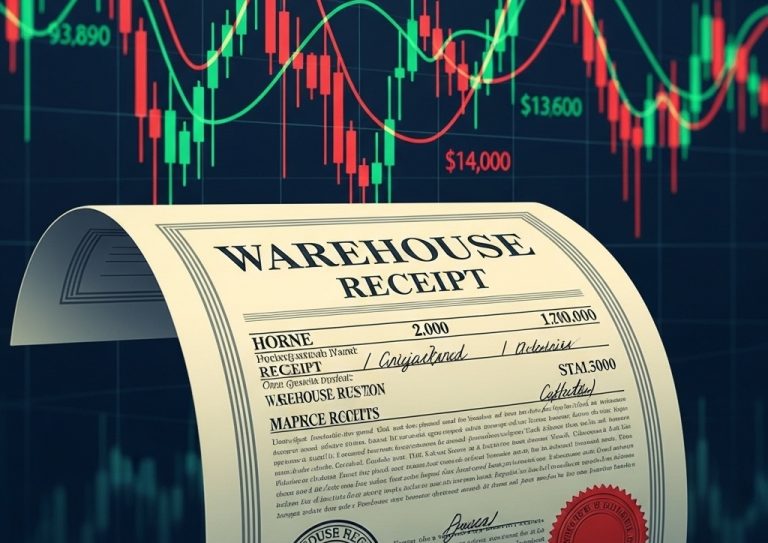
The Investments and Securities Act (ISA) of 2025 in Nigeria marks a significant legislative development for the country’s capital market, particularly in formalizing and regulating the warehouse receipt business.
Tekedia Capital is looking for innovators who are establishing robust and efficient warehouse receipt businesses in these states in Nigeria: Kano, Abia, and Osun. Our goal is to support in strengthening the agricultural value chain, facilitate access to finance for producers, bolster commodity trading, and anchor derivative markets in Nigeria. The following are our immediate focus domains:
- Kano State: Facilities capable of handling various grain classes (e.g., maize, rice, sorghum).
- Abia State: Facilities dedicated to the storage and handling of palm oil.
- Osun State: Facilities specializing in cocoa bean storage and management.
The establishment of these warehouse receipt businesses will play a crucial role in:
Register for Tekedia Mini-MBA edition 20 (June 8 – Sept 5, 2026).
Register for Tekedia AI in Business Masterclass.
Join Tekedia Capital Syndicate and co-invest in great global startups.
Register for Tekedia AI Lab.
- Providing secure and standardized storage for agricultural commodities.
- Enabling the issuance of credible warehouse receipts, which can be used as collateral for loans.
- Facilitating efficient trading of commodities on organized platforms.
- Reducing post-harvest losses through proper storage practices.
- Enhancing price discovery and market transparency.
If interested, send us an email with any public material that shows you’re working in this area; do not include any proprietary info.
Warehouse Receipt Business in Nigeria
The Investments and Securities Act (ISA) of 2025 in Nigeria marks a significant legislative development for the country’s capital market, particularly in formalizing and regulating the warehouse receipt business. Here’s a breakdown of what a warehouse receipt business entails in Nigeria, based on the ISA 2025:
What is a Warehouse Receipt?
At its core, a warehouse receipt is a document of title issued by a licensed warehouse operator, serving as evidence that a specified quantity and quality of a commodity (e.g., agricultural produce, minerals) has been deposited in a particular warehouse. It essentially represents ownership of the stored goods without requiring physical possession.

Key Aspects of the Warehouse Receipt Business under ISA 2025:
The ISA 2025 introduces specific provisions that are crucial for the development and regulation of the warehouse receipt system in Nigeria. These include:
- Legal Framework for Commodities Exchanges and Warehouse Receipts: The Act contains a new part specifically providing for the regulation of commodities exchanges and warehouse receipts. This is a critical step towards developing a comprehensive commodities ecosystem in Nigeria.
- Regulation and Licensing of Warehouses: The Act empowers the Nigerian Independent Warehouse Regulatory Agency (NIWRA), likely established or further strengthened by the ISA 2025, to:
- License warehouses that store commodities to be traded on a registered exchange.
- Regulate the operations of licensed warehouse keepers.
- Classify licensed warehouses into categories.
- Certify warehouse operators, including inspectors, samplers, graders, and weighers.
- Issuance and Regulation of Warehouse Receipts:
- The Act details requirements for the issuance of warehouse receipts, including electronic warehouse receipts (EWRs).
- It outlines provisions for the management of lost, missing, or altered warehouse receipts and the issuance of duplicate receipts.
- It clarifies the obligations of a warehouse operator to deliver goods to the holder of a valid receipt and outlines liabilities for wrongful delivery or failure to cancel receipts after delivery.
- Negotiation and Transfer of Warehouse Receipts: The ISA 2025 establishes clear requirements for the negotiation and transfer of warehouse receipts, defining the rights derived from such negotiation and the rights and obligations of transferors and transferees. This facilitates the use of warehouse receipts as a financial instrument.
- Establishment of a Central Registry: The Act provides for the establishment of a Central Registry for Warehouse Receipts. This central registry is crucial for maintaining transparency, preventing fraud, and ensuring the integrity of the warehouse receipt system.
- Pledging Against Warehouse Receipts: The framework allows for the pledging of commodities held with a warehouse, against which a warehouse receipt (especially an EWR) has been issued, in favor of a financial institution. This enables farmers and traders to access finance using their stored commodities as collateral, thereby unlocking credit.
- Standardization and Grading: While not explicitly detailed in every snippet, a robust warehouse receipt system inherently promotes uniform grading and standardization of commodities. This is essential for transparent trading on a commodity exchange.
- Investor Protection and Market Integrity: The ISA 2025, in its broader scope, emphasizes investor protection and market integrity. This extends to the warehouse receipt business, aiming to build trust and confidence among participants in the commodity exchange market.
Benefits of the Warehouse Receipt Business in Nigeria (as envisioned by ISA 2025):
- Unlocking Dormant Assets: The Securities and Exchange Commission (SEC) sees the formalization of commodities and warehouse receipts as a way to unlock an estimated $500 billion in dormant agricultural and mineral assets, transforming them into tradable securities.
- Economic Diversification: It is a key strategy to diversify Nigeria’s economy away from its heavy reliance on oil and gas.
- Enhanced Liquidity and Financing: Warehouse receipts facilitate access to finance for farmers and traders, allowing them to use their stored produce as collateral. This injects liquidity into the agricultural sector.
- Price Discovery and Transparency: Trading of warehouse receipts on a commodity exchange contributes to transparent price discovery mechanisms.
- Reduced Post-Harvest Losses: By promoting formal warehousing and storage, the system helps reduce significant post-harvest losses often experienced by farmers.
- Increased Investment: A well-regulated warehouse receipt system is expected to attract both domestic and international investment into Nigeria’s commodities sector.
In essence, the Investments and Securities Act of 2025 provides a comprehensive legal and regulatory backbone for a thriving warehouse receipt business in Nigeria, aiming to transform the nation’s vast agricultural and mineral wealth into active and tradable assets within a robust commodity exchange market.

More on Warehouse Receipt
In the context of a commodity exchange, a warehouse receipt is a crucial document that transforms a physical commodity into a fungible, tradable asset. It’s essentially a certificate of ownership for a specific quantity and quality of a commodity that has been deposited in an exchange-approved and licensed warehouse.
Here’s a breakdown of its key aspects and how it functions in commodity exchange:
1. Proof of Ownership and Existence:
- When a producer, trader, or anyone with a commodity (e.g., grain, metal, coffee, crude oil) deposits it into a certified warehouse, the warehouse operator issues a warehouse receipt.
- This receipt serves as legal proof that the specified goods are in the warehouse and that the depositor (or the holder of the receipt) owns them. It guarantees the existence and availability of the commodity.
2. Standardized Quality and Quantity:
- For a commodity to be traded on an exchange, it must meet specific quality and quantity standards. The warehouse receipt certifies that the stored commodity meets these standards, often after inspection and grading by independent certifiers.
- This standardization is vital because it allows buyers and sellers to trade without physically inspecting each batch of the commodity. They can trust that a warehouse receipt for “Grade A corn” truly represents “Grade A corn.”
3. Fungibility and Tradability:
- The most important function of a warehouse receipt in a commodity exchange is to make the physical commodity fungible and tradable. Instead of exchanging physical goods, market participants can simply exchange the warehouse receipts.
- This allows for efficient and rapid transactions on the exchange. A buyer of a futures contract, for example, might receive a warehouse receipt at contract expiry instead of taking physical delivery of the commodity itself.
4. Collateral for Financing (Warehouse Financing):
- Warehouse receipts are widely accepted as collateral by financial institutions. This is a significant benefit for producers and traders.
- Instead of selling their commodities immediately after harvest (when prices might be low), they can store them in a warehouse, get a receipt, and use that receipt to secure loans. This provides them with immediate liquidity to meet operational costs or invest further, while allowing them to wait for more favorable market prices.
5. Facilitating Futures and Spot Markets:
- Futures Markets: Warehouse receipts are a critical component of the delivery mechanism for futures contracts. When a futures contract matures and leads to physical delivery, the seller delivers a warehouse receipt to the buyer, representing the underlying commodity. This avoids the logistical complexities and costs of physically moving commodities for every contract settlement.
- Spot (Cash) Markets: In spot markets, where commodities are traded for immediate delivery, warehouse receipts also simplify transactions. Buyers can purchase a warehouse receipt and then choose to take physical delivery of the commodity from the warehouse whenever they need it.
6. Central Registry and Transparency:
- Modern commodity exchanges often have a central registry for warehouse receipts, especially for electronic warehouse receipts (EWRs). This registry tracks ownership, transfers, and the status of all receipts.
- This central system enhances transparency, reduces the risk of fraud, and provides a clear audit trail for all transactions.
In essence, a warehouse receipt acts as the financial equivalent of the physical commodity, allowing for its efficient and secure trade on a commodity exchange, and facilitating financing against stored inventory. It transforms static inventory into dynamic capital.
*AI assisted on this article
---
Connect via my
LinkedIn |
Facebook |
X |
TikTok |
Instagram |
YouTube
Quite intresting, we have said this a long time ago and had expected that by now it will have been in full operation, For us in NIGERIA COMMODITY EXCHANGE we have done several presentation on this, we hope it will come to fruition and enhance the commodity Ecosystem in Nigeria and the world at large.