

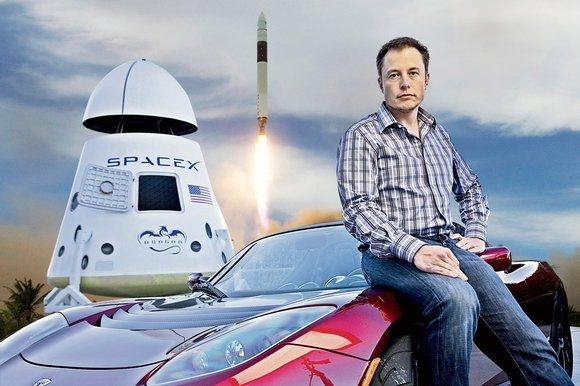
Elon Musk’s Tesla and SpaceX have appointed five directors to oversee separate committees negotiating a potential merger between the two companies, advancing discussions that could bring his electric vehicle, artificial intelligence, robotics and aerospace businesses under one corporate structure.
The appointments comprise three Tesla directors, Robyn Denholm, Kathleen Wilson-Thompson and Jack Hartung, and two SpaceX directors, Roelof Botha and Randy Glein, according to a Financial Times report on Tuesday, citing people familiar with the discussions.
The committees have engaged financial advisers to develop valuation models and establish negotiating positions for a potential all-stock transaction. Morgan Stanley and Goldman Sachs are advising SpaceX, while Tesla has appointed Evercore, the report said.
Register for the next Tekedia Mini-MBA.
Register for Tekedia AI in Business Masterclass.
Join Tekedia Capital Syndicate and co-invest in great global startups.
The development indicates that discussions have moved beyond the broad strategic proposition previously outlined by Musk towards the financial and governance questions involved in combining two of his most valuable businesses.
Musk said during SpaceX’s third-quarter earnings call last month that merging the companies to bring his ambitions in artificial intelligence, robotics, electric vehicles and aerospace under one corporate structure would be “a good idea”. He also confirmed that independent director committees had been established to examine the possibility.
A transaction would mark a significant restructuring of Musk’s business empire, combining Tesla’s automotive and energy operations with SpaceX’s rocket manufacturing, satellite communications and growing artificial intelligence ambitions.

However, the negotiations face substantial challenges involving corporate valuations, shareholder interests, regulatory approvals and the different financial and operational structures of the two businesses.
Bankers Examine Valuations, Overlapping Businesses
The appointment of investment banks underscores the complexity of determining how much each company would contribute to a combined organisation.
The advisers are examining potential overlaps between the businesses and developing financial models that could form the basis of an exchange ratio in an all-stock merger, according to the Financial Times.

That process is required because Tesla and SpaceX operate in different industries, with distinct revenue models, capital requirements and regulatory obligations.
Tesla generates revenue primarily through electric vehicle sales, energy storage and related services. SpaceX operates in aerospace and satellite communications, with businesses including commercial rocket launches and its Starlink broadband network. Its expanding AI ambitions add another variable to its valuation.
An all-stock transaction would require shareholders in both companies to exchange their existing holdings for equity in the combined business. Determining the relative value of each company would therefore be key to negotiations, particularly given their different growth prospects and exposure to financial and regulatory risks.
The committees will also need to address potential conflicts of interest arising from Musk’s leadership positions and significant influence over both companies. Independent directors are expected to play an important role in evaluating the proposed terms and protecting the interests of shareholders who do not control either business.
the move has created a major question for Tesla investors: would combining the company with SpaceX create additional value or expose its automotive and energy operations to the capital requirements and risks of a much broader corporate structure?
SpaceX shareholders face a different consideration: whether accepting Tesla equity would offer sufficient value for their interests in a private aerospace and satellite communications business.
Beyond valuation, the proposed combination faces regulatory obstacles because both companies have significant international operations and different relationships with governments.
SpaceX holds major US government and defence contracts, making its ownership, corporate governance, and operational independence sensitive national security issues. A merger involving Tesla could attract scrutiny over how those contracts would be managed within a larger conglomerate.
Tesla’s substantial exposure to China presents another complication. The company operates a major manufacturing facility in Shanghai and relies on the Chinese market and supply chain for an important part of its global business.
Combining Tesla with SpaceX could therefore create questions about the movement of technology, sensitive information and corporate resources across businesses with different regulatory obligations.
The US government would also need to consider whether the transaction affects SpaceX’s responsibilities as a defence contractor and the security arrangements governing its operations.
These issues could make regulatory approval more complicated than the financial negotiations themselves. Even if the two committees agree on valuations and transaction terms, the companies would still need to satisfy applicable regulatory requirements.
Bloomberg reported earlier this month that an agreement could be announced as early as December, citing progress in negotiations. However, an announcement would not necessarily mean that the transaction had secured the approvals required for completion.
Questions Surround Musk’s Expanding Business Empire
The proposed merger fits into Musk’s broader effort to bring together technologies that he believes will shape the next phase of industrial development.
Tesla is investing heavily in autonomous driving, robotics and artificial intelligence, while SpaceX is expanding its satellite network and aerospace capabilities. Musk has also been developing links between his AI ambitions and the computing infrastructure required to train powerful models.
A combined corporate structure could create opportunities to share capital, technology, engineering expertise and infrastructure across these businesses.
For example, advances in artificial intelligence could support Tesla’s autonomous driving and humanoid robotics programmes, while SpaceX’s satellite network could provide connectivity for a broader range of applications. The companies could also potentially coordinate investment in computing infrastructure and advanced manufacturing.
However, the strategic logic does not automatically establish that a merger would improve shareholder returns. Combining businesses with different financing requirements and regulatory obligations could result in management complexity and make it harder for investors to assess the performance of individual divisions.
There is also the question of capital allocation. Tesla’s automotive business operates in a highly competitive market requiring continued investment in manufacturing, batteries, and vehicle technology. SpaceX, meanwhile, has substantial capital requirements associated with rocket development, satellite deployment and its longer-term aerospace ambitions.
A merger would place these investment priorities within a shared corporate structure, potentially changing how capital is distributed between the businesses.
The appointment of independent directors and financial advisers is believed to be an indication that both companies are attempting to establish a formal process for examining those trade-offs.