

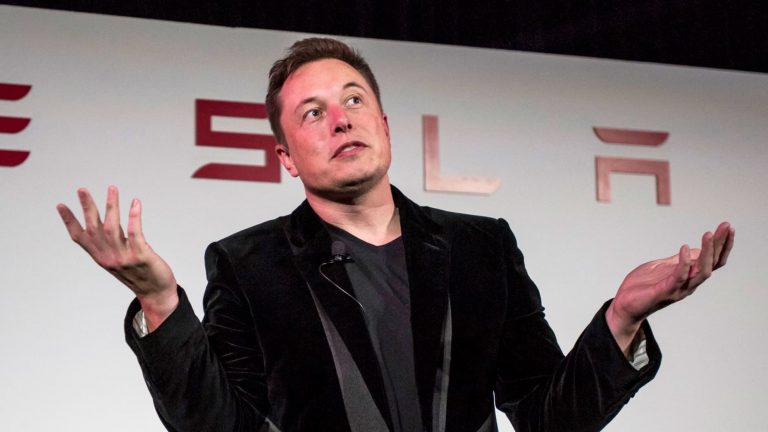
Tesla has approved a new interim stock award worth roughly $29 billion for CEO Elon Musk, reigniting debate over executive compensation and raising legal questions over whether this latest package will face the same fate as its predecessor—a $56 billion plan that was annulled by a Delaware judge earlier this year.
The new grant, comprising 96 million Tesla shares, was announced in a filing to the U.S. Securities and Exchange Commission. Tesla’s board said the stock is intended as a “good faith” incentive to retain Musk’s focus on the company, especially at a time when the EV maker is pivoting toward AI, robotics, and autonomous driving as future revenue engines.
In the letter to the shareholders, the committee members noted: “While we recognize that Elon’s business ventures, interests and other potential demands on his time and attention are extensive and wide-ranging…we are confident that this award will incentivize Elon to remain at Tesla.”
Register for Tekedia Mini-MBA edition 20 (June 8 – Sept 5, 2026).
Register for Tekedia AI in Business Masterclass.
Join Tekedia Capital Syndicate and co-invest in great global startups.
Register for Tekedia AI Lab.
The board members also noted: “Losing Elon would not only mean the loss of his talents but also the loss of a leader who is a magnet for hiring and retaining talent at Tesla.”
The board added that a longer-term CEO compensation package will be presented at Tesla’s annual shareholder meeting on November 6.
But this move comes with significant legal baggage.

A Legal Backdrop That Shook Tesla’s Governance
In 2018, Tesla’s board awarded Musk a landmark $56 billion performance-based compensation package—one of the largest in corporate history—designed to be earned only if Tesla achieved a series of ambitious operational and market cap milestones. Musk eventually met most of the conditions, triggering large tranches of stock awards.
However, the deal became the subject of a lawsuit filed by Tesla shareholder Richard Tornetta, who argued that the board had failed in its fiduciary duty and essentially rubber-stamped a deal shaped by Musk himself. The lawsuit claimed the process lacked independence, transparency, and fairness, noting that Musk had deep ties to several board members who approved the package.
In 2024, Delaware Chancery Court Judge Kathaleen McCormick ruled in favor of the shareholder, voiding the $56 billion package and calling it “an unfathomable sum” not justified by standard corporate governance norms. The court found that Musk had wielded significant influence over the process and that Tesla’s board had failed to properly justify the award as necessary to retain or motivate him.

Musk’s Response: Exit Delaware
Following the court’s decision, Musk reacted swiftly. In April, he relocated Tesla’s corporate headquarters from Delaware—where it was incorporated—to Texas, a state seen as more favorable to executive-friendly corporate governance. The move was widely interpreted as both a rejection of Delaware’s legal oversight and a signal that Musk would not tolerate court intervention in Tesla’s internal affairs.
The new $29 billion award announced this week is not a formal replacement of the voided $56 billion package, but the parallels are already drawing scrutiny. While it remains to be seen whether any shareholder will challenge this new stock grant in court, legal analysts warn it could face similar challenges, especially if shareholders feel the award sidesteps the spirit of the court’s earlier ruling.
A Gamble to Keep Musk Close
In a letter posted on Tesla’s X account, the company’s board chair, Robyn Denholm, and director Kathleen Wilson-Thompson said: “We know that one of your top concerns is keeping Elon’s energies focused on Tesla.” They described the stock award as a “critical first step” to ensure the CEO remains committed amid his growing commitments to ventures like SpaceX, Neuralink, the AI startup xAI, and most of all, politics.
The committee said it “deliberated carefully” to grant this interim stock award to Musk “against the backdrop of the ever-intensifying AI talent war and Tesla’s position at a critical inflection point.”
Tesla’s share price rose 2% following the news, reflecting investor optimism that Musk’s renewed focus might restore momentum to a company that has lost over 20% of its market value this year.
However, some analysts believe that with Tesla increasingly betting on AI, robotics, and getting involved in politics, governance tensions surrounding Musk’s pay may linger.