

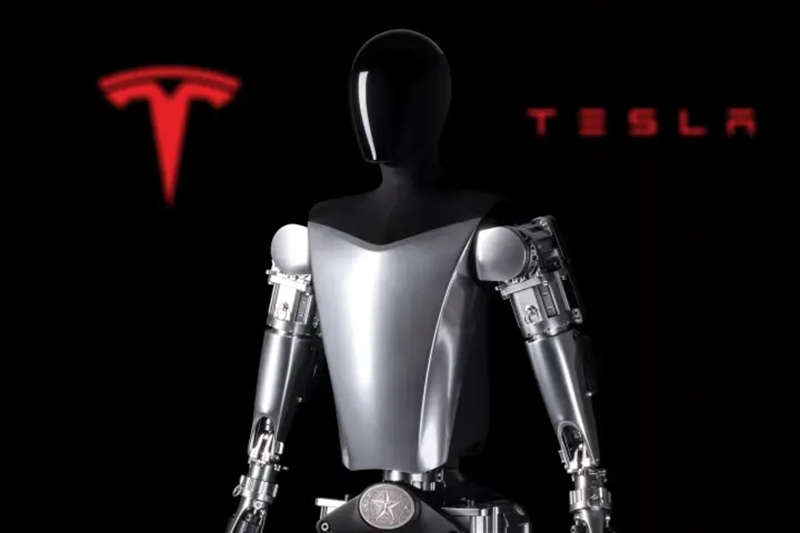
Tesla has confirmed that production of its Optimus humanoid robot has begun at its Fremont factory, marking an important milestone in the electric vehicle manufacturer’s ambition to expand beyond automobiles and establish itself as a major player in robotics and artificial intelligence.
The announcement comes alongside a reduction in the company’s capital-spending forecast following its latest earnings report, highlighting the financial challenges associated with funding its long-term technological ambitions.
The start of Optimus production represents progress toward Tesla’s goal of developing humanoid robots capable of performing repetitive, physically demanding and potentially hazardous tasks.
Register for the next Tekedia Mini-MBA.
Register for Tekedia AI in Business Masterclass.
Join Tekedia Capital Syndicate and co-invest in great global startups.
Designed to operate in environments built for humans, Optimus could eventually support manufacturing, logistics, warehousing and other industrial activities. Tesla has presented the technology as a potential solution to labor shortages and a foundation for new commercial opportunities beyond its traditional automotive business.
The Fremont factory is particularly significant because it has long served as one of Tesla’s principal vehicle manufacturing facilities. Beginning robot production there provides the company with an opportunity to apply its existing manufacturing expertise, engineering resources and industrial infrastructure to humanoid robotics.
Beginning production does not automatically mean that large-scale manufacturing has been achieved or that the robots are ready for widespread commercial deployment.

Tesla’s longer-term objective is to increase production volumes while improving the robots’ dexterity, mobility, reliability and ability to complete complex tasks autonomously. Achieving those targets will require continued investment in hardware, software, artificial intelligence training and production systems.
The company must demonstrate that Optimus can perform useful work safely and economically compared with existing industrial automation and human labor. The timing of the production announcement is important because Tesla continues to navigate a competitive electric vehicle market while investing heavily in emerging technologies.
Automotive sales remain central to its financial performance, but Chief Executive Elon Musk has increasingly emphasized autonomous driving, robotaxis and humanoid robots as potential engines of future growth. These businesses could eventually diversify Tesla’s revenue and reduce its dependence on vehicle deliveries.

Humanoid robotics remains a technically demanding industry, with manufacturers facing challenges involving battery life, mechanical durability, perception, balance and reliable decision-making in unpredictable environments.
Even if Tesla successfully develops a capable robot, commercial adoption will depend on manufacturing costs, maintenance requirements, customer demand and the economic benefits delivered to businesses.
Against this backdrop, Tesla’s decision to reduce its capital-spending forecast after earnings introduces an important question about how the company intends to allocate its financial resources.
Capital expenditure supports factories, equipment, computing infrastructure and other long-term investments. A lower forecast could reflect tighter spending discipline, adjustments to project schedules or changes in anticipated investment requirements.
Without further details, it should not automatically be interpreted as evidence that Tesla is abandoning its robotics ambitions. Investors will examine whether the revised spending outlook affects the pace of Optimus development or other strategic projects.
Tesla must balance the need to finance ambitious innovations against pressure to maintain profitability, preserve cash flow and deliver measurable returns on investment.
The beginning of Optimus production signals that Tesla is moving humanoid robotics closer to industrial reality. Yet production milestones alone will not determine the project’s success.
The decisive tests will be whether the company can scale manufacturing, deploy robots in meaningful commercial applications and establish a sustainable business model.
Tesla’s latest developments therefore present a combination of technological progress and financial caution. Its ability to manage both priorities could determine whether Optimus becomes a significant contributor to future growth or remains a costly experiment in an increasingly competitive robotics industry.