

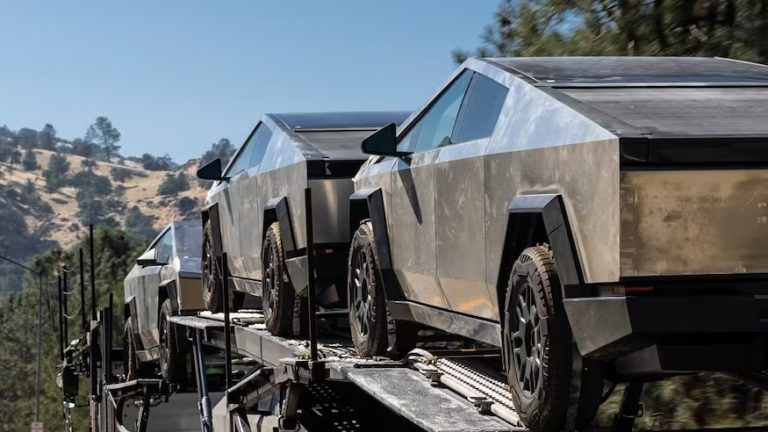
Tesla is now touting a compact electric pickup truck, a strategic pivot that comes as its long-hyped Cybertruck continues to underperform.
The potential shift was revealed by Lars Moravy, Tesla’s vice president of engineering, who said the company has been actively considering a smaller sibling to the Cybertruck, particularly with an eye on international markets where demand and regulatory requirements sharply differ from the U.S.
“We always talked about making a smaller pickup,” Moravy said during an event in California over the weekend, hosted by Tesla investors and owners. He explained that such a model could align with future plans for Tesla’s robotaxi platform, saying, “That kind of service is useful not just for people, but also for goods… We’ve definitely been churning in the design studio about what we might do to serve that need.”
Register for Tekedia Mini-MBA edition 20 (June 8 – Sept 5, 2026).
Register for Tekedia AI in Business Masterclass.
Join Tekedia Capital Syndicate and co-invest in great global startups.
Register for Tekedia AI Lab.
This marks a possible recalibration of Tesla’s electric truck ambitions, especially as Cybertruck sales remain far below expectations. Tesla had predicted annual sales of over 250,000 units, but the reality has been sobering: just under 39,000 Cybertrucks were sold throughout 2024, and approximately 11,000 have been sold so far in 2025, according to industry estimates. That figure is a fraction of what Tesla envisioned when it launched the “apocalypse-proof” truck with high hopes and cinematic flair in 2023.
At the heart of the problem is the Cybertruck’s design and pricing. Initially promised at a starting price of $39,900, the actual entry-level model now starts at over $60,000, with premium trims inching close to the $100,000 mark. The vehicle’s hefty 6,000kg frame and sharp-edged design have further restricted its global expansion. The truck is not road-legal in many markets, including Europe and China—Tesla’s two largest markets outside the U.S.
Authorities in the UK seized one of the first Cybertrucks imported into the country earlier this year, while another in the European Union had to be modified to pass local safety regulations due to its angular, rigid body. While Tesla has managed to expand Cybertruck sales to Canada, Mexico, Saudi Arabia, the UAE, and Qatar, these remain relatively limited markets compared to the regulatory-tight European and Chinese auto sectors.

Meanwhile, Tesla’s overall vehicle sales have continued to slump. In the second quarter of 2025, the automaker recorded a 13.5% year-over-year drop, marking the second consecutive quarter of declining sales. The disappointing numbers come at a pivotal time for the company, which has been battling mounting criticism over its controversial self-driving technology claims.
California’s Legal Challenge
Tesla’s ability to continue selling vehicles in its home state of California is also under scrutiny. The California Department of Motor Vehicles has concluded a weeklong court hearing on a lawsuit it filed in 2022, accusing Tesla of misleading consumers about the capabilities of its “Full Self-Driving” (FSD) and “Autopilot” systems. The DMV is seeking to suspend Tesla’s sales license in the state for at least 30 days and to impose monetary penalties.
The suit argues that Tesla falsely marketed its driver-assist features as nearly autonomous, citing statements from the company’s website that implied the cars could operate from departure to destination without human input. DMV Commander Melanie Rosario, testifying as a witness, told the court she found Tesla’s branding around “Autopilot” and “FSD” to be confusing and contradictory, saying it gave the impression the vehicles could drive themselves despite disclaimers in the fine print.

Tesla’s legal team pushed back, arguing that the company had always stated drivers must remain attentive and that the systems are not fully autonomous. However, multiple witnesses, including experts in vehicle automation and advertising law, suggested that the language used by Tesla could indeed mislead consumers. The case remains pending, but legal analysts have flagged it as one with potentially far-reaching implications for Tesla’s operations nationwide.
Adding to Tesla’s woes is the public backlash tied to CEO Elon Musk’s recent appointment as the face of the White House’s controversial DOGE Office, which spurred protests outside Tesla dealerships across the country earlier this year. The political spotlight, coupled with growing consumer dissatisfaction, has only intensified the company’s mounting image problems.
Further complicating the situation are several lawsuits. In Florida, a wrongful death case alleges that a Tesla operating on Autopilot struck a parked SUV, killing a 22-year-old woman, while another class-action lawsuit and federal probe are examining reports of “phantom braking,” where Teslas suddenly slam on the brakes without cause, creating safety hazards at high speeds.
Amid the turbulence, a compact pickup could serve as a fresh offering to re-engage markets increasingly wary of Tesla’s bolder bets. Although Moravy noted that it’s still at the design phase, it is not clear whether a smaller truck will succeed where the Cybertruck stumbled.