

The U.S. House of Representatives has passed a sweeping tax and spending bill backed by President Donald Trump, dealing a significant blow to clean energy efforts and electric vehicle (EV) incentives championed under the Biden administration.
The legislation, passed early Thursday, repeals a broad range of tax credits tied to Joe Biden’s Inflation Reduction Act (IRA), including the $7,500 EV purchase incentive that has been central to accelerating the transition to electric cars in the U.S.
The legislation, now headed to the Senate, has immediately roiled markets. While Tesla stock showed a modest recovery on Thursday morning, other EV makers, including Rivian and Lucid Motors, recorded slight declines. Major auto manufacturers like Ford and General Motors also opened lower on the stock market, reflecting investor unease over the implications of the House bill.
Register for Tekedia Mini-MBA edition 20 (June 8 – Sept 5, 2026).
Register for Tekedia AI in Business Masterclass.
Join Tekedia Capital Syndicate and co-invest in great global startups.
Register for Tekedia AI Lab.
Major Rollback of IRA Policies
At the heart of the Trump-backed bill is the undoing of core components of the Inflation Reduction Act. The IRA passed in 2022, aimed to reduce inflation while accelerating the U.S. shift to clean energy by offering tax credits for EV purchases, clean commercial vehicles, battery manufacturing, and energy storage investments.
Under the current IRA framework, consumers could claim a tax credit of up to $7,500 for purchasing new EVs, with eligibility tied to North American manufacturing and battery sourcing requirements. The bill also allowed for credits to be applied at the point of sale starting in 2024, providing immediate financial relief to buyers.
But the new House-passed bill would terminate the consumer EV tax credit at the end of 2025—seven years earlier than originally planned under the IRA, which set the expiration for 2032.

Notably, a “special rule” tucked into the bill allows automakers that haven’t sold 200,000 EVs by the end of 2025 to continue offering credits through 2026. While that excludes legacy players like Tesla, GM, and Ford, it could buy time for younger companies like Rivian and Lucid, which are still scaling production.
The bill also eliminates the commercial clean vehicle credit, a provision that offered up to $40,000 for heavy-duty electric vehicles used in commercial fleets. Tesla’s Semi truck and other zero-emission freight solutions would no longer benefit under this revised policy, except for contracts finalized before May 12, 2025.
New EV Fees and a Gas Tax Workaround
Alongside the removal of incentives, the bill introduces new federal fees on electric vehicles, in what Republicans say is an attempt to compensate for revenue lost from gas taxes. Under the bill, the Federal Highway Administration would collect a $250 annual registration fee for EVs and a $100 annual fee for hybrids.

While critics argue the move disincentivizes EV ownership, proponents say it brings parity to road maintenance funding. Currently, 37 U.S. states already impose similar EV registration fees ranging between $50 and $250 per year.
Tesla at a Crossroads
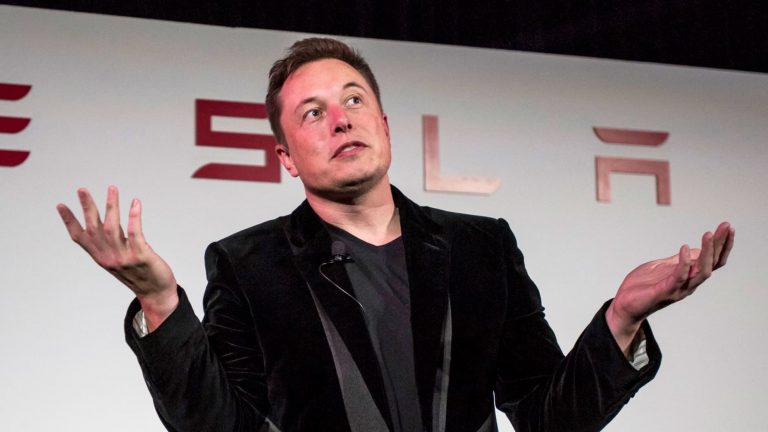
Tesla, the biggest EV maker in the U.S., finds itself at a turning point. Shares edged higher on Thursday to $335.83 after falling 2.7% the previous day. The company’s recent rebound in May—up 18.6% for the month—has been fueled by investor optimism after a strong Q1 call, but the momentum now faces a fresh hurdle with the threat of losing federal incentives that helped fuel its growth.
Tesla has already exhausted its initial federal EV credits under pre-IRA laws, and while the IRA restructured the rules, many of its models regained eligibility. Currently, 10 Tesla models qualify for the $7,500 credit, according to the IRS.
But if the Trump bill becomes law, Tesla would lose access to this support at the end of 2025. This is particularly pressing as Tesla attempts to reinvigorate demand, which has been softening in recent quarters amid a more competitive EV market and slowing consumer uptake.
However, CEO Elon Musk remains optimistic. Speaking at the Bloomberg Qatar Economic Forum in Abu Dhabi on Tuesday, Musk downplayed the political implications.
“We’ve lost some sales perhaps on the left, but we’ve gained them on the right,” he said, referring to partisan consumer behavior. “The sales numbers at this point are strong and we see no problem with demand.”
Tesla is expected to unveil its first robotaxi as early as next month in Austin, Texas, a pivot that could further blur the lines between carmaker and tech company.
Clean Energy Storage and Manufacturing Also Hit
Beyond EVs, the House-passed bill takes aim at broader clean energy investments. It phases out the IRA’s advanced manufacturing production credit, which has been crucial in attracting new battery and solar component factories to U.S. soil.
Under the IRA, the manufacturing credit offered significant subsidies for the domestic production of battery cells, wind and solar components, and the refining of critical minerals. It was structured to phase down gradually through 2032.
But Trump’s bill proposes to eliminate the credit for wind components by 2027 and remove it entirely for other components by the end of 2031. It also restricts access to companies associated with “prohibited foreign entities”—a veiled reference to Chinese firms, which dominate global battery and rare earth markets.
Tesla has used the manufacturing credits to expand its energy storage division, including products like the Powerwall and utility-scale Megapacks.
Moreover, the bill phases out the clean electricity investment credit, a tax break for utilities and developers who invest in clean energy storage and generation. Under the new plan, the credit value would decline 20% annually starting in 2029 before ending completely by 2031.
The residential clean energy credit, which supported home solar and storage installations, is also slated to expire in 2025 under the House bill.
Investors Assess The Fallout
Analysts say the bill introduces significant policy uncertainty into a market that was just beginning to stabilize. Shares of Tesla, while showing some resilience, are still down 17% year-to-date and remain 31% off their peak of $488.54 recorded in December.
With the S&P 500 and Nasdaq in what’s known as a “power trend,” Tesla’s stock has gained technical momentum—particularly after breaking above its 200-day moving average on May 9. Yet, investors are cautioned to remain wary of volatility. Tesla’s 21-day average true range, a measure of daily price swings, stands at 5.46%, signaling elevated trading risk.
Tesla currently holds a Composite Rating of 79 out of 99, a 92 Relative Strength Rating, and an EPS Rating of 59.
The bill’s fate now rests with the Senate, where the political calculus is far less straightforward. Even if it clears the upper chamber, it’s likely to face legal challenges from environmental groups and backlash from the auto industry, which has invested heavily in building domestic EV supply chains on the back of IRA incentives.