

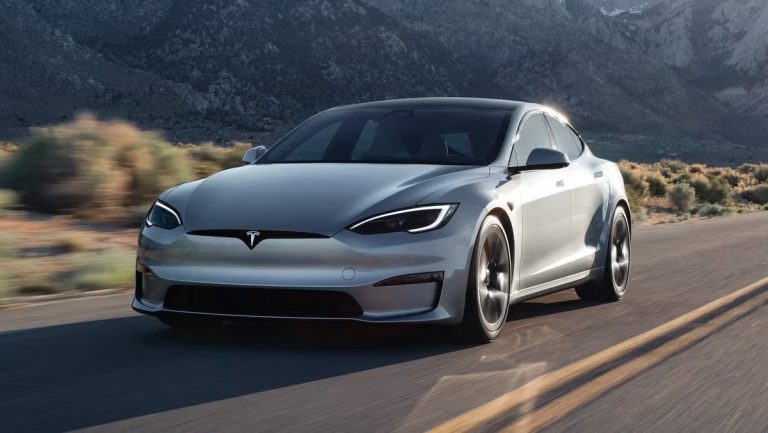
Tesla has once again missed a self-imposed deadline to begin production of its long-promised affordable electric vehicle, intensifying questions about its roadmap just as the company reels from a second consecutive year-over-year drop in vehicle deliveries.
Despite repeatedly assuring investors that the new low-cost model would begin production in the first half of 2025, the June deadline passed this week without an update. Notably, the company made no mention of the project in its latest earnings call, which instead focused on reaffirming earlier claims.
Tesla’s silence comes at a critical moment. After years of dominating the electric vehicle market, the automaker is now grappling with a stark slowdown in global EV adoption, fierce competition from cheaper Chinese models, and the erosion of brand loyalty in key regions. The push for a budget-friendly EV—reportedly a stripped-down version of the Model Y, codenamed “E41″—is not just a delayed product; it’s part of a larger rescue effort to reverse Tesla’s downward spiral trajectory and reclaim its edge in a shifting market.
Register for Tekedia Mini-MBA edition 20 (June 8 – Sept 5, 2026).
Register for Tekedia AI in Business Masterclass.
Join Tekedia Capital Syndicate and co-invest in great global startups.
Register for Tekedia AI Lab.
A Race Against Time and Rivals
The idea of a $25,000 Tesla first surfaced in 2020, when CEO Elon Musk pledged to deliver a fully autonomous, mass-market EV within three years. The announcement, made during the company’s Battery Day presentation, raised expectations that Tesla would finally become a true mass-market automaker. But despite multiple reassurances, the timeline has been pushed back, contradicted, and rebranded—at times dismissed altogether.
By 2022, Musk admitted Tesla had deprioritized the project. In early 2024, he suggested production could begin by the end of 2024 or early 2025. But just months later, in October, he publicly argued that building a $25,000 “non-robotaxi” model would be “pointless” and “completely at odds” with Tesla’s mission—a statement that stunned investors who had been counting on affordable models to expand the company’s reach.
Still, in January 2025, following shareholder disappointment over the lackluster robotaxi debut, Tesla recommitted to the timeline, promising that cheaper models remained on track. April brought another twist. Reuters reported that Tesla had delayed the rollout of the E41 and had shifted focus to retooling factories in preparation for eventual mass production. The company declined to confirm or deny the report but reiterated that the launch was still planned within the first half of the year.

As of July, nothing has materialized.
China’s Subsidized Onslaught and Tesla’s Sliding Market Share
China, once Tesla’s crown jewel market, has become an increasingly hostile battlefield. Local manufacturers such as BYD have flooded the market with ultra-cheap, government-subsidized EVs, selling for nearly half the price of Tesla’s cheapest models. BYD, now the world’s top EV seller by volume, has capitalized on its scale, local supply chain advantages, and generous state support to displace Tesla in China’s mid-range market.
Tesla, lacking the same pricing flexibility and facing rising production costs, has been forced to slash prices aggressively, hurting its margins and brand perception. The new affordable model—reportedly intended to be cheaper to build than even the Model 3—is a key part of Musk’s counteroffensive. With lower-cost vehicles, Tesla hopes to retake ground lost in China and protect its presence as EV sales growth softens globally.

Reclaiming Europe’s Disenchanted Buyers
Europe presents another challenge—one not only rooted in price but in perception. Once Tesla’s second-largest market, the region has grown increasingly cold toward the brand, with critics citing Musk’s political antics, including his vocal support for far-right figures and controversial statements on social media platform X. These moves have alienated large swaths of European consumers, particularly in progressive cities that once embraced Tesla’s clean energy ethos.
Sales in Germany, France, and the UK have slowed, and Musk’s reputation is now seen as a liability in many European circles. The affordable EV project is expected to help offset this damage by returning focus to practical, sustainable transportation—at a price point that is palatable to middle-class Europeans who might otherwise turn to competitors like Renault, Peugeot, or Volkswagen.
A Shifting Narrative With No Clear Endpoint
Internally, Tesla appears to be facing mounting pressure to shift its narrative. The luxury halo once surrounding the brand is fading fast as competitors catch up on software, performance, and battery efficiency. Musk’s insistence on prioritizing robotaxis and full autonomy has also worn thin, especially after repeated delays and underwhelming demonstrations.
The affordable EV was meant to be the antidote to that fatigue—a way to broaden Tesla’s reach and tap into the global demand for economically viable electric vehicles. With the delay, however, the company risks not only missing out on that opportunity but also losing further credibility with investors and consumers alike.
Vehicle engineering VP Lars Moravy insisted in April that Tesla had already retooled factories and was resolving “last-minute issues” related to the new models. But his comments now read like the final thread in a timeline marked by shifting promises and missed milestones.
Tesla’s rivals aren’t waiting. BYD has already entered European markets and is expanding rapidly in Latin America and Southeast Asia. Volkswagen, Hyundai, and General Motors are all moving forward with affordable EV offerings, many with established supply chains and government backing.
Unless Tesla delivers on its promise soon, the company risks being left behind—not just by newcomers, but by the very market it helped pioneer.