

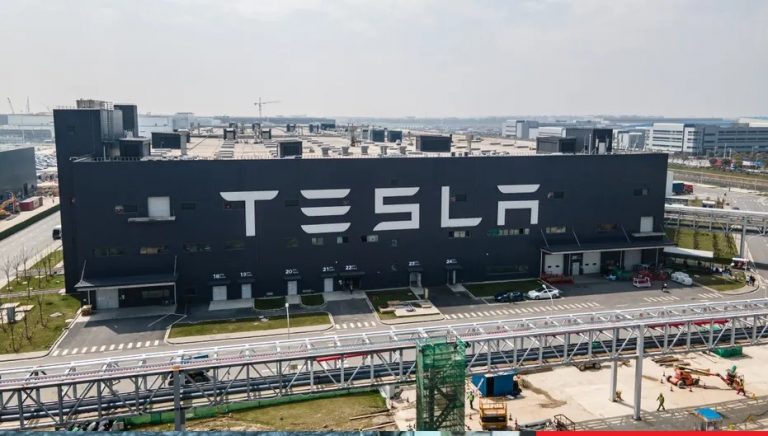
Tesla is seeking to purchase roughly $2.9 billion worth of solar manufacturing equipment from Chinese suppliers, according to people familiar with the matter who spoke to Reuters.
The plan is emerging as more than a supply chain story, with many seeing it as a window into a widening gap between industrial ambition and policy direction in the United States, even as energy demand surges. The proposed purchases, linked to chief executive Elon Musk’s target of building 100 gigawatts of solar manufacturing capacity by 2028, underscore both the scale of Tesla’s energy strategy and the structural reliance on China’s deeply entrenched solar ecosystem.
The move comes amid the high rate of energy consumption buoyed by the evolution of AI data centers, which has stirred concern among governments across the West.
Register for Tekedia Mini-MBA edition 20 (June 8 – Sept 5, 2026).
Register for Tekedia AI in Business Masterclass.
Join Tekedia Capital Syndicate and co-invest in great global startups.
Register for Tekedia AI Lab.
Suppliers under consideration include Suzhou Maxwell Technologies, alongside Shenzhen S.C New Energy Technology and Laplace Renewable Energy Technology. These firms dominate key segments of solar production equipment, particularly high-efficiency screen-printing lines used in advanced cell manufacturing.
Musk has repeatedly acknowledged that China is well ahead in solar energy, both in manufacturing scale and cost efficiency. He has consistently framed solar as the most viable path to abundant, scalable electricity, arguing that it can underpin future demand from electric vehicles, industrial production, and increasingly, artificial intelligence infrastructure.
“Solar power could meet all of the electricity needs of the United States,” Musk said earlier this year, reinforcing a long-held view that solar, combined with storage, represents the most direct route to energy sufficiency.

That view is rooted in economics as much as technology. China’s dominance across the solar value chain, from polysilicon processing to module assembly and manufacturing equipment, has driven costs down globally. Replicating that ecosystem elsewhere remains difficult, particularly in the short term.
Tesla’s move effectively acknowledges that reality. Even as it seeks to build “solar manufacturing from raw materials on American soil,” it is turning to Chinese machinery to make that possible. Some of the equipment will require export approvals from Chinese regulators, adding a geopolitical layer to what would otherwise be a commercial transaction.
The United States has imposed tariffs on imported solar panels and cells, but continues to depend on foreign equipment to build domestic capacity. The exemption of solar manufacturing machinery from tariffs, first under the previous administration and maintained under Donald Trump, was a tacit recognition that domestic alternatives are limited.

Yet the policy backdrop has shifted in ways that complicate Tesla’s ambitions.
The current administration has rolled back several green energy initiatives introduced under its predecessor, prioritizing fossil fuel expansion and cutting support for renewable projects. Trump has repeatedly criticized solar and wind as costly and unreliable, creating a policy environment that is less aligned with large-scale renewable buildouts.
This has created a divergence, especially given Musk’s support for Trump’s policies.
The tension is sharpened by the scale of demand growth. Data from the Energy Information Administration show U.S. power consumption reached a record in 2025 and is expected to continue rising through 2027. A significant portion of that increase is being driven by AI data centers, which require continuous, high-density power.
Tesla’s approach appears to anticipate that demand. By building its own solar manufacturing base, the company is attempting to secure a dedicated energy pipeline for its operations and adjacent ventures, including SpaceX. This aligns with a broader trend among large technology firms seeking greater control over energy supply rather than relying solely on public utilities.
However, the execution challenge is substantial. Establishing 100 gigawatts of solar manufacturing capacity in a few years would require not only equipment procurement but also workforce training, permitting approvals, supply chain coordination, and sustained capital investment.
There is also the question of economics. Musk has argued that tariffs and trade barriers make solar deployment “artificially high” in cost. If policy continues to favor fossil fuels while maintaining protective measures on imports, the cost structure for domestic solar production could remain elevated, complicating Tesla’s plans.
For Chinese equipment makers, the potential deal offers a significant opportunity. Domestic overcapacity has weighed on demand, and large overseas orders could provide a stabilizing outlet. The immediate market reaction, sharp gains in the shares of the companies linked to the deal, underpins that expectation.