


There was a time when wearing a camera on your face immediately attracted attention. Early smart glasses looked futuristic, felt experimental, and often made people around the wearer wonder whether they were being recorded.
That image is changing quickly. Camera-equipped glasses are now lighter, more stylish, and much closer to ordinary eyewear. Instead of being designed only for technology enthusiasts, they are being used for travel videos, hands-free photography, social content, translation, AI assistance, work documentation, and everyday moments that would otherwise require pulling out a phone.
The change is not simply about putting a better camera into a smaller frame. Smart-glasses companies are taking several different approaches to what eyewear should actually do. Some focus heavily on cameras, others combine cameras with displays and augmented reality, while another group is beginning to question whether smart glasses need a camera at all.
From Google Glass to Glasses People Actually Want to Wear
Google Glass was one of the products that introduced the wider public to the idea of a computer worn like eyewear. The Explorer Edition reached early users in 2013 and could capture photos and video while displaying information in front of the wearer. At the time, the concept felt remarkably futuristic.
But Glass also exposed two problems that would follow the category for years. The first was design: early devices looked obviously technological. The second was social acceptance. People could not always tell when or why someone wearing the device might be recording them. Privacy concerns became part of the public conversation, and some establishments eventually restricted Google Glass.
Those early struggles did not end the idea of camera eyewear. Instead, they gave later companies a useful lesson: if smart glasses were going to become everyday products, they needed to feel less like computers strapped to the face.
The Camera Disappeared Into Normal-Looking Frames
A modern eyeglass camera guide looks very different from one written a decade ago. Many current models place the camera discreetly near the corner of the frame, integrate microphones and speakers into the arms, and rely heavily on smartphone apps for managing photos and videos.
That design change matters. People are far more likely to wear smart glasses throughout the day if they resemble the sunglasses or prescription frames they would normally choose. Weight has also fallen considerably, while better processors and batteries have made it possible to add AI features without making the glasses look like a prototype.
The result is a category that increasingly sits somewhere between eyewear, headphones, cameras, and AI assistants.
Today’s Market Is Splitting Into Three Main Directions
Not every manufacturer has the same idea about what smart glasses should become. In 2026, three approaches are becoming especially visible:
- Camera-first lifestyle glasses that emphasize quick photos, video, audio, and AI.
- AI and AR glasses that combine cameras with information displayed in the wearer’s view.
- Camera-free AI glasses that remove visual recording and concentrate on audio, voice assistance, translation, and productivity.
These categories overlap, but the distinction is useful because each one solves a different problem. Someone wanting hands-free travel videos has very different needs from someone who wants discreet meeting assistance in a workplace.
Meta Helped Make Camera Glasses Feel Mainstream
Ray-Ban Meta is perhaps the clearest example of camera glasses moving toward everyday fashion. Instead of looking like an experimental headset, the technology sits inside familiar Ray-Ban-style frames.
The second-generation Ray-Ban Meta glasses introduced 3K video capture along with open-ear audio, Meta AI, translation, and up to eight hours of typical use. Meta says millions of people now use its AI glasses, showing how far the category has moved beyond early enthusiast devices.
The appeal is straightforward. A traveler can capture a quick first-person clip without holding a phone. A parent can take a photo while keeping both hands free. A creator can record short POV footage without setting up a separate action camera.
Why Eyeglass Cameras Are Useful Beyond Social Media
It is easy to think of camera glasses mainly as tools for recording social media clips, but hands-free cameras have practical uses well beyond content creation.
A technician can document what they see while keeping both hands available. A traveler can capture a walking tour without staring through a phone screen. Someone cooking can record a first-person demonstration. Businesses can use wearable cameras for training, inspection records, or remote assistance.
The advantage in all of these situations is perspective. Traditional cameras record what the person holding the camera points toward. Eyeglass cameras naturally capture something much closer to what the wearer is actually looking at.
That can make the footage feel more personal, but it is also exactly what creates the category’s biggest challenge.
Privacy Has Never Fully Disappeared From the Conversation
Modern designs may look better than Google Glass, but the privacy question remains.
A phone being held up in front of someone is an obvious camera. Glasses can be far less noticeable. That creates uncertainty about whether recording is happening, especially in workplaces, private businesses, schools, healthcare settings, or other environments where sensitive information may be present.
Meta tries to address this issue with a visible capture LED on its glasses. The company says the light flashes while photos or videos are being captured, and on newer models blocking the LED automatically disables normal camera capture.
Still, technology cannot solve every privacy issue. Recording and data-protection rules vary by country and situation, and organizations may impose their own policies even where wearing smart glasses is legal. Workplace monitoring, for example, can involve additional privacy obligations when employee information is being collected.
The safest assumption is simple: wearing a camera does not remove the normal responsibility to consider consent, privacy, and the rules of the place you are visiting.
Some Smart-Glasses Brands Are Removing the Camera Entirely
Interestingly, the next stage of the eyeglass-camera revolution may also include glasses that deliberately do not have cameras.
Dymesty AI Sunglasses Moore Vision takes this approach. Instead of visual recording, the titanium sunglasses focus on audio-based functions such as AI recording and summaries, calls, voice interaction, and other hands-free features. Dymesty lists the model at 35 grams with a camera-free and display-free design and more than 48 hours of typical battery life.
Removing the camera creates an obvious limitation: users cannot take first-person photos or videos. But it also removes the part of smart eyewear most likely to create concern in privacy-sensitive environments.
That makes camera-free eyewear less of a competitor to recording glasses and more of a separate branch of the same wearable-technology idea.
Camera-Free Glasses Solve a Different Everyday Problem
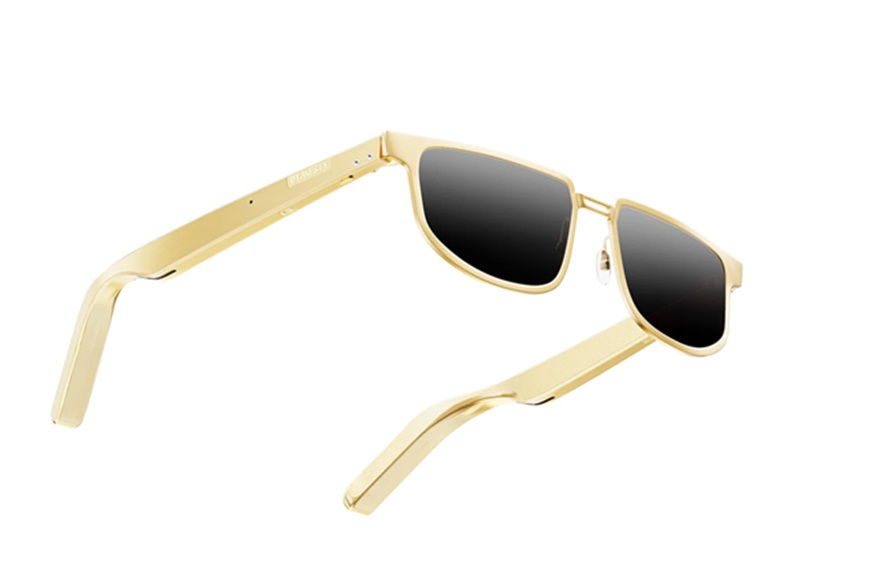
Someone visiting a conference may want translation, calls, voice assistance, or audio throughout the day without needing a camera. A professional may want meeting transcription but work somewhere that discourages wearable recording cameras. Other users simply may not want another lens continuously pointing outward from their face.
Products from dymesty.com illustrate how companies can build AI eyewear around microphones, speakers, and voice services rather than visual capture. Dymesty specifically positions its camera-free approach around situations where privacy and professional use matter.
There is also a battery advantage to simpler designs. Cameras and displays consume energy. Removing them gives manufacturers more room to prioritize lightweight frames and longer operating times, although actual endurance still depends on how the glasses are used.
The Future May Be About Choosing the Right Kind of Smart Glasses
For years, the smart-glasses industry seemed to be moving toward one destination: putting as much technology as possible into a pair of frames.
The market now looks more varied.
Creators may want high-resolution cameras. Travelers may want quick photos, translation, and navigation. Enterprise users may need remote visual assistance. Executives may prefer audio-only AI functions. Other users may want information displayed directly in their vision.
That means cameras will remain important, but they will not define the entire category.
Eyeglass Cameras Have Finally Found Their Everyday Role
The most significant change in camera glasses is not that today’s cameras have more pixels than early models. It is that the technology is beginning to fit naturally into activities people already perform.
Modern glasses can capture a short video without interrupting a walk, record a first-person demonstration without occupying both hands, or answer a question without requiring someone to reach for a phone.
At the same time, the industry has learned that convenience has to be balanced with social acceptance. Visible recording indicators, clearer privacy practices, and camera-free alternatives are all responses to concerns that existed as far back as the Google Glass era.
The eyeglass camera has therefore evolved from an unusual gadget into one branch of a much broader smart-eyewear market. Some people will want the camera because it captures life from a uniquely personal viewpoint. Others will deliberately choose glasses without one.