

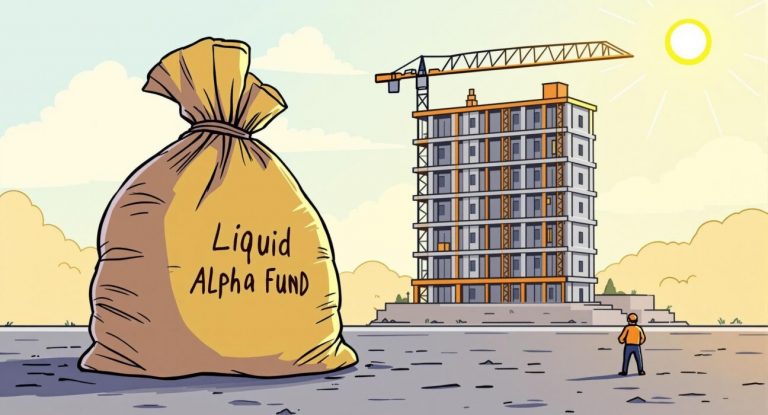
Joe McCann, founder of Asymmetric Financial, has closed the Liquid Alpha Fund after it reportedly suffered a 78% loss in 2025, amid criticism and investor frustration. The fund, designed for high-volatility crypto markets, struggled as market conditions matured and volatility dropped, with the Crypto Volatility Index (CVI) falling nearly 30% over the past year.
McCann has shifted focus from liquid trading to long-term blockchain investments, offering investors the option to exit without lock-up restrictions or roll capital into a new illiquid strategy. Asymmetric’s venture arm will continue backing early-stage blockchain projects.
Simultaneously, McCann is spearheading Accelerate, a new Solana-focused treasury company, as its CEO. Accelerate aims to raise $1.51 billion through a SPAC merger with Gores X Holding, including $800 million via PIPE, $358.8 million from the SPAC, $250 million in convertible bonds, and $103.2 million from SPAC warrants. If successful, Accelerate plans to acquire approximately 7.32 million SOL tokens, positioning it as the largest Solana treasury holder, surpassing firms like Upexi.
This move reflects growing institutional interest in Solana’s high-performance blockchain but has sparked concerns about centralization and regulatory scrutiny. The fundraising timeline targets late 2025, though details remain speculative without official confirmation. The 78% loss in 2025 highlights the challenges of managing high-volatility crypto funds in a stabilizing market. This closure signals a shift from speculative, short-term trading to longer-term blockchain investments, reflecting a broader trend among crypto funds adapting to maturing markets.
Register for Tekedia Mini-MBA edition 20 (June 8 – Sept 5, 2026).
Register for Tekedia AI in Business Masterclass.
Join Tekedia Capital Syndicate and co-invest in great global startups.
Register for Tekedia AI Lab.
Offering investors an exit or a roll-over into an illiquid strategy mitigates immediate backlash but risks alienating those preferring liquidity. The pivot to venture-style investments in blockchain projects suggests confidence in early-stage innovation but carries higher risk and longer horizons. McCann’s decision to shut down the fund after significant losses could damage his credibility, though his transparency in offering exits may soften the blow. Success in the new venture arm will be critical to restoring investor confidence.
If Accelerate raises $1.51 billion and acquires 7.32 million SOL tokens, it could significantly influence Solana’s ecosystem. Such a large holding could stabilize SOL’s price by reducing circulating supply but risks centralization, potentially undermining Solana’s decentralized ethos. The SPAC merger and high-profile fundraising signal growing institutional interest in Solana’s scalable blockchain, potentially attracting more developers and projects.
However, it also invites regulatory scrutiny, especially given the SEC’s focus on crypto securities. Surpassing firms like Upexi as the largest Solana treasury holder positions Accelerate as a dominant player, which could drive partnerships but also spark concerns about market manipulation or governance influence within Solana’s ecosystem.

The decline in crypto market volatility (CVI down ~30%) suggests a maturing industry, pushing funds like Asymmetric toward fundamental-driven investments rather than speculative trading. Large treasury accumulations by entities like Accelerate could create tension between institutional power and the decentralized principles of blockchain, potentially alienating retail investors or developers.
Retail investors may view Accelerate’s massive SOL acquisition as centralizing control, reducing their influence in Solana’s governance or price dynamics. This could fuel distrust in institutional-driven projects. Institutional players, like those backing the $800 million PIPE, see Solana as a scalable, enterprise-ready blockchain. This divide could lead to a two-tiered ecosystem where institutional agendas dominate over retail-driven decentralization.
The failure of Asymmetric’s Liquid Alpha Fund underscores the risks of volatility-driven trading in a stabilizing market. Meanwhile, McCann’s shift to venture investments and Accelerate’s treasury strategy reflect a belief in blockchain’s long-term potential, creating a divide between traders seeking quick gains and investors betting on infrastructure. Accelerate’s potential to hold 7.32 million SOL tokens raises concerns about centralization within Solana’s ecosystem.

Critics argue this could give McCann’s firm outsized influence over network decisions, clashing with the decentralized ethos valued by many in the crypto community. The SPAC structure and large-scale fundraising invite regulatory attention, particularly from the SEC, which has intensified scrutiny of crypto assets. This creates a divide between innovators pushing for adoption and regulators enforcing compliance, potentially slowing Solana’s institutional growth.
McCann’s closure of the Liquid Alpha Fund and pursuit of a $1.51 billion Solana treasury via Accelerate reflect a strategic pivot toward long-term blockchain investment amid a maturing crypto market. While this could bolster Solana’s institutional adoption and ecosystem growth, it risks deepening divides between retail and institutional players, speculative traders and long-term investors, and centralized control versus decentralized ideals.