

If you have been keeping tabs on the Fintech space in Nigeria, you will notice that there is a massive influx of Fintech startups in the country’s tech ecosystem. Nigeria is currently home to over 200 fintechs, which has placed the country among Africa’s Fintech leaders with a lively crop of startups and a growing suite of digital offerings.
One would naturally think that since there is a significant influx of Fintech startups in the country, the percentage of Financial inclusion will be at an all-time high. Unfortunately, the reverse is the case, as a recent publication on Tekedia disclosed that “only 35% of the Nigerian population have access to Fintech” which is not even above the average number of the country’s population.
No wonder, despite the influx of Fintechs in the country, tech experts continue to state that the Fintech sector has only scratched the surface. A tech expert Mr. Brian Manuwike recently disclosed that the nation’s smartphone penetration is at 35 percent, which implies that financial technology companies can only serve about 35 percent of Nigeria’s population.
Register for Tekedia Mini-MBA edition 20 (June 8 – Sept 5, 2026).
Register for Tekedia AI in Business Masterclass.
Join Tekedia Capital Syndicate and co-invest in great global startups.
Register for Tekedia AI Lab.
Access to digital payment drives the adoption of digital financial services, however, once customers use the service for the first time and have a good experience, they will always resort to convenience, which is a common human trait. The problem with financial inclusion in Nigeria is not necessarily a lack of infrastructure, but a relatively low smartphone penetration in the country which is at 35 percent.
Nigeria’s mobile penetration rate has been described to be lower than that of developed markets, although it is estimated to rise to 130 million or about 60-65% of the total population by 2025. Although mobile Internet penetration is growing fast in the country, there are several barriers to access in Nigeria.
Affordability is one major barrier for a large percentage of people in the country. Another barrier is the high cost of internet data subscriptions. Despite the fact that there are some people using smartphones in rural areas, there is a significant rural-urban divide. Approximately 61% of Nigerians in rural areas are unconnected, compared to 40% in urban areas.

Looking at these constraints that have contributed to the low financial inclusion in the country, this is a more ideal reason why Fintech startups need to invest more in offline transaction infrastructure, where consumers can access financial products/services with cash and without necessarily needing a smartphone. This offline distribution will drastically drive the rate of financial inclusion in the country.
Using Safaricom’s M-Pesa As A Case Study
To further buttress my point on the need for Fintechs in Nigeria to include an offline transaction feature, I will use Safaricom’s M-Pesa as a case study.
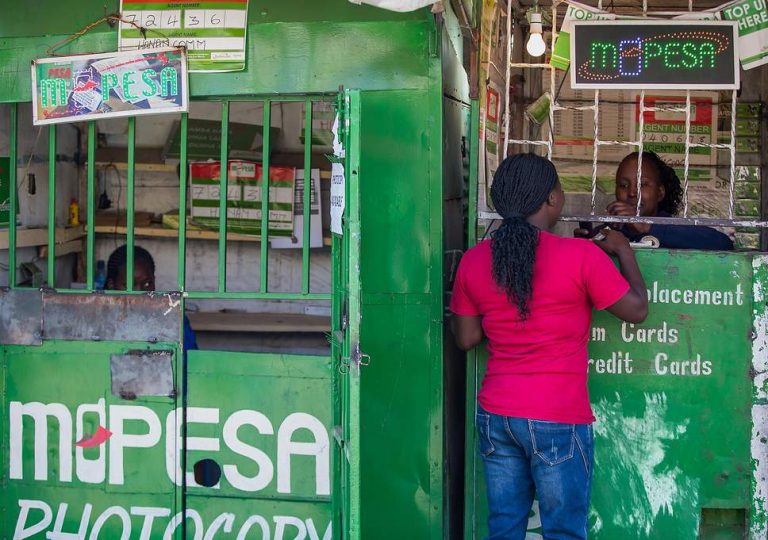
M-Pesa (M for mobile, Pesa is Swahili for money) is a mobile phone-based money transfer service payments and micro-financing service. M-Pesa allows its users to deposit, transfer money, access credit, and savings, and pay for goods and services all with a mobile phone.

An interesting feature of the new M-Pesa super app is the “offline mode” which allows customers to use it and complete transactions even without data bundles or when totally offline. In general, the app is also zero-rated and does not consume any additional data when customers use it, which is something very important most especially for Nigerian users.
M-Pesa allows users to deposit money into an account stored on their cell phones. Despite having an app where transactions can take place, to achieve large financial inclusion, M-Pesa rolled out a USSD shortcode service.
This feature made it accessible for people who do not have smartphones to use the service simply by just dialing a code on any mobile device. The fintech platform now has over 25 million customers in Kenya who rely on it for day to day purchases and payments. M-Pesa is also specifically designed to benefit customers who have no access to banks.
Conclusion
A large percentage of Nigerians are reported to be financially excluded. This means they do not use any financial products and services, both formal or informal.
However, in order to deepen financial inclusion in the country, Fintech startups needs to roll out more features, most especially the offline mode of transaction. This feature will ensure that those who do not own a smartphone and also those who have difficulty purchasing data will be financially included.
Financial inclusion is seen as a major yardstick for economic development and individual well-being, the increase in financial inclusion is aimed to create capital accumulation which positively impacts a nation’s economy.
It strengthens the availability of economic resources and builds the concept of savings among the poor. Therefore, the development of offline distribution will drastically drive financial inclusion.
This is an insightful post! The offline transaction feature is indeed crucial for enhancing financial inclusion in Nigeria, especially in rural areas with limited internet access. Safaricom’s M-Pesa model shows just how impactful such a feature can be. I hope Nigerian fintechs take notes and prioritize this in their development strategies to reach more underserved populations.
This is a crucial discussion! The importance of offline transaction features in fintech cannot be overstated, especially in a country like Nigeria where internet penetration can be inconsistent. Safaricom’s M-Pesa has set a remarkable precedent for the potential of such services. Implementing similar solutions here could significantly boost financial inclusion and empower underserved populations. I hope more fintech companies take cues from this success story!
This is a thought-provoking post! The case study of M-Pesa illustrates how essential offline transaction features are for financial inclusivity in Nigeria. It’s crucial for fintechs to bridge the gap for users without reliable internet access. I hope to see more innovative solutions that cater to the unbanked and underbanked populations in rural areas.
This is a timely and insightful post! The comparison with M-Pesa highlights the potential for fintechs in Nigeria to reach underserved populations. Developing offline transaction features could truly bridge the gap and provide financial inclusion to many who rely on cash. I’m excited to see how Nigerian fintechs will innovate in this space!
This post highlights a crucial aspect of fintech in Nigeria. The offline transaction feature is indeed vital for reaching unbanked populations and ensuring financial inclusion. Safaricom’s M-Pesa serves as a great example of how such systems can thrive and benefit users. I believe Nigerian fintechs should prioritize this to empower more citizens financially. Looking forward to seeing how this develops!
This post highlights a crucial aspect of fintech development in Nigeria. The case study of M-Pesa illustrates how offline transaction capabilities can significantly enhance financial inclusion, especially in rural areas. It’s imperative for Nigerian fintechs to prioritize this feature to cater to the underserved population who may have limited internet access. Embracing offline solutions could bridge the gap and empower more people to participate in the digital economy.
This is a crucial insight! Developing offline transaction features could significantly increase financial inclusion in Nigeria, especially for those in remote areas with limited internet connectivity. The success of M-Pesa in Kenya highlights the potential impact. I hope fintechs in Nigeria can take a page from this case study and innovate solutions that cater to all demographics. It’s time for a more accessible financial ecosystem!
This is a timely and insightful discussion! The need for fintechs in Nigeria to integrate offline transaction features is crucial, especially in regions with limited internet access. Safaricom’s M-Pesa model demonstrates how effective offline solutions can drive financial inclusion. It would be interesting to see how Nigerian fintechs adapt these strategies to suit local needs. Great job!
This is a timely discussion! The offline transaction feature is crucial for fintechs in Nigeria, especially in rural areas with poor internet connectivity. Safaricom’s M-Pesa model demonstrates how empowering users without relying solely on internet access can drive financial inclusion. I hope more Nigerian fintechs take this approach to enhance their services and reach underserved populations.
This is an insightful read! The emphasis on offline transaction features is crucial, especially in areas with limited internet access. Safaricom’s M-Pesa model shows how fintech can bridge gaps in financial inclusion. It would be interesting to see how Nigerian fintechs can adapt and innovate similarly to ensure seamless transactions for everyone, regardless of connectivity. Keep up the great work!
Great insights on the necessity for fintechs in Nigeria to incorporate offline transaction features! The comparison with M-Pesa highlights the potential for increased financial inclusion in areas with limited internet connectivity. It’s essential for Nigerian fintechs to prioritize accessibility to truly revolutionize the market. Looking forward to seeing how this evolution unfolds!
This is a timely discussion! Given the diverse socio-economic landscape in Nigeria, the need for offline transaction features in fintech solutions like M-Pesa is crucial. It could significantly enhance financial inclusion, especially in rural areas where internet connectivity is often a challenge. This approach could empower many who are currently excluded from the digital economy. Great insights!
This blog post highlights a crucial gap in Nigeria’s fintech landscape. The offline transaction feature, as demonstrated by M-Pesa, could significantly enhance financial inclusion for underserved populations. It’s essential for fintechs in Nigeria to prioritize this development, as it would empower many who lack steady internet access. Great insights!