

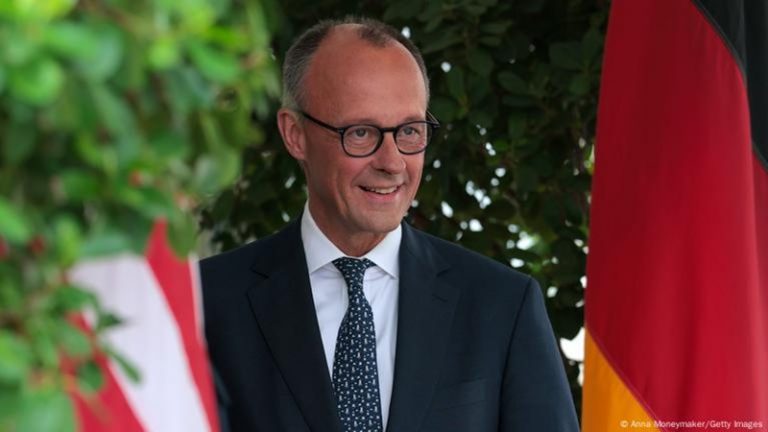
German Chancellor Friedrich Merz announced a partial arms embargo on Israel, halting exports of military equipment that could be used in the Gaza Strip, in response to Israel’s plans to expand its military operations in Gaza City.
This decision, made on August 8, 2025, marks a significant shift from Germany’s historically strong support for Israel, which former Chancellor Angela Merkel described as a “reason of state” due to Germany’s historical responsibility for the Holocaust.
The embargo specifically targets weapons that could be used in Gaza, while exempting armaments for air and sea defense, which Merz emphasized are central to Israel’s self-defense. The move has sparked significant division within Merz’s conservative Christian Democratic Union (CDU) and its Bavarian sister party, the Christian Social Union (CSU).
Register for Tekedia Mini-MBA edition 20 (June 8 – Sept 5, 2026).
Register for Tekedia AI in Business Masterclass.
Join Tekedia Capital Syndicate and co-invest in great global startups.
Register for Tekedia AI Lab.
Critics within the CDU, including its youth wing, have called the decision a betrayal of core party principles and Germany’s commitment to Israel’s security. CSU parliamentary group leader Alexander Hoffmann criticized the lack of consultation, while CDU lawmaker Carsten Müller condemned the embargo for disregarding security cooperation with Israel.
Conversely, some conservatives, like foreign policy expert Norbert Röttgen, supported the decision, citing concerns over Israel’s actions in Gaza. The center-left Social Democratic Party (SPD), Merz’s coalition partner, largely applauded the move, with Vice Chancellor Lars Klingbeil calling it “the right decision” amid the worsening humanitarian crisis in Gaza.
Merz defended the policy, stating that Germany’s solidarity with Israel remains unchanged but does not extend to supporting every Israeli government decision, particularly those risking high civilian casualties. He cited concerns over the humanitarian situation in Gaza, where UN agencies have warned of famine and mounting deaths from starvation.

Israeli Prime Minister Benjamin Netanyahu criticized the embargo, accusing Germany of “rewarding Hamas terrorism” and expressing hope that Merz would reconsider. The decision has also drawn international attention, with some European countries like France, the UK, and Canada recognizing Palestinian statehood, further isolating Israel diplomatically.
Public sentiment in Germany appears mixed, with a recent survey indicating 51% of Germans oppose arms exports to Israel, reflecting growing criticism of Israel’s actions in Gaza. However, the embargo’s practical impact may be limited, as Germany had already scaled back certain arms shipments to Israel in recent months.
Germany’s longstanding policy of unconditional support for Israel, rooted in historical responsibility for the Holocaust, is strained. While Merz emphasized that the embargo is limited to weapons for Gaza and spares air and sea defense systems, Israel’s Prime Minister Benjamin Netanyahu’s sharp criticism signals a diplomatic rift.
The embargo aligns Germany with a growing number of European countries, including France, the UK, and Canada, that have taken steps to distance themselves from Israel’s actions in Gaza, such as recognizing Palestinian statehood. This could embolden further European coordination on Middle East policy, potentially isolating Israel diplomatically.

However, it may also strain Germany’s relations with the U.S., which continues robust military support for Israel, creating tension within NATO and Western alliances. The embargo responds to the worsening humanitarian crisis in Gaza, where UN reports highlight famine risks and high civilian casualties.
By limiting arms that could be used in Gaza, Germany aims to reduce its complicity in potential violations of international humanitarian law. However, the practical impact may be limited, as Germany had already reduced certain arms exports, and Israel’s military capabilities are heavily supported by other allies.
The embargo may signal to Israel’s adversaries, such as Hamas or Iran-backed groups, a perceived weakening of Western support, potentially emboldening their actions. Conversely, it could pressure Israel to adjust its military strategy in Gaza to avoid further international backlash. The exemption of air and sea defense systems ensures Israel’s ability to counter threats like missile attacks, maintaining a balance in Germany’s approach.
German arms manufacturers, such as Rheinmetall, may face short-term losses from halted exports, though the embargo’s narrow scope limits broader economic impact. Israel may diversify its suppliers, potentially affecting Germany’s defense industry influence in the Middle East.
The embargo marks a nuanced shift in Germany’s Israel policy, balancing humanitarian concerns with strategic commitments. It risks internal party strife and strained ties with Israel but aligns with European trends and domestic sentiment. The long-term impact hinges on Israel’s response, coalition stability, and the trajectory of the Gaza conflict.