

The breathtaking rise of SpaceX following its record-breaking market debut is increasingly being driven by something that traditional valuation models struggle to measure: investor faith in Elon Musk.
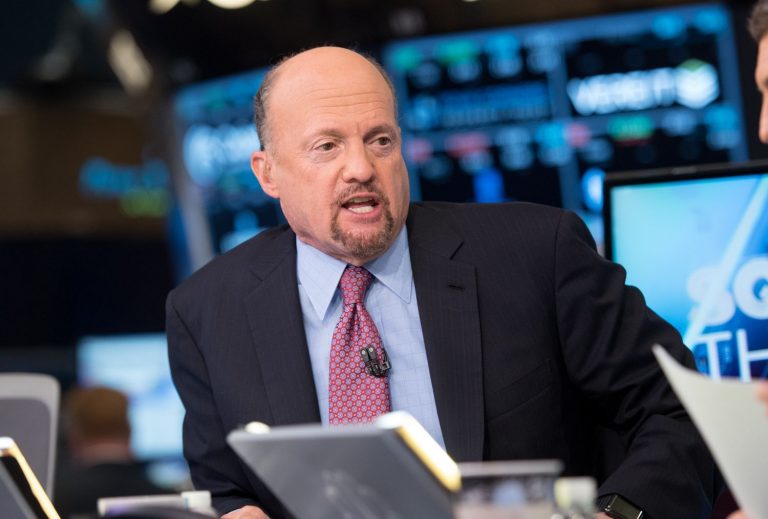
That was the central argument made by CNBC’s Jim Cramer on Tuesday as SpaceX shares continued their post-IPO rally, briefly pushing the company’s market capitalization above several of the world’s largest technology firms and bolstering its status as the dominant force in a new era of AI and space-related investing.
“The stock is called SpaceX, but it might as well be called Elon Musk,” Cramer said.
Register for the next Tekedia Mini-MBA.
Register for Tekedia AI in Business Masterclass.
Join Tekedia Capital Syndicate and co-invest in great global startups.
His remarks capture a growing consensus among both supporters and skeptics that SpaceX’s valuation is no longer being judged primarily on present-day earnings or cash flow. Instead, investors are placing enormous value on Musk’s ability to create entirely new industries and commercialize technologies that many initially dismissed as unrealistic.
At more than $2.5 trillion, SpaceX now commands a valuation that would have seemed implausible just a few years ago. The company remains far from being a conventional blue-chip business. While its Starlink satellite internet division generates substantial revenue and its launch operations dominate the commercial space market, the broader company continues to invest aggressively in projects that may not produce meaningful returns for years.
That has not stopped investors.

“There is no way this company, which could see losses for many years, deserves such a high valuation on its own. It only gets there because it’s run by Musk,” Cramer said.
Investors have shown increasing willingness to overlook near-term profitability if they believe a company controls technologies capable of reshaping major industries. In SpaceX’s case, those opportunities span satellite communications, reusable rockets, defense technologies, artificial intelligence infrastructure, autonomous systems, and potentially orbital computing.
While SpaceX built its reputation as a space company, investors are increasingly treating it as an artificial intelligence infrastructure play. The company’s acquisition of AI coding startup Cursor for $60 billion adds another layer to a rapidly expanding AI strategy that already includes xAI, Grok, large-scale data centers, and plans for orbital computing networks.

Musk has repeatedly argued that future AI growth will be constrained by electricity and computing capacity rather than algorithms alone. SpaceX’s vision of deploying AI infrastructure in orbit aims to address those constraints through solar-powered computing systems operating beyond Earth’s crowded energy grid.
That narrative has become attractive as global spending on AI infrastructure accelerates. Technology companies, including Oracle, Microsoft, Meta Platforms, and Amazon, are collectively spending hundreds of billions of dollars to build data centers capable of supporting increasingly powerful AI systems.
SpaceX is taking a position not merely as a participant in that trend but as a company attempting to redefine how AI infrastructure itself is built.
A Major Signal For AI IPOs
The success of SpaceX’s debut is being closely watched across Silicon Valley because it could shape investor appetite for the next wave of mega-cap technology listings. The market is preparing for public offerings from AI leaders, including OpenAI and Anthropic, two companies that have already reached valuations approaching $1 trillion despite posting significant losses.
Investors have long debated whether public markets would support those valuations once detailed financial information became available. SpaceX’s explosive debut is seen as an indication that investors may be willing to continue prioritizing growth potential and technological leadership over near-term profitability.
That significantly matters due to the similarities between SpaceX and the leading AI companies. Like OpenAI and Anthropic, SpaceX is spending heavily today in pursuit of markets that could be dramatically larger a decade from now. A strong aftermarket performance for SpaceX may therefore strengthen confidence that public investors remain willing to finance ambitious, capital-intensive technology companies at unprecedented valuations.
Conversely, had SpaceX struggled after listing, it could have raised concerns about whether markets were beginning to push back against the lofty valuations assigned to AI firms.
The “Musk premium”
Perhaps the most important factor underpinning SpaceX’s valuation is what some analysts describe as the “Musk premium.” The phenomenon reflects investors’ willingness to assign additional value to ventures associated with Musk because of his history of building transformative businesses.
Supporters point to his role in establishing leadership positions in electric vehicles, commercial spaceflight, satellite communications, and artificial intelligence. Many investors appear to believe that backing Musk provides exposure not only to SpaceX’s current operations but also to future businesses that have yet to be fully developed.
Cramer compared that dynamic to how previous generations viewed Berkshire Hathaway under Warren Buffett.
“When you buy SpaceX here, you’re really buying Elon Musk’s brain,” he said. “I think the cult of Musk is for real.”
However, the enthusiasm surrounding SpaceX does not eliminate significant risks. The company’s valuation assumes extraordinary future growth across multiple industries, many of which remain highly uncertain. Its orbital AI computing ambitions have yet to be proven commercially. Competition in AI is intensifying. Regulatory scrutiny remains a constant challenge. And a large portion of SpaceX’s value is closely tied to confidence in Musk himself.
That concentration creates both opportunity and risk.
As London Business School finance professor James Dow recently noted, much of SpaceX’s valuation is inseparable from Musk’s personal involvement and vision.
Still, the market’s message so far has been clear. Investors are not buying SpaceX primarily because of what it earns today. They are buying what they believe Musk can build tomorrow. Currently, that belief is proving powerful enough to support one of the most valuable companies in financial history and is providing a potentially bullish signal for the wave of AI IPOs waiting in the wings.