

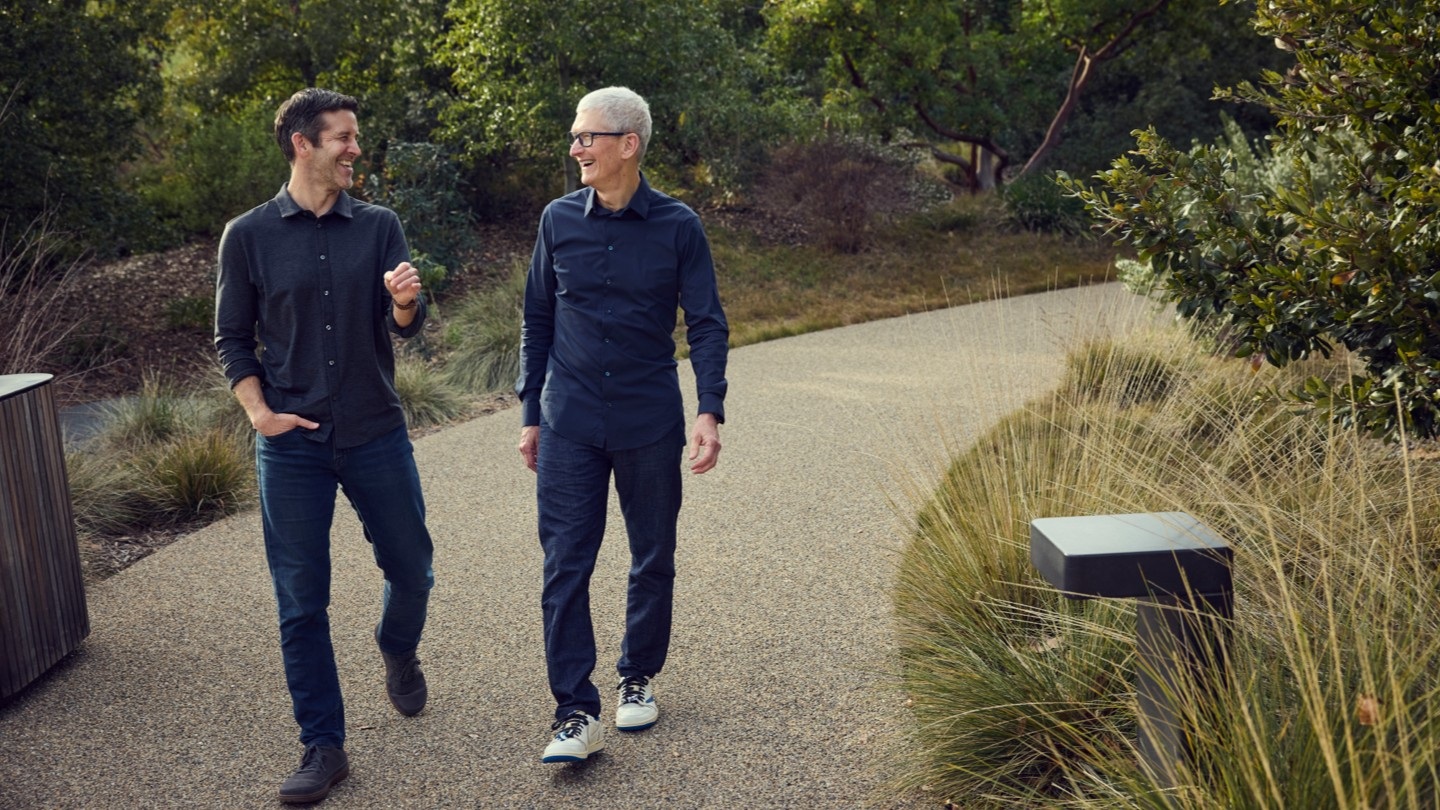
Tim Cook is stepping down as Apple’s CEO effective September 1, 2026, after nearly 15 years in the role. He will transition to executive chairman of the board, remaining involved in key areas like global policy engagement. John Ternus, Apple’s current senior vice president of Hardware Engineering and a 25-year veteran who joined in 2001 will become the new CEO.
The board approved the move unanimously as part of a long-planned succession process. Cook will stay on as CEO through the summer to ensure a smooth handover. This is not a sudden exit—Apple had been preparing for it, with Ternus long viewed as the heir apparent.
Cook joined Apple in 1998, became CEO in 2011 succeeding Steve Jobs, and oversaw explosive growth: market cap from ~$350 billion to over $4 trillion, revenue nearly quadrupling to ~$416 billion (FY 2025), the launch of categories like Apple Watch, AirPods, and Vision Pro, a services business now exceeding $100 billion annually, the shift to Apple-designed silicon, major sustainability gains, and a privacy-first stance.
Market and investor reaction has been muted and largely positive. Apple’s stock showed only a minor dip; under 1% in pre-market or after-hours trading following the April 20 announcement, reflecting confidence in the plan rather than alarm. Investors credit Cook with delivering massive returns and see the internal succession as low-risk continuity. Cook himself is widely praised for turning Apple into a services-and-ecosystem powerhouse while maintaining operational excellence.
Register for the next Tekedia Mini-MBA.
Register for Tekedia AI in Business Masterclass.
Join Tekedia Capital Syndicate and co-invest in great global startups.
No major sell-off occurred because the transition feels prepared and stable. Strong continuity with a subtle shift toward product and hardware focus. Ternus is a low-profile but highly respected engineer; mechanical engineering degree from University of Pennsylvania; prior work on VR headsets. He has led hardware engineering for iPhone, iPad, Mac including the Apple silicon revival and recent MacBook Neo, AirPods with health features like hearing aid capabilities and more.
He played key roles in the iPhone 17 lineup, durability innovations, recycled materials, and carbon footprint reductions. Unlike Cook; supply-chain and operations maestro, Ternus brings deep technical and product expertise—positioning Apple to execute faster on hardware-centric innovations. Cook’s ongoing role as executive chairman provides oversight, relationships, and stability.
Strategic emphasis on AI, hardware innovation, and ecosystem strength. The move signals Apple’s intent to double down on hardware as the foundation for its AI push (Apple Intelligence). Ternus’s background aligns with integrating on-device AI, advanced chips, wearables, AR/VR and new form factors like thinner and durable iPhones or foldables. Analysts note this could accelerate product roadmaps in AI-powered devices while addressing competition from Samsung, Meta, Google, and others.
Challenges include regulatory scrutiny like antitrust, app store issues, U.S.-China tensions, and sustaining growth amid a maturing iPhone base. Privacy, health features, sustainability, and emerging markets remain core strengths. Cultural and leadership style continuity, with lower public profile. Apple’s values like innovation, privacy, accessibility, inclusion are deeply embedded.

Ternus is described as affable, collaborative, and values-driven, mentored by Cook. He is not a flashy celebrity CEO like Jobs or even Cook, but his engineering credibility could boost internal morale and Wall Street trust on product execution. Risks are low given the deliberate planning—no drama, no outsider hire. Overall, this is one of the smoothest big-tech successions in years.
It caps Cook’s era on a high note while positioning Apple for its next chapter without disruption. Seamless handover. Focus on executing the fall 2026 product cycle likely under Ternus’s direct influence and advancing AI features. Cook’s presence ensures no gaps in policy or partnerships. Leverage Ternus’s hardware expertise for AI hardware breakthroughs; on-device processing to differentiate from cloud-heavy rivals, expanded health and wearables, AR glasses, and ecosystem lock-in.
Continue services growth, silicon leadership, and sustainability. Apple remains uniquely positioned with 2.5+ billion active devices and a massive installed base. Potential challenges and how to address them: Nail AI storytelling and execution to avoid timidity critiques; balance innovation speed with Apple’s quality standards; navigate geopolitics and regulation through Cook’s ongoing involvement. Ternus has a long runway (he’s ~51) and a strong bench of executives.

The stock’s resilience suggests buy and hold conviction. Apple’s fundamentals like cash flow, ecosystem moat are intact; watch for AI/hardware catalysts in upcoming earnings and events. This reinforces Apple’s reputation for disciplined, forward-thinking leadership. At 50 years old, the company is evolving from the Jobs/Cook visionary/executor duo into a new engineering-led phase—poised for continued dominance if it executes on AI and next-gen devices.
The implications are overwhelmingly positive: stability, strategic alignment with the AI/hardware future, and a proven internal leader. Apple’s way forward looks like more of the same exceptional execution—only with fresh technical emphasis under Ternus, backed by Cook’s experience.