

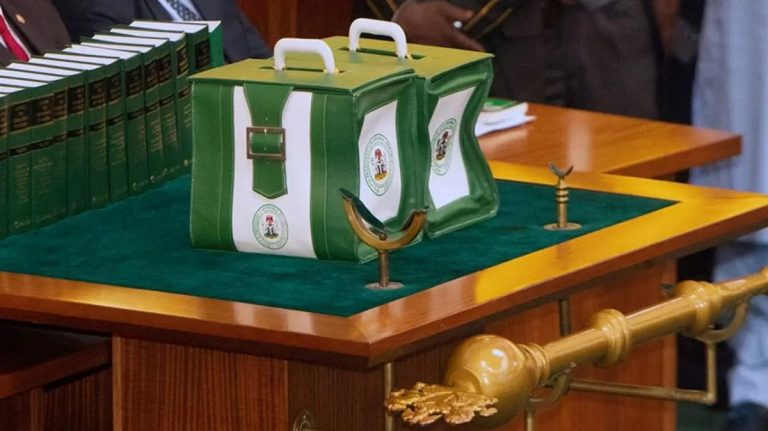
President Bola Tinubu has revised Nigeria’s proposed 2025 budget, increasing it from N49.7 trillion to N54.2 trillion.
The latest adjustment, which the President attributes to additional revenue from key government agencies, has raised concerns among economic analysts and political observers, who see it as yet another sign of inconsistency in the administration’s fiscal planning.
The President conveyed the budget revision in separate letters to both the Senate and the House of Representatives, which were read during today’s plenary session by Senate President Godswill Akpabio.
Register for Tekedia Mini-MBA edition 20 (June 8 – Sept 5, 2026).
Register for Tekedia AI in Business Masterclass.
Join Tekedia Capital Syndicate and co-invest in great global startups.
Register for Tekedia AI Lab.
According to Tinubu, the decision was driven by improved revenue collection from the Federal Inland Revenue Service (FIRS), which contributed an additional N1.4 trillion; the Nigeria Customs Service (NCS), which generated N1.2 trillion; and other government-owned agencies, which collectively raised an extra N1.8 trillion.
This is not the first time the government has made adjustments to the budget in response to changing expectations. In December 2024, the administration had initially proposed a budget of N49.7 trillion. It was based on the Medium-Term Expenditure Framework and Fiscal Strategy Paper for 2025–2027. Key parameters in the MTEF/FSP include a $75 oil price benchmark per barrel, daily oil production of 2.06 million barrels, an exchange rate of N1,400 to $1, and a targeted GDP growth rate of 6.4%.
The budget was shaped by the government’s removal of the fuel subsidy, exchange rate unification, and an anticipated increase in oil revenue.

Now, with an increase to N54.2 trillion, questions are being raised about the administration’s ability to maintain a consistent and realistic fiscal strategy. Economic analysts argue that while revenue improvements are welcome, constant changes to the budget raise concerns about the government’s ability to plan effectively and manage expenditures responsibly.
While the Tinubu administration justifies the revision by citing increased revenue, concerns remain about the certainty of the projected earnings. Nigeria has a long history of setting ambitious revenue targets that often fall short, leaving the country with widening budget deficits and an increasing debt burden.
Furthermore, Nigeria’s external debt and debt servicing obligations remain a major source of concern. The country spends a significant portion of its revenue on debt repayment, limiting its ability to invest in critical sectors such as infrastructure, healthcare, and education. The latest budget increase raises questions about how much of the additional funds will go toward capital projects versus recurrent expenditures.

Following the President’s request, Senate President Akpabio has referred the matter to the Senate Committee on Appropriations for urgent review and consideration. He assured lawmakers that the budget would be finalized and passed before the end of February.
However, the National Assembly is expected to face pressure from both opposition lawmakers and civil society groups over the perceived lack of fiscal discipline and long-term economic planning among other issues. The bone of contention is expected to be where the increased funds will go, and potential padding by the lawmakers.