

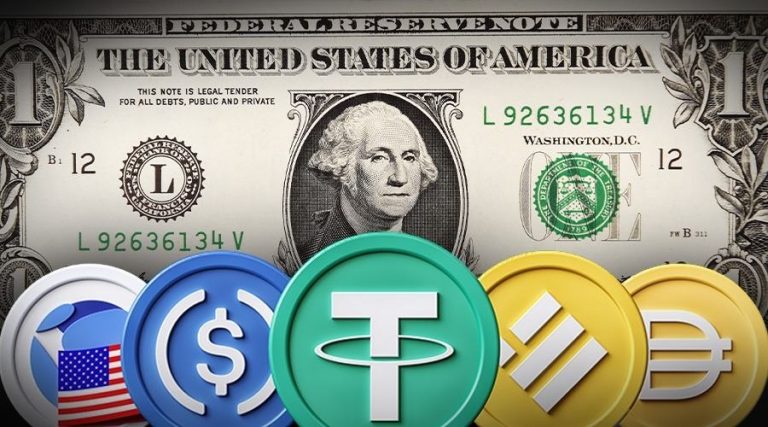
The total market capitalization of stablecoins has reached a new all-time high, surpassing previous records. The stablecoin market cap has climbed to approximately $235.7 billion, exceeding the prior peak of $204.7 billion for the top five stablecoins earlier in the month. This growth reflects significant capital inflows, increased adoption for trading, payments, and remittances, and the introduction of new yield-generating stablecoin products.
Leading stablecoins such as Tether (USDT) and Circle’s USD Coin (USDC) continue to dominate, with USDT holding a market cap of around $143 billion and USDC at approximately $58 billion. The surge is also notable on blockchains like Solana, which has seen its stablecoin market cap rise from $4 billion in December 2024 to $11.7 billion by mid-March 2025. This milestone occurs amidst a broader cryptocurrency market downturn, suggesting a shift of capital into stablecoins as investors adopt a more cautious approach.
The key factors fueling their growth
Role in DeFi Ecosystems: Stablecoins are integral to decentralized finance (DeFi) platforms, where they serve as a stable medium of exchange, collateral for lending and borrowing, and liquidity for decentralized exchanges (DEXs) like Uniswap and Curve. The growth of DeFi, with total value locked (TVL) reaching new highs, has driven demand for stablecoins. Stablecoins, which are cryptocurrencies pegged to stable assets like fiat currencies (e.g., USD), gold, or other commodities, have become a cornerstone of the digital asset ecosystem.
Register for Tekedia Mini-MBA edition 20 (June 8 – Sept 5, 2026).
Register for Tekedia AI in Business Masterclass.
Join Tekedia Capital Syndicate and co-invest in great global startups.
Register for Tekedia AI Lab.
Stablecoins provide a low-volatility option for liquidity pools, enabling traders and investors to participate in yield farming, staking, and other DeFi activities without exposure to the price volatility of assets like Bitcoin or Ethereum. The rise of yield-generating stablecoin products, such as tokenized real-world assets (RWAs) and stablecoin savings protocols, has attracted significant capital, further boosting stablecoin market caps.
Stablecoins offer a faster, cheaper alternative to traditional cross-border payment systems, which often involve high fees and long settlement times. This has made them particularly attractive for remittances, especially in regions with underdeveloped banking infrastructure. Stablecoins like USDT and USDC are widely used in emerging markets, where they provide a stable store of value amid local currency depreciation or hyperinflation (e.g., in countries like Argentina, Venezuela, or Turkey). Companies like Ripple (using XRP but also stablecoin integrations) and Stellar have partnerships that leverage stablecoins for cross-border settlements, further driving adoption.
Major corporations and payment processors, such as PayPal, Visa, and Mastercard, have integrated stablecoins into their platforms, enabling merchants and consumers to use them for everyday transactions. For instance, PayPal’s stablecoin, PYUSD, has contributed to the overall stablecoin market cap growth. Some corporations and institutional investors use stablecoins as a cash equivalent for treasury management, especially in high-inflation environments or as a hedge against currency risk. The adoption of USDC by institutional players for settlement in blockchain-based financial systems has significantly boosted its market cap, reaching $58 billion by March 2025.

During periods of cryptocurrency market downturns, investors often move capital from volatile assets like Bitcoin and Ethereum into stablecoins to preserve value. This trend was evident in early 2025, as the broader crypto market experienced a correction, yet stablecoin market caps hit new highs. Stablecoins are the preferred base currency for trading pairs on centralized and decentralized exchanges, facilitating arbitrage opportunities and high-frequency trading. This increases their circulation and demand.