

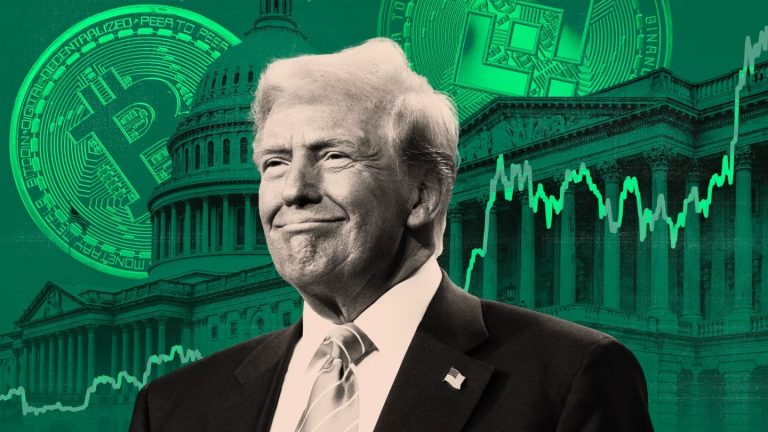
President Donald Trump recently lashed out at major banks, accusing them of undermining U.S. cryptocurrency progress and stalling key legislation.
This came shortly after he held a private meeting with Coinbase CEO Brian Armstrong. In a Truth Social post, Trump criticized banks for threatening and undermining the GENIUS Act, a stablecoin regulatory framework he signed into law earlier and blocking broader crypto market structure legislation, often referred to as the CLARITY Act.
He urged banks to “make a good deal with the Crypto Industry” to advance digital asset rules, emphasizing that Americans should earn more on their money, banks are already profiting hugely, and delays risk pushing innovation to China or elsewhere. He pushed for the market structure bill to pass “ASAP” to provide regulatory clarity.
Register for Tekedia Mini-MBA edition 20 (June 8 – Sept 5, 2026).
Register for Tekedia AI in Business Masterclass.
Join Tekedia Capital Syndicate and co-invest in great global startups.
Register for Tekedia AI Lab.
The core dispute involves stablecoin yield; interest or rewards on stablecoins like USDC, which crypto firms like Coinbase support to let users earn returns, while banks oppose it, viewing it as unfair competition that could erode their deposit bases and lending profits.
Earlier drafts of the market structure bill included provisions limiting or banning such yields, leading Armstrong to withdraw Coinbase’s support in January 2026 and publicly accuse banks of trying to undermine Trump’s pro-crypto agenda. Trump’s meeting with Armstrong preceded his public comments, signaling White House alignment with the crypto industry’s position in this lobbying battle.
The legislation has been stalled in Congress, amid tensions between crypto advocates pushing for innovation-friendly rules and traditional finance seeking protections.This move reinforces Trump’s pro-crypto stance during his second term, contrasting with earlier industry clashes like White House pushback against “no bill better than a bad bill” rhetoric.

It highlights ongoing efforts to resolve the impasse, potentially accelerating passage of market structure rules that could define oversight, consumer protections, and competition between banks and crypto platforms. The development is seen as bullish for the sector by many observers, as it shows direct presidential intervention to break the deadlock.
Stablecoins themselves do not inherently pay interest or generate yield. The stablecoin token is just a digital dollar equivalent for payments, trading, or holding value with low volatility. Any “yield” comes from external mechanisms where the stablecoins are used productively to generate revenue, and some of that revenue is passed back to holders as rewards or interest.
How Stablecoin Yields Are Generated
There are a few main ways yields are created: Reserve Yield (Issuer-Level). Many stablecoins are backed by reserves like short-term US Treasury bills, cash equivalents, or other low-risk assets. These reserves earn interest in the current high-rate environment often 4%+ from Treasuries. Traditionally, issuers keep most or all of this yield as profit.

In some cases, part of it can be shared indirectly with holders through partnerships or programs. Platforms like Coinbase offer “rewards” on held USDC, often around 3.5–4.7% APY varying by program, membership like Coinbase One, or on-chain vs. custodial. This isn’t the stablecoin itself paying yield—it’s the platform sharing revenue from its arrangement with the issuer.
It’s often framed as a loyalty or marketing program, with payouts from the platform’s budget, keeping funds liquid and accessible. Higher yields often 5–12% or more, though variable come from decentralized finance (DeFi) protocols: Deposit stablecoins into protocols like Aave or Compound; borrowers pay interest, and lenders earn it.
Liquidity Pools: Provide stablecoins to trading pairs on DEXes and earn trading fees + possible token incentives. Some tokens natively accrue yield from underlying strategies (Treasuries, RWAs, or protocol revenues) passed to holders. These can offer higher returns but involve more smart contract or protocol risks.
Yields fluctuate based on factors like interest rates, borrowing demand, incentives, competition, and market conditions—often higher in bull markets or with temporary promotions. In the context of recent US debates like around the GENIUS Act for stablecoins and the pending CLARITY Act for broader crypto rules.
Crypto firms push for allowing these yields/rewards to compete with traditional finance, attract users, and innovate; letting people earn more than low bank savings rates on digital dollars.
Banks oppose them strongly, arguing that yield-bearing stablecoins act like “interest-paying deposits” outside banking regulations, potentially pulling trillions in deposits away from banks, reducing their ability to lend, and threatening financial stability.
Regulations often ban direct interest on stablecoins but leave room for indirect rewards via third parties—leading to ongoing lobbying battles, with banks pushing for stricter limits. Unlike bank deposits, stablecoin yields (even low-risk ones) aren’t government-insured.
If the platform or issuer has issues, access to funds or yields could be affected. Though rare for major stablecoins, de-pegging events can occur. Variable rates — Yields aren’t fixed and can drop sharply. Ongoing US debates could restrict or reshape these programs.
Stablecoin yields let you earn passive returns on a stable digital dollar—often beating traditional savings accounts—by putting the money to work in lending, reserves, or DeFi. They’re a bridge between crypto’s innovation and traditional finance’s stability, but they come with unique risks and are at the center of a major policy fight in 2026.