

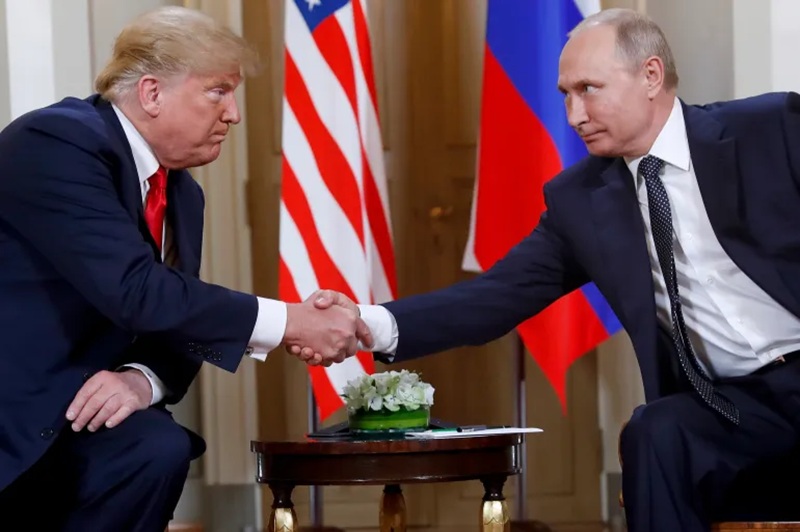
President Donald Trump on Saturday proposed a new path to end the Russia-Ukraine war: a complete NATO ban on Russian oil purchases and tariffs of 50% to 100% on China for its imports of Moscow’s petroleum.
Trump said NATO’s current commitment to victory has been “far less than 100%,” and described alliance members’ continued oil trade with Russia as “shocking.”
“[Buying Russian oil] greatly weakens your negotiating position, and bargaining power, over Russia,” Trump posted on his social media platform, calling for energy sanctions paired with punitive tariffs that he said would “break [China’s] grip” over Moscow.
Register for Tekedia Mini-MBA edition 20 (June 8 – Sept 5, 2026).
Register for Tekedia AI in Business Masterclass.
Join Tekedia Capital Syndicate and co-invest in great global startups.
Register for Tekedia AI Lab.
The suggestion arrives after Russian drones crossed into Polish airspace last week — a move U.S. Secretary of State Marco Rubio called “dangerous” and Britain answered with new sanctions on Russian shipping and suppliers. However, Trump’s hardline proposal is raising questions about whether another layer of restrictions would yield a breakthrough, or whether Moscow’s proven ability to evade sanctions would make the effort another symbolic gesture.
A Long Trail of Sanctions
Since Russia’s full-scale invasion of Ukraine in February 2022, the U.S. and its allies have imposed one of the most extensive sanctions regimes in modern history. Washington and Brussels targeted Russia’s central bank reserves, cut major lenders off from SWIFT, restricted technology exports, and capped the price of Russian crude at $60 per barrel.
The goal was to starve the Kremlin of revenue. Yet Russia’s economy has adapted. Moscow rerouted oil flows to Asia, with China and India emerging as lifelines. According to the International Energy Agency, the two countries now buy more than 70% of Russia’s seaborne crude. Turkey and other middlemen have also played roles, creating back channels that blunt Western measures.

As a result, Russia’s oil revenues remain resilient. The ruble has wavered but avoided collapse, and the Kremlin has continued to fund its war machine despite Western predictions that sanctions would bring it to its knees.
India, China, and the Limits of Tariffs
Trump highlighted China’s importance as Russia’s patron, suggesting tariffs of up to 100% could sever Moscow’s financial safety net. But Washington has already tried punishing India for its energy ties to Russia. The Trump administration earlier this year slapped a 50% tariff on Indian goods, citing New Delhi’s large-scale imports of Russian crude.
The move changed little. India continued buying, often at discounted rates, refining the crude and even re-exporting some products back to Europe. For New Delhi, Russian oil has proven too crucial to abandon — an economic reality that raises doubts about whether higher tariffs on China would truly alter Moscow’s fortunes.

Russia’s Defiance of Past Pressure
This pattern echoes earlier sanction campaigns. When the U.S. and its allies imposed restrictions on Russia after its 2014 annexation of Crimea, Moscow absorbed the shock and pivoted eastward. It deepened ties with Beijing, expanded trade in non-dollar currencies, and fortified domestic industries.
Even the unprecedented 2022-2023 sanctions package — broader and deeper than anything Russia had faced before — failed to cripple the Kremlin. Instead, Moscow adapted by exploiting gaps in enforcement, turning to countries outside the Western alliance, and leaning on its vast energy resources.
A Risk of Diminishing Returns
Trump’s proposal of banning Russian oil within NATO and doubling down on tariffs against China reflects a belief that only maximum pressure can change Putin’s calculus. But the record of the past two years suggests that every new measure carries diminishing returns.
Russia has shown an ability to reroute trade, build shadow fleets of tankers, and create alternative payment systems. China and India, driven by their own strategic and economic interests, have resisted U.S. pressure and kept buying. That resilience underscores a sobering reality: even if NATO bans Russian oil entirely, the barrels may still flow elsewhere, softening the intended blow.
Meanwhile, higher tariffs on China risk igniting another round of tit-for-tat trade wars that could hit U.S. and European economies harder than Russia’s. Earlier this year, Trump raised Chinese tariffs to 145%, prompting Beijing to retaliate with 125% duties on U.S. goods, effectively freezing trade until both sides negotiated a reduction. Another escalation could send shockwaves through global markets.
A Strategy in Question
At the U.N. Security Council last week, acting U.S. Ambassador Dorothy Shea pledged America “will defend every inch of NATO territory,” insisting Moscow must not mistake restraint for weakness. Britain tightened sanctions on vessels and suppliers. G7 ministers urged a “unified front” to cut off Putin’s war revenues.
However, Trump’s approach — punishing China, and indirectly India — faces the same obstacle that has haunted Western sanctions for years: Russia’s survival hinges on partners seemingly outside NATO’s reach. Unless Beijing or New Delhi reverse course, analysts warn, more tariffs and bans may tighten the noose only slightly, without achieving the knockout blow Trump envisions.
As the war drags on, geopolitical analysts believe that NATO faces a stark dilemma. Push harder on sanctions and risk collateral economic fallout — or accept that Russia’s oil leverage, and its allies in Asia, have blunted Western tools of economic warfare.