

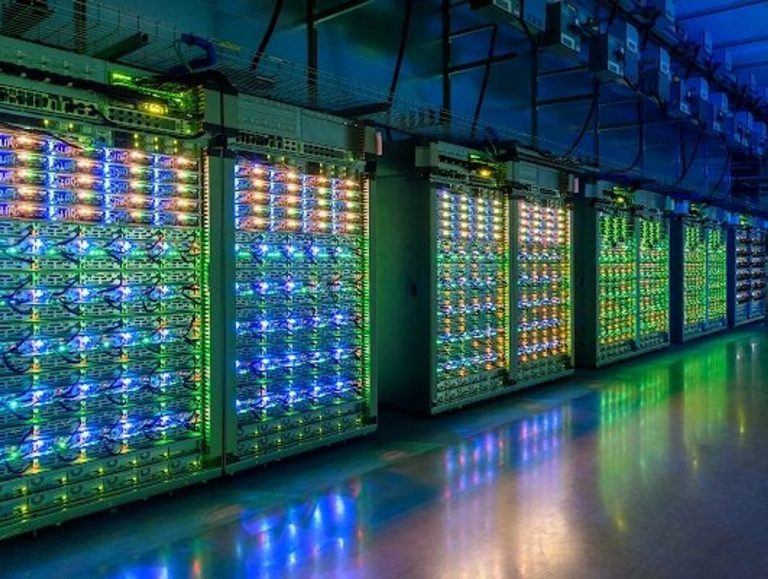
The data-center boom was supposed to be one of the great economic stories of the artificial-intelligence age. Billions of dollars would pour into towns, construction crews would find work.
Tax bases would expand, and communities would become part of the infrastructure powering a technological revolution. Yet beneath the promise of silicon and servers, a political fault line is widening.
Donald Trump has now stepped directly into that fight, urging American communities to stop resisting data-center projects. Writing on Truth Social on Monday, Trump described the buildout as a “Golden Goose” and warned that towns rejecting facilities risk becoming “backwards and poor.”
Register for the next Tekedia Mini-MBA.
Register for Tekedia AI in Business Masterclass.
Join Tekedia Capital Syndicate and co-invest in great global startups.
He also invoked China, arguing that Beijing could not be happier to see Americans turn against the infrastructure needed to compete in artificial intelligence. The message is unmistakable.
America cannot afford to slow the construction of the machines that will underpin the next generation of computing. But for many communities, the argument is not about rejecting technology. It is about asking who pays for it.
By late July, more than 500 counties and municipalities were restricting or blocking new data-center developments. The resistance stretches across political boundaries, making it increasingly difficult to dismiss as a fringe environmental movement or an anti-technology campaign.
Residents in different parts of the country have raised similar concerns: electricity costs, water consumption, grid capacity, noise and the transformation of local landscapes.

The economic equation becomes complicated when a community is told that a facility will bring prosperity while residents fear their utility bills could rise to accommodate enormous new loads on the power grid.
A data center may create construction jobs and generate tax revenue, but its electricity demand can also reshape local infrastructure decisions for decades.
Pennsylvania, Texas and New York have all seen efforts to pause, freeze or otherwise scrutinize projects. The geography matters because these are not states traditionally defined by opposition to industrial development.
Instead, they illustrate how the AI boom is colliding with an older reality: infrastructure has physical consequences. Bernie Sanders seized on that tension in his response to Trump, arguing that the reported 75% opposition does not represent Americans choosing poverty.

Rather, he said, people want a decent future for their communities. That distinction may define the political battle ahead. Trump sees data centers through the lens of global competition. In his framing, every delayed project potentially strengthens China.
While every new facility adds another brick to America’s technological fortress. Sanders and local opponents see the issue from the ground up, asking whether national ambitions should override local concerns about resources, affordability and quality of life.
Even Trump’s political allies appear to recognize the danger. A leaked National Republican Senatorial Committee memo reportedly warned that opposition to data centers could become a “sleeper” issue throughout the election cycle, beginning in Ohio.
That warning is significant because the politics of AI infrastructure are still being written. The same technology that promises economic transformation can become unpopular when its costs are visible at the household level.
America’s AI race therefore faces an uncomfortable question: how fast can the country build without leaving communities feeling that the future has been imposed upon them?
The Golden Goose may indeed be valuable. But communities want to know who owns the nest, who feeds the bird, and who gets stuck cleaning up after it.