

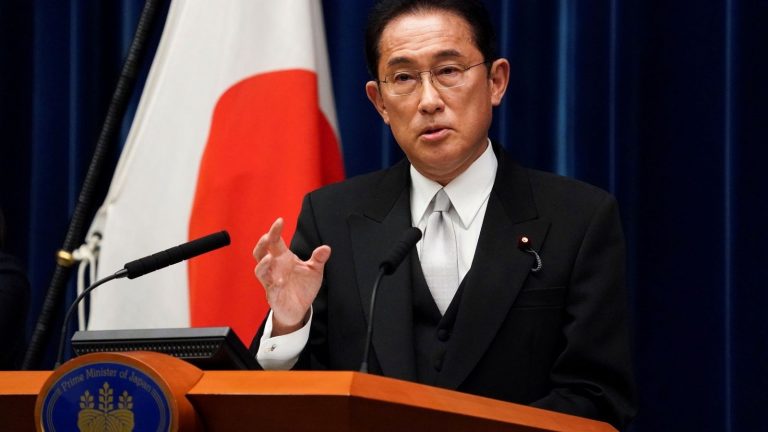
President Donald Trump has declared the new trade agreement with Japan the “largest trade deal in history,” touting it as a landmark achievement in his administration’s ongoing bid to reset global commerce on terms favorable to Washington.
Though the scale of the deal may fall short of Trump’s hyperbole, its implications across Asia are already reverberating.
The agreement, finalized after months of tense negotiations, drastically reduces US tariffs on Japanese automobiles—from a steep 27.5% to 15%—and paves the way for Tokyo to pour $550 billion into the US economy. In return, Japan will lift restrictions on US agricultural exports, especially rice and beef, allowing American farmers greater access to the world’s third-largest economy.
Register for Tekedia Mini-MBA edition 20 (June 8 – Sept 5, 2026).
Register for Tekedia AI in Business Masterclass.
Join Tekedia Capital Syndicate and co-invest in great global startups.
Register for Tekedia AI Lab.
But while this deal brings immediate benefits for both nations, it is also triggering broader consequences throughout Asia, where countries are reassessing their trade strategies, bargaining positions, and geopolitical alignments.
A New Benchmark for Asian Trade Negotiations
The 15% US tariff on Japanese cars now serves as a critical benchmark for other major Asian economies currently negotiating trade deals with Washington. Countries like South Korea and Taiwan, both major exporters of vehicles and electronics, are under pressure to extract similar or better terms. South Korea’s industry minister, preparing for crunch talks in Washington, said Seoul will study the Japan deal carefully, noting that “fairness and reciprocity” will guide Korea’s approach.
South Korea and Japan are long-time competitors in global markets—especially in automobiles, steel, and semiconductors. A more favorable deal for Japan may compel South Korea to accelerate negotiations to avoid being outcompeted in the American market.

Likewise, Taiwan, heavily reliant on exports to the US, particularly in semiconductors, is now expected to seek concessions similar to Japan’s—especially around market access and tariffs. Analysts believe the Japan-US agreement gives Taiwan a stronger case to negotiate lower duties on key goods like computer chips and electrical equipment.
Dividing Asia: Winners and Losers
While major Asian economies like Japan, South Korea, and Taiwan prepare to adjust, the Trump-Ishiba pact threatens to leave smaller nations behind.
Countries such as Cambodia, Laos, and Sri Lanka—largely dependent on low-cost textile exports—offer little strategic value to the US in terms of high-tech supply chains or investment opportunities. With Washington now prioritizing deals that support critical industries like semiconductors, pharma, and autos, these smaller economies may find themselves increasingly sidelined in a new trade order.

Indonesia and the Philippines, which had earlier been seen as potential victims of Trump’s tariff regime, have since raced to the negotiating table. Preliminary agreements with Washington have already been announced, with both countries hoping to build deeper industrial links with the US in exchange for greater trade access.
But their window is narrowing. Trump’s administration has set a self-imposed August deadline to lock in as many bilateral deals as possible, prompting fears among Asian policymakers that they could be boxed out unless swift action is taken.
Strategic Supply Chains, Not Just Tariffs
Beyond trade in goods, Japan’s commitment to invest $550 billion in the United States marks a clear shift in the future of Asia-US relations. The bulk of that money is expected to flow into high-tech sectors like pharmaceuticals, semiconductors, and clean energy — areas where the US has sought to reduce dependency on China.
That investment strategy is not lost on other Asian countries. South Korea and Taiwan, already dominant players in semiconductors, are likely to propose similar investment partnerships to ensure their access to the US market is not undermined by Japan’s first-mover advantage.
Singapore, another technology hub, is also watching the developments closely. A senior official from Singapore’s trade ministry said the country is exploring ways to offer joint R&D projects with US firms, in hopes of aligning with Washington’s new supply chain priorities.
Japan’s Strategic Gain, China’s Strategic Loss?
There is also a broader strategic layer to the deal. Japan’s enhanced trade status with the US sends a clear message to China, whose own trade relationship with Washington remains clouded by distrust, sanctions, and security concerns.
As Japan secures lower tariffs, expanded exports, and a stronger position in the US market, China faces increasing isolation — particularly as the U.S. government has doubled down on restricting Chinese access to critical American technologies.
Trump’s Japan deal is not just a trade agreement. It’s a calculated effort to redraw Asia’s economic map in a way that favors US allies and penalizes rivals, particularly Beijing.
EU-Japan Alignment Raises US Stakes
While the US-Japan deal is positioned as a bilateral win, it has also pushed Tokyo closer to the European Union. On the same day the agreement was signed, Japan and the EU pledged to deepen cooperation against “economic coercion and unfair trade practices” — a thinly veiled swipe at China’s tactics and possibly Trump’s own earlier tariffs.
European Commission President Ursula von der Leyen emphasized that global trade must benefit everyone, not just a select few, hinting at growing European concerns over bilateralism and protectionism.
In sum, the US-Japan trade agreement, while lauded by Trump as the “largest in history,” has triggered a far broader realignment across Asia. From South Korea and Taiwan to Indonesia and Singapore, countries are racing to preserve their positions in the global value chain before Trump’s deadline resets the terms once again.
What started as a bilateral deal may end up reshaping trade priorities across Asia, redrawing alliances, and deepening divides — not just economically, but geopolitically.