

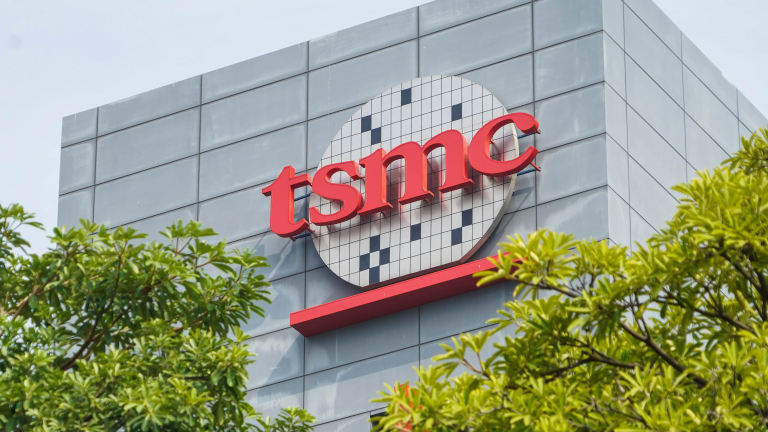
The global semiconductor industry is facing renewed uncertainty after Taiwan Semiconductor Manufacturing Company (TSMC) and Samsung reportedly suspended some chip shipments to Chinese customers following new export controls.
While US President Donald Trump threatened to impose a “tremendous tax” on American companies building data centers overseas.
The developments highlight Washington’s growing efforts to reshape global technology supply chains, restrict China’s access to advanced computing hardware and encourage domestic investment in artificial intelligence infrastructure.
Register for the next Tekedia Mini-MBA.
Register for Tekedia AI in Business Masterclass.
Join Tekedia Capital Syndicate and co-invest in great global startups.
The reported shipment suspensions by TSMC and Samsung come amid tightening export restrictions aimed at limiting China’s access to advanced semiconductor technologies.
These controls have increasingly targeted high-performance chips, manufacturing equipment and technologies considered critical to artificial intelligence, military applications and strategic computing capabilities.
TSMC and Samsung, two of the world’s largest semiconductor manufacturers, are central to the global chip supply chain. Their manufacturing capabilities serve major technology companies across industries.

Including artificial intelligence, cloud computing, smartphones, automotive technology and data center infrastructure. Any disruption to chip shipments involving Chinese customers could introduce further uncertainty for companies relying on advanced processors and semiconductor components.
China has been attempting to strengthen its domestic semiconductor industry through significant government investment, research initiatives and efforts to develop alternative suppliers.
However, restrictions involving advanced chip manufacturing technologies continue to complicate the country’s ambitions to reduce dependence on foreign semiconductor companies.

The latest developments could intensify geopolitical tensions between Washington, Beijing and major Asian semiconductor manufacturers as governments increasingly treat chip production and artificial intelligence infrastructure as national security priorities.
Meanwhile, Trump has threatened to impose a “tremendous tax” on US companies that build data centers outside the United States, signalling another potential policy intervention aimed at encouraging domestic investment in technology infrastructure.
The president’s remarks reflect his broader economic strategy of encouraging companies to prioritize American manufacturing, infrastructure development and employment opportunities.
Data centers have become increasingly important to the expansion of artificial intelligence, cloud computing and digital services, with technology companies committing billions of dollars to new facilities capable of supporting advanced computing workloads.
The proposed tax threat could influence investment decisions by major technology companies considering data center projects in foreign markets.
Businesses expanding their computing infrastructure must weigh electricity costs, land availability, regulatory requirements, access to skilled workers and proximity to customers when selecting locations.
However, imposing additional taxes on overseas infrastructure investments could complicate international expansion strategies for companies operating globally and requiring computing capacity across multiple regions.
Data centers are increasingly being built near renewable energy resources, affordable electricity supplies and emerging technology markets, making international investment an important part of infrastructure planning.
The semiconductor shipment suspensions and Trump’s proposed tax threat underscore how technology infrastructure is becoming intertwined with international trade policy and geopolitical competition.
Governments are increasingly using regulatory restrictions, taxation and industrial incentives to influence where critical technologies are manufactured and deployed.
As artificial intelligence investment accelerates, semiconductor access and data center construction are emerging as major battlegrounds in the global economic landscape.
Companies may increasingly have to navigate competing national policies while balancing supply chain resilience, infrastructure costs and technological innovation.
The latest developments could reshape investment priorities across the semiconductor and artificial intelligence industries, reinforcing the growing importance of geopolitical considerations in corporate technology decisions.