

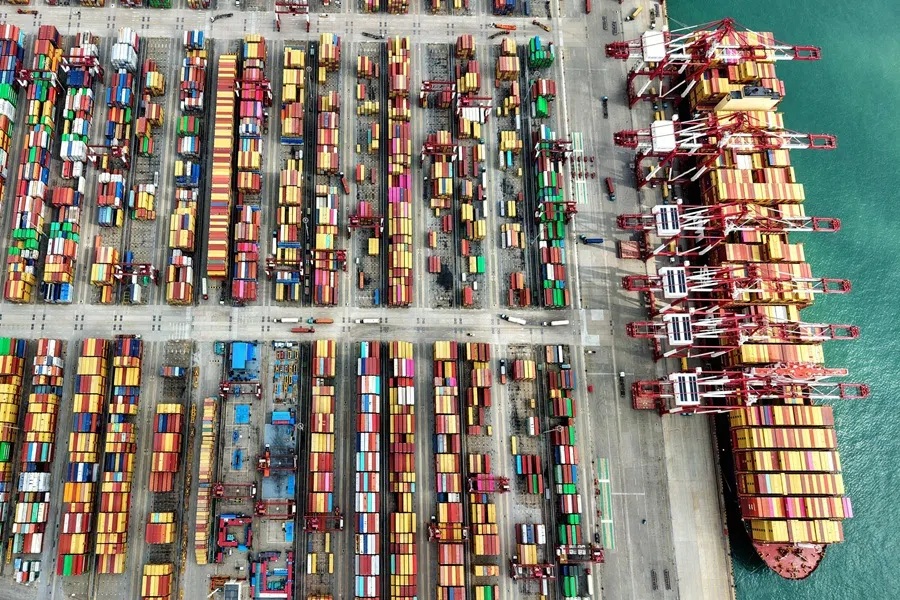
U.S. imports of containerized goods remained unusually strong in July as companies accelerated shipments to get products into the country before another round of uncertain tariff changes, highlighting the continuing impact of trade policy on global supply chains.
U.S. ports handled about 2.5 million 20-foot equivalent units (TEUs) in July, making it the fourth-highest July volume on record, according to supply-chain technology provider Descartes Systems Group. Although volumes fell 4.3% from the near-record level recorded in July 2025, imports during the first seven months of 2026 were down only 0.9% from a year earlier and remained well above pre-pandemic levels.
The figures suggest that companies are continuing to bring forward shipments as they attempt to reduce exposure to potentially higher import costs and avoid disruptions caused by changing U.S. trade policy.
Register for the next Tekedia Mini-MBA.
Register for Tekedia AI in Business Masterclass.
Join Tekedia Capital Syndicate and co-invest in great global startups.
The latest rush came ahead of changes to U.S. tariffs at the end of July. The 10% global tariffs imposed under Section 122 expired and were replaced by tariffs of as much as 12.5% on imports from 60 countries, in connection with U.S. allegations concerning forced labor.
The uncertainty has made the timing of shipments beneficial for importers. Bringing goods into the United States before a tariff takes effect can allow companies to reduce the immediate cost of inventory, although it can also increase warehousing expenses and leave retailers carrying larger inventories than they would under normal demand conditions.
China was a particularly important source of July’s import activity.

Imports from China reached 873,129 TEUs, the highest monthly volume in a year. China remains the largest source of containerized goods entering the United States even as the Trump administration has imposed tariffs on a broad range of Chinese products.
The increase indicates that tariffs have not eliminated the underlying commercial relationship between the world’s two largest economies. Instead, they have encouraged companies to adjust the timing, sourcing and routing of shipments.
Major U.S. retailers remain useful to those flows. Walmart, Amazon and Home Depot together account for roughly half of U.S. container imports, according to Descartes. Their purchasing cycles also help explain why shipping volumes have become less concentrated around the traditional peak season.

Retailers typically increase imports ahead of autumn and winter promotions and the holiday shopping period. That seasonal pattern has increasingly been stretched over a longer period as companies attempt to anticipate disruptions and secure inventory before trade-policy changes take effect.
The shift began during the COVID-19 pandemic, when supply shortages, port congestion and unpredictable consumer demand forced retailers to rethink inventory management. It has continued as companies respond to geopolitical tensions, shipping disruptions and successive changes in U.S. tariff policy.
The latest figures therefore provide an indication not only of import demand but also of how businesses are adapting their supply chains to greater policy uncertainty.
Descartes said the wider trade environment remains unsettled, with risks surrounding the Strait of Hormuz, changing U.S. tariff measures, tighter draft restrictions in the Panama Canal and continuing disruption in the Red Sea affecting freight costs, shipping routes and sourcing decisions.
The combination of those factors is making supply-chain planning more expensive and complex.
The Strait of Hormuz significantly matters because disruptions there can affect energy prices and global transportation costs. The Panama Canal remains a key route for trade between Asia and the U.S. East Coast and Gulf Coast, while instability in the Red Sea has forced many vessels to take longer routes around Africa.
For U.S. importers, the result is a supply chain increasingly shaped by risk management rather than simply by the lowest transportation or production cost. The strong July import figures also complicate the assessment of the underlying health of U.S. consumer demand. High import volumes can indicate robust retail demand, but they can also reflect companies accelerating purchases ahead of tariffs rather than responding to immediate consumer needs.
Analysts see that distinction becoming more important in the coming months. If import volumes weaken sharply after the tariff changes take effect, it could indicate that July’s strength was partly driven by front-loading. If volumes remain elevated, it would suggest that retailers and manufacturers continue to see sufficient demand to absorb higher trade costs.
China’s rebound in July shipments is similarly notable. The increase suggests that U.S. companies continue to rely heavily on Chinese manufacturing despite tariffs and efforts to diversify supply chains. Shifting production to alternative countries can take years, particularly for complex products and established supplier networks.
The data therefore point to an American import market that remains resilient but increasingly shaped by tariff deadlines and geopolitical risks.
While the strategy of moving goods earlier can provide retailers with protection against sudden tariff increases and shipping disruptions, it also carries costs, including higher inventory financing, storage requirements and the risk of being left with unwanted products if consumer demand changes.