

An investigation by The New York Times reports that in July 2023, senior U.S. intelligence officials privately briefed some of the technology sector’s most influential executives on classified assessments concerning China and Taiwan.
The executives included Tim Cook of Apple, Jensen Huang of Nvidia, Lisa Su of AMD, and Cristiano Amon of Qualcomm.
The briefing, led by CIA Director William J. Burns and Director of National Intelligence Avril Haines, conveyed updated classified intelligence indicating that China’s military buildup could position Beijing to move on Taiwan by 2027. U.S. defense officials had publicly referenced that year in prior testimony, but the meeting appears to have delivered the most current intelligence directly to the executives whose companies are structurally dependent on Taiwanese production.
Register for Tekedia Mini-MBA edition 20 (June 8 – Sept 5, 2026).
Register for Tekedia AI in Business Masterclass.
Join Tekedia Capital Syndicate and co-invest in great global startups.
Register for Tekedia AI Lab.
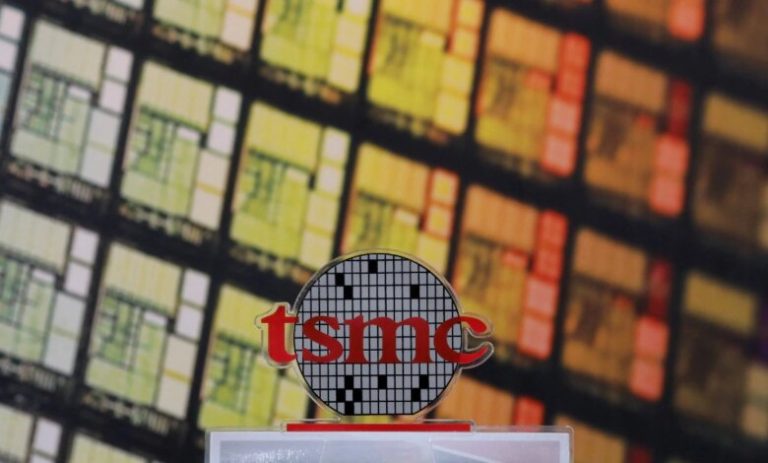
Taiwan produces roughly 90 percent of the world’s most advanced semiconductors, primarily through Taiwan Semiconductor Manufacturing Company. These chips are not commodity components. They are leading-edge logic nodes that power high-performance computing, flagship smartphones, data center accelerators, and advanced military systems. Their production depends on a tightly integrated ecosystem of fabrication, advanced packaging, specialty chemicals and precision equipment that has few equivalents elsewhere.
A blockade or invasion would not simply tighten the supply. It would remove the core of the world’s most advanced chip manufacturing capacity from the global market in a matter of days.
From Smartphones to AI Infrastructure
The immediate economic shock of a severe Taiwan disruption has been estimated at an 11 percent contraction in U.S. GDP, according to a 2022 industry-commissioned study cited in the report. That figure was calculated before the current surge in AI-related capital expenditure. Since then, hyperscale data centers have expanded rapidly to support large language models, generative AI systems, and enterprise automation tools.

The vulnerability extends well beyond consumer electronics. The emerging AI market is structurally more exposed to Taiwan than previous computing cycles. Training and deploying advanced AI models depend on high-end graphics processing units and specialized accelerators, many of which are fabricated at TSMC’s most advanced nodes. Companies like Nvidia and AMD design the chips, but the manufacturing bottleneck sits offshore.
AI development is capital-intensive and hardware-constrained. Model training requires massive clusters of advanced GPUs interconnected with high-bandwidth networking and supported by specialized memory. Interrupting the supply of next-generation silicon would slow model scaling, delay product launches, and raise costs across the AI ecosystem. Startups reliant on cloud-based AI infrastructure would face capacity shortages. Enterprises integrating AI into operations could see deployment timelines pushed back by years.
In that sense, a Taiwan disruption would not only fracture existing supply chains but also stall the trajectory of the AI economy at a formative moment. The recent surge in U.S. economic activity linked to AI investment — including data center construction, energy infrastructure expansion, and chip procurement — is directly tied to the availability of advanced semiconductors. If you remove the hardware foundation, the software layer cannot scale.

The risk also cuts into defense modernization. AI-enabled systems, autonomous platforms, and next-generation command-and-control architectures rely on advanced computing. A supply shock would constrain both commercial and military innovation simultaneously.
Awareness, Incentives, and Structural Inertia
The classified briefing occurred amid federal efforts to reshore semiconductor production through the CHIPS Act and subsequent trade measures aimed at altering procurement patterns. Intelligence warnings were part of a broader attempt to signal that geopolitical risk is now a central variable in corporate planning.
Yet structural change has been slow. Building leading-edge fabrication capacity in the United States requires tens of billions of dollars and years of construction. Even where new facilities are under development in Arizona and Texas, advanced packaging — a critical step in assembling high-performance chips — remains heavily concentrated in Taiwan. That means some U.S.-fabricated chips would still require overseas finishing.
Market incentives complicate the picture. Leading-edge manufacturing in Taiwan remains cost-effective and technologically mature. Firms are reluctant to shift large volumes of production without firm demand commitments and predictable margins. According to the report, even after the July 2023 briefing, major technology companies did not substantially accelerate domestic purchase agreements. Intel and Samsung reportedly struggled to secure sufficient customer commitments to qualify for certain CHIPS-related support.
Cook reportedly told officials he sleeps “with one eye open.” That remark captures the tension at the heart of the industry: executives are acutely aware of the geopolitical risk, yet capital allocation decisions remain anchored to cost, performance, and shareholder return.
The warning delivered in July 2023 did not introduce a new strategic reality. It clarified a timeline and brought classified assessment into the boardroom. If the scenario outlined were to materialize, the disruption would reach far beyond semiconductors. It would strike at the infrastructure underpinning the global AI buildout, reshaping economic growth trajectories, technological leadership, and national security planning in a single stroke.
Currently, the gap between awareness and structural resilience remains wide.