

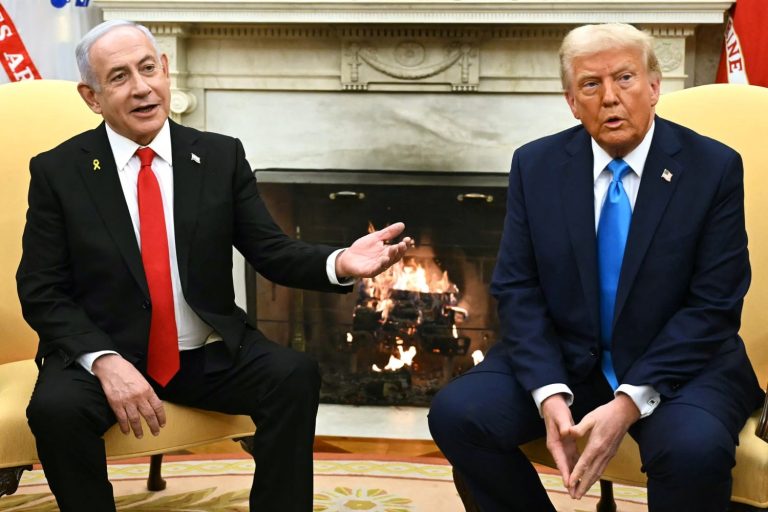
The United States and Israel launched coordinated military strikes on Iran on Saturday, targeting senior political and military leaders in an operation that has rapidly expanded into a regional confrontation and injected fresh volatility into global energy markets.
President Donald Trump described the assault as a pre-emptive move to eliminate imminent threats and prevent Tehran from obtaining a nuclear weapon. In a video message, he warned that “bombs will be dropping everywhere” and urged Iranians to seek shelter, adding that once operations conclude, they should “take over your government.”
Israeli Prime Minister Benjamin Netanyahu said the joint operation would create the conditions for Iranians to “take their destiny into their own hands.” Defense Minister Israel Katz called it a pre-emptive strike designed to remove strategic threats to Israel.
Register for Tekedia Mini-MBA edition 20 (June 8 – Sept 5, 2026).
Register for Tekedia AI in Business Masterclass.
Join Tekedia Capital Syndicate and co-invest in great global startups.
Register for Tekedia AI Lab.
Tehran condemned the attacks as illegal and unprovoked. Iranian forces responded with missile launches against Israel and several Gulf Arab states hosting U.S. bases, broadening the theatre of confrontation. Gulf governments reported intercepting missiles, while explosions were heard in parts of the United Arab Emirates and Bahrain, home to the U.S. Fifth Fleet.
Sources familiar with the situation said Iranian Defense Minister Amir Nasirzadeh and Revolutionary Guards commander Mohammed Pakpour were killed in Israeli strikes, alongside other senior commanders. If confirmed, the removal of top-level military leadership would represent one of the most significant blows to Iran’s command structure in decades.
Iran’s Revolutionary Guards said retaliation would continue until “the enemy is decisively defeated,” and warned that all U.S. bases and interests in the region are within range.

The Pentagon named the first phase of the operation “Operation Epic Fury,” focusing initially on high-value leadership and security targets. The strikes followed the collapse of indirect nuclear negotiations mediated by Oman earlier in the week.
Oil markets brace for supply disruption
Beyond the military dimension, the confrontation is reverberating through global commodity markets. Iran is the third-largest producer in the Organization of the Petroleum Exporting Countries and accounts for roughly 4.5% of global crude supply. More critically, a far greater share of global oil shipments transits the Strait of Hormuz, the narrow maritime chokepoint along Iran’s southern coast.
Any sustained military escalation that threatens tanker traffic through Hormuz could remove millions of barrels per day from international markets, either through physical disruption or precautionary shipping suspensions. Even without a formal blockade, heightened insurance costs, rerouted shipping, and suspended cargoes can materially constrain supply.

Energy traders have already priced in geopolitical risk premiums. Analysts warn that, absent rapid de-escalation, oil prices could spike sharply when markets reopen, feeding into global inflation pressures and complicating central bank policy decisions in major economies.
Two sources close to OPEC+ discussions told Reuters that the producer alliance is considering a larger-than-planned output increase at its meeting on Sunday in an effort to stabilize markets. The move would be aimed at offsetting potential supply losses and signaling that spare capacity remains available.
Saudi Arabia and the United Arab Emirates have already raised exports in anticipation of supply stress, according to industry sources. Both countries hold significant spare production capacity within OPEC+, positioning them as primary stabilizers in the event of a prolonged disruption.
The scale of any emergency increase will be closely scrutinized. While Riyadh and Abu Dhabi can ramp up production, sustained conflict affecting Hormuz would present logistical constraints that additional barrels alone may not fully resolve.
Broader economic and geopolitical consequences
A sustained surge in crude prices would ripple across global supply chains. Higher energy costs could lift transportation, manufacturing, and food prices, slowing growth in import-dependent economies while boosting revenues for major exporters.
Airlines have already cancelled or rerouted flights across parts of the Middle East, and some oil majors and trading houses have paused shipments through the Gulf pending further security assessments. Insurance premiums for vessels transiting the region are expected to rise sharply.
Strategically, the confrontation marks once again the fragility of the Gulf security architecture. The region hosts dense concentrations of energy infrastructure, desalination plants, and U.S. military assets within relatively short missile range. Even limited strikes risk triggering cascading economic consequences.
The immediate effect of a military confrontation centered on Iran is a global economic risk, with oil markets once again at the frontline of geopolitical shock. It is hoped it doesn’t escalate into a prolonged conflict affecting energy corridors at scale.