

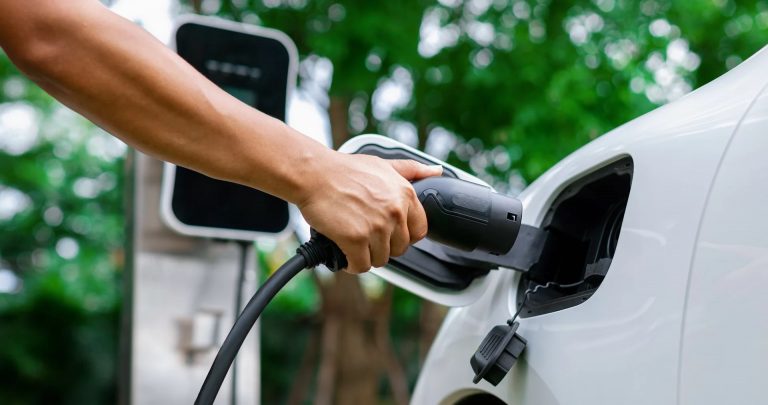
A federal judge has ruled that President Donald Trump’s administration acted unlawfully when it suspended billions of dollars in funding meant to expand electric vehicle charging infrastructure, delivering a significant legal victory to Democratic-led states and a broader rebuke of the White House’s efforts to unwind key elements of the Biden-era climate agenda.
U.S. District Judge Tana Lin, sitting in Seattle, ruled on Friday in favor of 20 states and the District of Columbia, which sued after the U.S. Department of Transportation halted the National Electric Vehicle Infrastructure Formula Program, known as NEVI. The programme was created under the Infrastructure Investment and Jobs Act, signed into law in 2021, and was designed to support the build-out of a nationwide EV charging network.
In her ruling, Lin said the Transportation Department and the Federal Highway Administration overstepped their authority by freezing funds that Congress had already appropriated and directed to the states.
Register for Tekedia Mini-MBA edition 20 (June 8 – Sept 5, 2026).
Register for Tekedia AI in Business Masterclass.
Join Tekedia Capital Syndicate and co-invest in great global startups.
Register for Tekedia AI Lab.
“They yanked the NEVI Formula Program’s cord out of the outlet,” Lin wrote, saying the agencies acted outside the boundaries of established administrative law.
The judge permanently barred the Transportation Department from cancelling the states’ previously approved implementation plans or clawing back funds already awarded, effectively allowing states to resume EV charger projects that had been thrown into uncertainty earlier this year.
The dispute traces back to February, shortly after Transportation Secretary Sean Duffy took office, when the department announced a suspension of the $5 billion NEVI programme. The administration argued at the time that the pause was temporary and necessary to review the programme and issue new guidance. States countered that the move amounted to an unlawful attempt to dismantle a congressionally mandated programme without legislative approval.

Lin sided with the states, rejecting the administration’s argument that a temporary pause was permissible. She said the 2021 law did not contemplate any suspension of funding once states’ plans had been approved.
“In short, Defendants defied the will of Congress by withholding funds in a manner not contemplated by the IIJA,” she wrote.
The lawsuit was led by states including California, Colorado, and Washington, which argued that the funding freeze threatened to derail years of planning and delay private investment tied to the rollout of charging infrastructure. State officials said the uncertainty had already slowed projects and undermined confidence among contractors and utilities.

Environmental groups welcomed the ruling as a check on executive overreach and a safeguard for long-term infrastructure planning. The Sierra Club said the decision ensures states can move ahead with building out EV charging networks funded by law.
“Judge Lin’s order is a resounding win for the rule of law and for smart investment in our clean energy future,” said Mike Faulk, a spokesperson for Washington State Attorney General Nick Brown.
The Transportation Department did not immediately respond to a request for comment.
The case sits at the intersection of law, climate policy, and industrial strategy. Since returning to office, Trump has pursued policies aimed at boosting sales of gas-powered vehicles while scaling back incentives for electric vehicles, both for automakers and consumers. Those moves have included efforts to weaken emissions rules and reassess federal spending tied to EV adoption.
The NEVI programme has been a particular target because it represents one of the most tangible federal efforts to accelerate the transition to electric transport. By guaranteeing federal funding to states, the programme was intended to address a core barrier to EV adoption: the lack of reliable, widely available charging infrastructure, especially along highways and in rural areas.
The ruling comes as Congress weighs further changes. The U.S. Senate is expected next week to consider legislation, already passed by the House of Representatives, that would redirect $879 million in EV charging funds approved under Biden to other infrastructure priorities. If enacted, that bill would reshape the scope of the federal charging network, even as the court decision restores near-term funding certainty for states.