

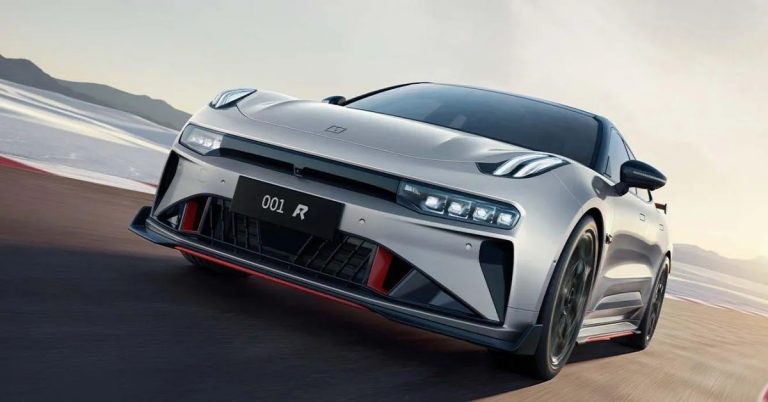
Senior officials in the Trump administration on Friday sharply criticized Canada’s decision to allow a limited number of Chinese electric vehicles into its market, warning that Ottawa would come to regret the move and making clear that the vehicles would be barred from entering the United States.
Speaking at a Ford manufacturing plant in Ohio, U.S. Transportation Secretary Sean Duffy said Canada’s decision risked opening the door to deeper Chinese influence in the North American auto market at a time when Washington is working to shield domestic manufacturers and workers.
“I think they’ll look back at this decision and surely regret it to bring Chinese cars into their market,” Duffy said, addressing an audience of government officials and auto industry figures at the event, which was organized to highlight the administration’s efforts to make vehicles more affordable for American consumers.
Register for Tekedia Mini-MBA edition 20 (June 8 – Sept 5, 2026).
Register for Tekedia AI in Business Masterclass.
Join Tekedia Capital Syndicate and co-invest in great global startups.
Register for Tekedia AI Lab.
Canada last year imposed a 100% tariff on Chinese electric vehicles, mirroring similar measures already in place in the United States. However, its more recent move to allow the import of up to 49,000 Chinese EVs has triggered concern in Washington that the policy could provide Beijing with a foothold in North America, even as the U.S. adopts an increasingly hardline stance on Canadian vehicles and auto parts.
U.S. Trade Representative Jamieson Greer sought to downplay any immediate impact on American automakers, saying the limited volume of Chinese EVs would not disrupt U.S. vehicle exports to Canada.
“I don’t expect that to disrupt American supply into Canada,” Greer said. “Those cars are going to Canada — they’re not coming here.”

Still, Greer described Canada’s decision as “problematic” in a separate interview, arguing that U.S. tariffs on Chinese vehicles are designed to protect American auto workers and consumers.
“There’s a reason why we don’t sell a lot of Chinese cars in the United States,” he said. “It’s because we have tariffs to protect American auto workers and Americans from those vehicles.”
The disagreement highlights growing friction in North American trade relations as the U.S. seeks to curb China’s global expansion in electric vehicles, a sector in which Chinese manufacturers have become increasingly competitive on cost and scale. U.S. officials fear that even limited access to the Canadian market could allow Chinese firms to build supply chains, brand recognition, and political leverage across the region.

Under the terms of the new arrangement with Beijing, Canadian Prime Minister Mark Carney said he expects China to lower tariffs on Canadian canola seed by March 1 to a combined rate of about 15%. Greer questioned the wisdom of that trade-off, warning that Ottawa could face longer-term consequences.
“I think in the long run, they’re not going to like having made that deal,” he said.
Beyond tariffs, Greer pointed to regulatory barriers that he said would make it difficult for Chinese vehicles to enter the U.S. market even if trade restrictions were eased. Rules adopted in January 2025 governing internet-connected vehicles and navigation systems pose a major obstacle, he said, citing U.S. cybersecurity standards.
“There are rules and regulations in place in America about the cybersecurity of our vehicles and the systems that go into those,” Greer said. “I think it might be hard for the Chinese to comply with those kind of rules.”
The administration’s stance reflects a broader consensus in Washington against Chinese-made vehicles. Lawmakers from both major parties have voiced strong opposition, echoing warnings from U.S. automakers that Chinese competition poses a serious threat to the domestic auto sector.
Ohio Senator Bernie Moreno, a Republican, drew applause at the Ohio event when he declared his opposition in blunt terms.
“As long as I have air in my body, there will not be Chinese vehicles sold the United States of America — period,” Moreno said.
The rhetoric stands in contrast to comments from President Donald Trump, who has said he would welcome Chinese automakers building vehicles in the United States, a position that underscores the tension between encouraging domestic investment and blocking imports seen as unfairly subsidized or strategically risky.
U.S. officials are making it clear that Canada’s decision will not soften Washington’s approach, at least for now. Even as Ottawa navigates its own trade-offs with Beijing, the Trump administration is signaling that Chinese electric vehicles will face firm resistance south of the border, reinforcing the United States’ determination to keep its auto market — and its supply chains — tightly guarded.