

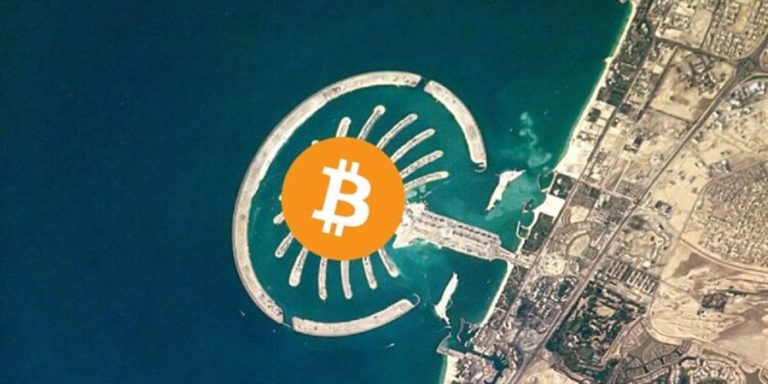
The UAE’s National Security Council has officially positioned Bitcoin as a foundational element of emerging financial systems, reflecting the country’s aggressive push to become a global crypto powerhouse.
This statement aligns with broader trends where nation-states are increasingly viewing digital assets as strategic reserves amid geopolitical shifts.
The remark comes from UAE Security General Mohammed Al Shamsi, who highlighted Bitcoin’s role in future finance while stressing the importance of sustainable mining practices—describing it as the “network’s beating heart” and advocating for an energy-efficient ecosystem.
It’s part of a larger narrative on how blockchain tech bolsters national security through innovation and diversification. The UAE has been on a tear lately. Dubai launched its own Virtual Asset Regulatory Authority (VARA) in 2022, attracting giants like Binance and Crypto.com.
Register for Tekedia Mini-MBA edition 20 (June 8 – Sept 5, 2026).
Register for Tekedia AI in Business Masterclass.
Join Tekedia Capital Syndicate and co-invest in great global startups.
Register for Tekedia AI Lab.
Abu Dhabi hosts the world’s largest crypto mining operation via the Abu Dhabi National Oil Company, leveraging excess energy for BTC production. Recent moves include licensing over 50 crypto firms and integrating blockchain into its “Dubai Blockchain Strategy” for government services.
As of today, Bitcoin is hovering around $90,000, with this news contributing to a modest uptick in sentiment. It’s fueling discussions on X about nation-state adoption, with users noting parallels to U.S. policy shifts under Trump pushing for rate cuts to support risk assets.
This isn’t just rhetoric—it’s a geopolitical flex. The UAE is signaling to investors and rivals like Singapore or the EU that it’s all-in on crypto as a hedge against fiat instability. For Bitcoin holders, it’s validation: from “digital gold” to “national security asset.”

Expect more inflows into UAE-based funds and exchanges like BitOasis. The United Arab Emirates (UAE) has positioned itself as a global leader in Bitcoin mining, leveraging its abundant energy resources, forward-thinking regulations, and state-backed initiatives to build one of the world’s largest sovereign Bitcoin reserves.
Unlike many nations that acquire BTC through purchases or seizures, the UAE focuses on industrial-scale mining to diversify its economy, hedge against fiat volatility, and establish blockchain expertise. This aligns with recent statements from UAE National Security officials emphasizing sustainable mining as the “network’s beating heart.”
As of December 2025, the UAE’s operations contribute significantly to its status as the fourth-largest sovereign BTC holder, with holdings valued at around $590 million amid market fluctuations. The UAE’s mining ecosystem is dominated by state-linked conglomerates and public companies, turning excess energy—often from oil and renewables—into digital assets.
The flagship operation, majority-owned (85%) by the International Holding Company (IHC), which is 61% controlled by the UAE Royal Group under Sheikh Tahnoon bin Zayed Al Nahyan. An 80,000-square-meter Bitcoin mining site on Al Reem Island, Abu Dhabi, constructed in just six months and operational since 2022.

Built in partnership with Phoenix Group and IHC, it’s powered by energy-efficient infrastructure, including renewables to align with ESG standards. Has mined approximately 9,300 BTC since inception, with 6,450 BTC valued at ~$590 million as of November 2025 held in government-linked wallets.
This ranks the UAE ahead of El Salvador (6,246 BTC) but behind Bhutan (11,286 BTC) globally. A key collaborator with Citadel, focusing on large-scale mining and infrastructure. It provides technical expertise and has been instrumental in scaling UAE’s hashrate, contributing to the country’s estimated 400 MW capacity.
The Abu Dhabi National Oil Company (ADNOC) has explored mining with excess gas, while events like Blockchain Life 2025 in Dubai showcase hardware from firms like Canaan and Bitmain, drawing Chinese-linked operations to the UAE for its favorable regulations.
UAE’s total mining capacity stands at around 400 MW, supporting a growing hashrate amid global records in 2024–2025. Operations emphasize sustainability, using solar and flared gas to minimize environmental impact, positioning mining as a tool for energy security and grid stabilization.
Mining has created jobs in tech and data centers, with transferable skills to AI and high-performance computing. The UAE also invested $436–$534 million in BlackRock’s Bitcoin ETF in 2025, complementing its mined reserves.
Fourth among sovereign holders, with total government BTC ownership including seizures estimated at up to 420,000 BTC ~$46 billion, though mined assets are the transparent core. This mining push underscores the UAE’s vision of Bitcoin as a “strategic financial asset” akin to oil, driving innovation under frameworks like Dubai’s VARA.
It’s attracting international firms and boosting local demand for ASICs, with experts noting rising ASIC upgrades and hosting services. Challenges include energy costs and volatility, but the model’s focus on renewables and regulation makes it a blueprint for other nations like Brazil and the Philippines.