

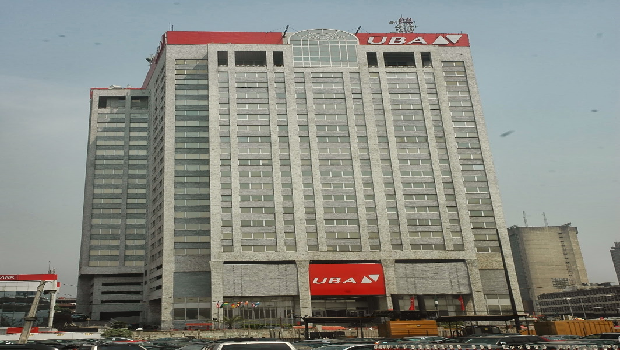
United Bank for Africa (UBA) Plc has extended the application period for its ongoing rights issue, shifting the deadline from Friday, 5th September 2025, to 19th September 2025.
The disclosure, published on the Nigerian Exchange (NGX) and signed by Group Company Secretary Bili Odum, confirmed that the Securities and Exchange Commission (SEC) had approved the revised timeline.
In a note explaining the adjustment, UBA said the extension is aimed at giving shareholders “additional time to fully exercise their rights and participate in the Rights Issue.”
Register for Tekedia Mini-MBA edition 20 (June 8 – Sept 5, 2026).
Register for Tekedia AI in Business Masterclass.
Join Tekedia Capital Syndicate and co-invest in great global startups.
Register for Tekedia AI Lab.
A Key Step in Meeting CBN’s Recapitalization Mandate
UBA’s fundraising effort is directly tied to the Central Bank of Nigeria’s (CBN) recapitalization directive, which requires commercial banks with international authorization to increase their capital base to N500 billion.
The bank’s ongoing offer covers 3,156,869,665 ordinary shares of 50 kobo each, priced at N50 per share, and is expected to raise over N157 billion. The structure of the issue allows shareholders to take up one new share for every thirteen ordinary shares held as of the qualification date of 16th July 2025.
Backstory: UBA’s Rights Issue History
This is not UBA’s first major capital-raising exercise. In November 2024, the bank launched a N239 billion rights issue priced at N35 per share. Investor appetite proved strong, with subscriptions reaching N251 billion. After adhering to the offer terms, the bank accepted N240 billion, boosting its capital base to N355.2 billion.

That earlier success provides confidence that the current extension to 19th September could drive further shareholder participation and put UBA firmly on track to meet — or even surpass — the recapitalization threshold.
UBA’s Q1 2025 Performance Underscores Growth Momentum
The extension comes against the backdrop of strong financial results. In the first quarter of 2025, UBA posted a pre-tax profit of N204.27 billion, marking a 30.65% increase year-on-year.
Net profit also surged 33.15%, hitting N189.84 billion compared to N142.58 billion in Q1 2024.

- A breakdown of its income drivers shows:
- Interest income rose 36.09% to N599.83 billion.
- Loans and advances generated N260.56 billion (+31%), contributing 43.44% of the total.
- Investment securities earned N291.86 billion (+44.96%), making up 48.66%.
- Income from cash balances climbed 17% to N47.42 billion, representing 7.9%.
- Non-interest income also showed resilience, with strong performance in transaction-based revenues:
- Electronic banking income: N47.84 billion (+7.86%)
- Account maintenance fees: N10.39 billion (+11.09%)
Investor Angle: Why This Rights Issue Matters
Some analysts believe that UBA’s decision to extend the application window is not just procedural but strategic. With Nigerian banks racing against time to meet the CBN’s capital requirements, maximizing shareholder participation is crucial to avoid reliance on expensive alternatives.
The pricing at N50 per share signals management’s confidence in the bank’s valuation, especially given that the previous rights issue in 2024 was priced at N35 per share and still oversubscribed.
If fully subscribed, the combined effect of the 2024 and 2025 rights issues will significantly lift UBA’s capital buffer, positioning it competitively against peers like Zenith Bank, Access Holdings, and GTCO, who are also actively raising fresh equity.
How Zenith and Access played the recapitalization game
Two of UBA’s peers moved earlier and by slightly different routes.
• Access Holdings / Access Bank ran a large rights programme that closed successfully and was cleared by regulators, raising roughly ?351 billion via the issuance of 17.77 billion shares at about ?19.75 per share — a transaction that lifted its capital well above the CBN minimum and made Access one of the first to cross the line under the new rules.
• Zenith Bank combined a rights issue with a public offer (a hybrid approach) and reported raising about ?350.4 billion under that programme. The hybrid structure allowed Zenith to tap both existing shareholders and new public investors in a single exercise.
What the choices tell you
Three practical differences stand out:
- Timing and market appetite. Access and Zenith moved earlier and posted large raises that exceeded the CBN threshold, freeing them from near-term recapitalization pressure. UBA is following with a second tranche; it is leaning on seasoned investor appetite and a history of oversubscription to reach the target.
- Structure and pricing. Access priced low per share but issued many shares, producing a large absolute rise. Zenith used a rights + public offer mix to widen distribution. UBA’s ?50 price point is higher than those earlier offers, signaling management’s confidence in valuation after solid quarterly results and prior shareholder support.
- Balance-sheet and funding mix. Banks that closed early (Access, Zenith) now have the regulatory headroom to pursue growth or M&A without the immediate distraction of further equity raises. UBA’s staggered approach — a prior rights round in 2024 followed by the current tranche — spreads dilution and gives management an option to absorb capital in stages rather than all at once.