

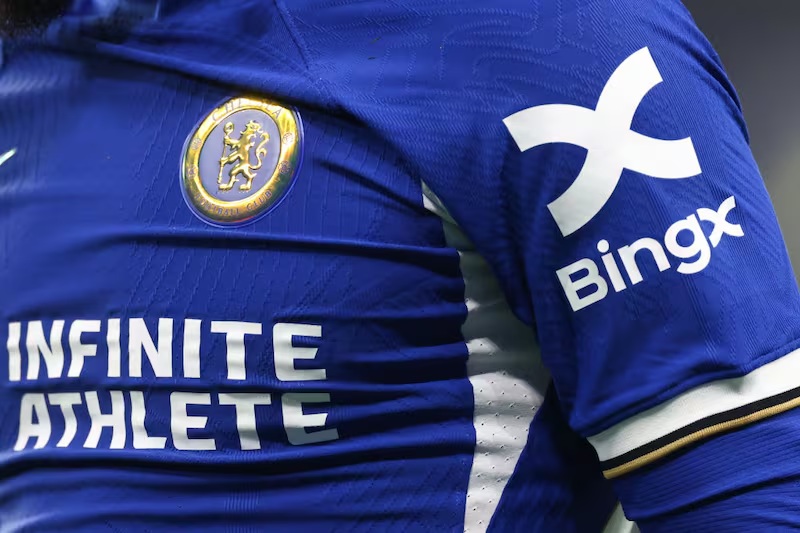
UK football clubs have become increasingly entangled with cryptocurrency sponsorships, reflecting a broader shift in sports finance toward digital asset firms seeking mainstream legitimacy.
Top-tier organizations such as Manchester United, Chelsea F.C., and Arsenal F.C. have all, at various points, explored or partnered with crypto-related sponsors, drawn by lucrative deals that often exceed traditional commercial agreements. Yet beneath the surface of these high-value partnerships lies a growing concern among regulators, compliance officers, and financial crime experts: the potential for money laundering exposure and reputational risk.
Cryptocurrency sponsorships typically involve exchanges, token issuers, or trading platforms that seek visibility through shirt deals, stadium branding, and digital advertising.
Companies such as Binance have previously pursued aggressive sports marketing strategies across European football, targeting clubs with global fanbases. While these deals provide essential revenue streams for clubs operating under Financial Fair Play constraints, they also introduce complex due diligence challenges.
Register for the next Tekedia Mini-MBA.
Register for Tekedia AI in Business Masterclass.
Join Tekedia Capital Syndicate and co-invest in great global startups.
Regulators, particularly in the UK under the Financial Conduct Authority framework, have raised concerns that crypto sponsorship deals may obscure the origin of funds, especially when sponsors operate across multiple jurisdictions with varying compliance standards. In some cases, sponsorship payments may be routed through intermediary entities or offshore structures, complicating beneficial ownership transparency and increasing exposure to illicit finance risks.
This is particularly relevant given the historical vulnerability of football finance to third-party ownership schemes and opaque agent networks. Beyond regulatory concerns, clubs risk reputational damage if associated crypto firms later face insolvency, fraud allegations, or sanctions. The collapse of several high-profile exchanges has already underscored the volatility of the sector.
For institutions like Manchester United and Chelsea F.C., global brand equity is tightly linked to sponsor credibility, meaning due diligence failures can have long-term commercial consequences. Governance frameworks within English football are also evolving, with increased scrutiny of ownership structures, sponsorship disclosures, and anti-money laundering compliance obligations.

As the relationship between football and digital assets deepens, the challenge for regulators and clubs is to balance innovation-driven revenue opportunities with robust safeguards against financial crime exposure. Stricter sponsorship vetting, enhanced know-your-customer (KYC) requirements for commercial partners, and cross-border cooperation between financial intelligence units are likely to become central to future compliance frameworks.
While crypto sponsorships have injected significant capital into UK football, they also expose clubs to a financial ecosystem that is still maturing and remains susceptible to misuse.
Additional risks include token volatility, marketing hype cycles, and limited oversight of influencer-driven promotions tied to club branding. As clubs increasingly monetize global fan engagement through digital assets, they may also inadvertently normalize high-risk financial instruments within mainstream sports culture. Without clearer regulatory alignment between sports governing bodies and financial authorities, the sector could face repeated cycles of scandal and reactive reform.
A more structured compliance architecture would require standardized disclosure of crypto sponsorship contracts, independent audit trails for payment flows, and clearer classification of digital asset firms within sports sponsorship codes. Such measures would help preserve the financial benefits of innovation while reducing systemic exposure to illicit finance risks in one of the world’s most commercially influential sports leagues.

Effective enforcement and industry collaboration will therefore determine whether crypto sponsorship becomes a sustainable revenue channel or a persistent compliance liability for UK football. Long-term outcomes will depend on regulatory clarity and institutional discipline across both sectors as enforcement matures globally in coming years and beyond.