

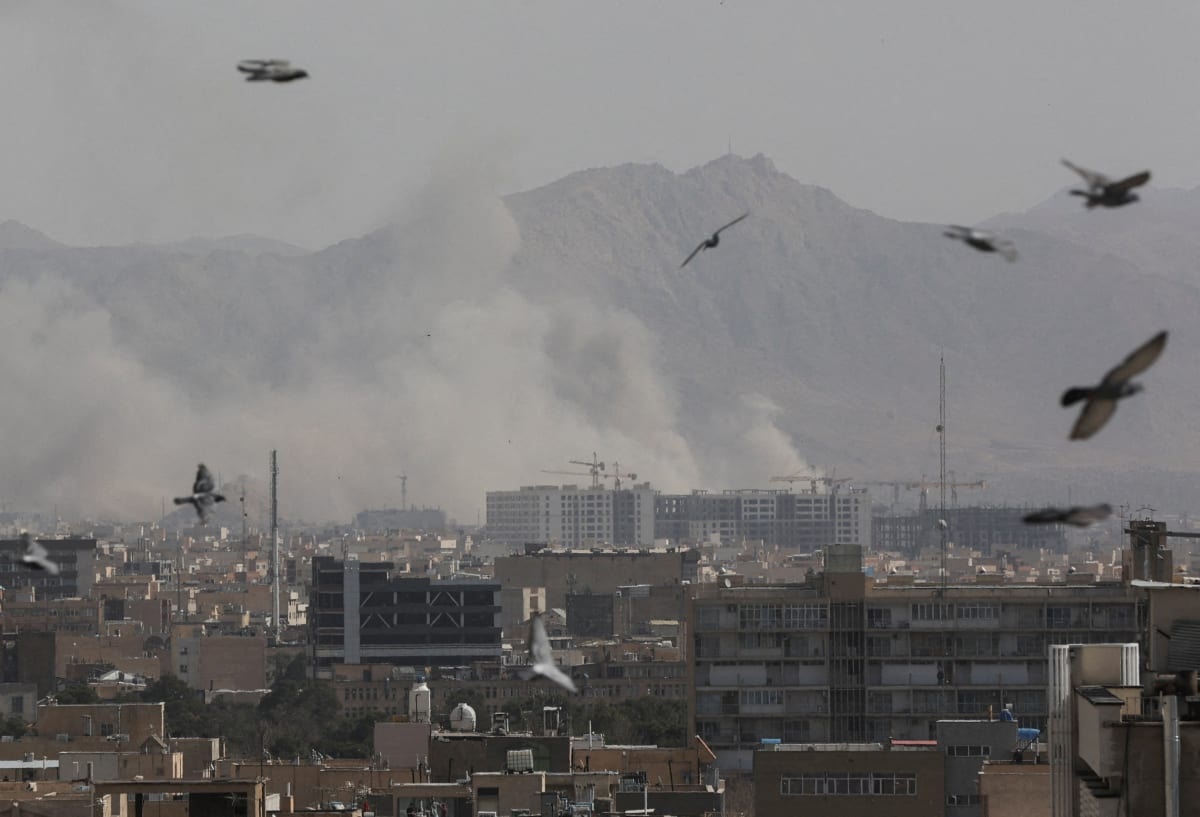
The United States and Israel launched a major joint military operation against Iran. This marks a significant escalation in the region, with strikes targeting Iranian leadership, military sites, nuclear-related facilities, ballistic missile programs, and other strategic locations.
The U.S. refers to it as Operation Epic Fury, while Israel calls it. Israeli strikes reportedly focused on high-level Iranian figures, including attempts on Supreme Leader Ayatollah Ali Khamenei, with some reports claiming he died during the onslaught.
U.S. efforts emphasized Iran’s nuclear and missile infrastructure. President Donald Trump posted a video statement confirming “major combat operations” are underway, framing it as necessary to eliminate threats from Iran’s regime, prevent nuclear weapon development, and create conditions for Iranians to potentially overthrow their government.
He urged Iranians to “take over your government” and seize their “destiny.” Prime Minister Benjamin Netanyahu and Defense Minister Israel Katz described it as a pre-emptive action after months of joint planning to remove existential threats. Strikes began early Saturday hitting cities like Tehran with visible smoke and explosions near leadership compounds, Isfahan, Qom, Karaj, Kermanshah, and others.
This follows failed recent indirect negotiations mediated in places like Oman over Iran’s nuclear program. Iran has launched retaliatory strikes, including missiles and drones targeting: Israel with interceptions reported over areas like Haifa. U.S. military bases and assets across the Middle East, including in Gulf states hosting American forces.
Register for Tekedia Mini-MBA edition 20 (June 8 – Sept 5, 2026).
Register for Tekedia AI in Business Masterclass.
Join Tekedia Capital Syndicate and co-invest in great global startups.
Register for Tekedia AI Lab.
Reports mention hits or attempts on U.S. naval facilities and other sites, with explosions reported in those countries. Casualties have been reported on the Iranian side, including civilian deaths; one strike allegedly hit a girls’ school in southern Iran, killing dozens per state media. The situation remains fluid, with ongoing exchanges and potential for further escalation.
This builds on prior tensions, including a 2025 air conflict between Israel and Iran. Russia condemned it as “unprovoked aggression,” while some Gulf states expressed solidarity with affected neighbors but are on high alert. Rep. Thomas Massie publicly opposed the action, calling it not “America First” and pushing for a congressional vote under constitutional requirements.
This marks a direct escalation from prior shadow conflicts and the 2025 air exchanges, shifting to an explicit campaign targeting Iranian leadership, nuclear and missile infrastructure, and regime stability—with open calls for regime change from both President Trump and Prime Minister Netanyahu.

Iran has already retaliated with missile and drone barrages targeting Israel; impacts reported in Tel Aviv and US bases and assets in Gulf states (Qatar, Bahrain, UAE, Kuwait, Saudi Arabia, Jordan, Syria). Explosions and interceptions have occurred in multiple locations, including Dubai and Bahrain’s US Navy facilities.
Proxies like the Houthis have resumed Red Sea attacks, raising the specter of multi-front warfare involving Hezbollah, Iraqi militias, and others. Thousands of American troops and assets in the region are vulnerable to asymmetric Iranian responses; missiles, drones, proxy strikes. Trump has acknowledged potential US casualties, signaling this could become a prolonged campaign rather than a one-off strike.
Experts note Iran has prepared for this since earlier conflicts, likely responding with full missile arsenal use and asymmetric tactics. A restrained retaliation might limit scope, but broader targeting; risks drawing in more actors and turning this into a regional war.
Strikes aim to degrade Iran’s nuclear and ballistic programs, but prior assessments from 2025 exchanges suggest setbacks may be temporary, potentially accelerating Iran’s push toward weaponization if the regime survives. The explicit goal—creating conditions for Iranians to overthrow their government—echoes historical interventions but faces skepticism.
Analysts describe it as a high-stakes bet; success could reshape the Middle East by weakening Iran’s “axis of resistance,” but failure or a drawn-out conflict might rally hardliners, embolden anti-Western alliances, and fracture global order. Hosts of US bases condemned Iranian strikes as sovereignty violations while balancing self-defense and avoiding full entanglement.

They fear economic fallout from energy disruptions and may accelerate arms purchases or nuclear ambitions
Condemnations from Russia China, and others; calls for restraint from EU leaders who urge renewed talks. Some Arab states express concern over escalation while aligning defensively with US and Israel interests.
Broader alliances could harden: potential for deeper Russia and China support to Iran, or shifts in global energy dependencies.
Iran controls key chokepoints; Strait of Hormuz carries ~20% of global oil. Disruptions—even limited—could spike prices, fuel inflation, and hit economies worldwide. This undercuts domestic US priorities like low gasoline prices. Shipping halts, airspace closures, and proxy flare-ups threaten global trade, supply chains, and markets.
Long-term conflict risks war fatigue in the US and Israel and domestic political backlash. Widespread sheltering, flight bans, and potential radiological risks if nuclear sites are hit. Strikes may unify the population against external aggression or spark unrest if leadership is weakened—but regime survival appears prioritized over concessions.
In the US, opposition from some Republicans questions constitutionality without congressional approval. Prolonged engagement could divide publics amid casualty risks. This remains a highly fluid, developing crisis with high potential for uncontrolled escalation.
Analysts warn of “wars of choice” often leading to unpredictable, costly outcomes—regional conflagration, economic shocks, and shifts in global power balances are all on the table. Live coverage from major outlets continues to track developments in real time.
The conflict has led to airspace closures, flight halts, shelter-in-place advisories including for U.S. citizens in Iran, and widespread regional fears of a prolonged war. The risk of broader regional involvement including proxies or other states remains high.