

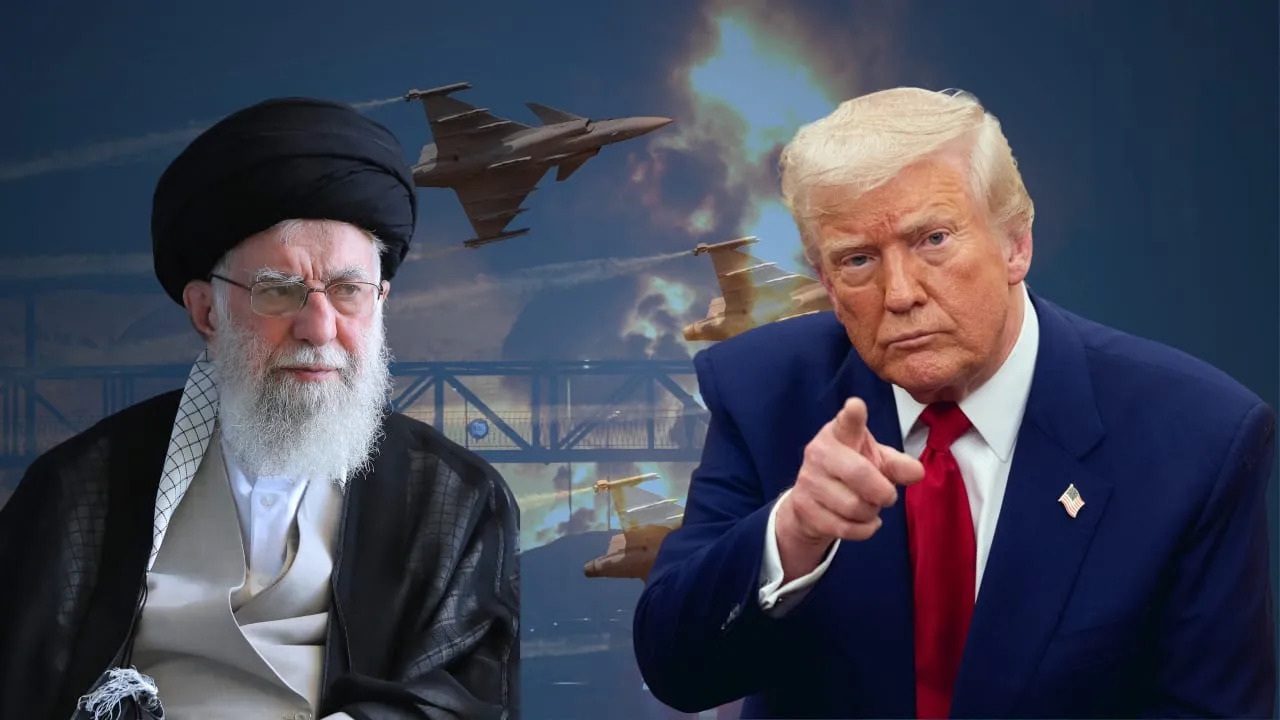
US and Iran to begin serious nuclear talks on Monday in ongoing high-stakes negotiations over Iran’s nuclear program. The most recent round of indirect talks (the third this year) concluded yesterday (Thursday, February 26) in Geneva, Switzerland, without a final deal.
These discussions were mediated by Oman and involved U.S. envoys including Steve Witkoff and Jared Kushner and Iran’s Foreign Minister Abbas Araghchi. Both sides described the session as one of the most intense and serious to date, lasting several hours around six and a half in some reports.
Mediators and officials noted “significant progress” or “good progress,” with understandings reached on some issues but gaps remaining on others; uranium enrichment levels, Iran’s highly enriched uranium stocks, sanctions relief, and potentially related matters like ballistic missiles.
Register for Tekedia Mini-MBA edition 20 (June 8 – Sept 5, 2026).
Register for Tekedia AI in Business Masterclass.
Join Tekedia Capital Syndicate and co-invest in great global startups.
Register for Tekedia AI Lab.
No breakthrough was achieved, and the risk of U.S. military action remains elevated amid a major American military buildup in the Middle East including aircraft carriers, warplanes, and troops—the largest in over two decades. Importantly, technical-level talks involving experts from both sides are set to begin on Monday (March 2, 2026, assuming standard scheduling) in Vienna, Austria, at the International Atomic Energy Agency (IAEA) headquarters.
These will focus on technical details, such as verification processes, enrichment limits, and related nuclear issues, with help from IAEA experts. A fourth round of higher-level (political) negotiations is expected to follow soon after, likely in about a week, following consultations in each capital.
This fits the phrasing of “beginning serious nuclear talks on Monday,” as the Vienna session represents the next concrete step in the diplomatic process—more focused and technical than the prior Geneva rounds.
Iranian officials emphasized seriousness on both sides to reach a deal, while U.S. demands reportedly include indefinite restrictions (no sunset clauses), dismantling or limiting key facilities (like Fordow, Natanz), and shipping out enriched uranium, though Iran rejects zero enrichment or facility destruction.

The backdrop includes ongoing threats: President Trump has warned of strikes if no agreement is reached, and Iran has vowed retaliation. Markets reacted with oil price jumps due to uncertainty.
Iran’s ballistic missile program is one of the most advanced and extensive in the Middle East, serving as a core element of its military doctrine for deterrence, asymmetric warfare, and supporting regional proxies.
The program remains a major point of tension in ongoing U.S.-Iran nuclear negotiations, with the U.S. pushing for limitations while Iran views it as non-negotiable. Iran possesses the largest ballistic missile arsenal in the region, with estimates of over 3,000 missiles, including thousands of short-range ballistic missiles and medium-range ballistic missiles.
Iran has imposed a self-declared range limit of about 2,000 km roughly 1,240 miles, which covers Israel, much of the Middle East, parts of southeastern Europe, and U.S. military bases in the region. Fateh-110/313 up to 500 km, Zolfaghar (700 km), Fath-360 (30–120 km, noted for precision and bunker-busting variants), Fath-450 (150–250 km), and anti-ship variants like Khalij Fars.
Many feature improved precision, solid-fuel propulsion for quicker launches and better survivability, maneuverable reentry vehicles, and resistance to electronic warfare. Iran has demonstrated these in exercises, strikes on Israel in 2024–2025 conflicts, and proxy support to Houthis, and Hezbollah.

Iran does not currently have intercontinental ballistic missiles (ICBMs) capable of reaching the continental United States. U.S. intelligence states Iran could develop a militarily viable ICBM by around 2035, potentially adapting space launch vehicles, but this would require a political decision and faces technical hurdles—even with assistance from partners like North Korea or China, it could take 8+ years.
Iran has actively rebuilt facilities damaged in the June 2025 Israel-Iran War and prior strikes, with satellite imagery showing rapid reconstruction at sites like Khojir Missile Production Complex and Taleghan 2 at Parchin (hardened with concrete “sarcophagus” against airstrikes).
Ongoing production and hardening efforts prioritize the program as a deterrent. Recent IRGC exercises showcased SRBMs like Fath-360/450, drones, and precision strikes, signaling preparation for potential Gulf conflicts targeting U.S. assets.
No major new missile tests publicly announced in early 2026, but rebuilding and enhancements continue. The program faces heavy U.S. sanctions, including recent Treasury actions targeting shadow fleet vessels, procurement networks; for solid propellant precursors like sodium perchlorate, and entities in Iran, Turkey, and UAE supporting missile and drone production.
UN-related restrictions persist in some forms due to Iran’s nuclear non-compliance, though ballistic missile-specific UN limits expired earlier but are echoed in U.S./allied measures. In current indirect nuclear talks, the U.S. demands curbs on missiles as a future issue, viewing them as linked to nuclear delivery potential and regional threats.
Iran firmly rejects discussing or limiting its missile program, calling it essential for defense—Supreme Leader Khamenei reportedly sees concessions as “equivalent to losing a war.” Talks remain focused on nuclear issues for now, with technical sessions upcoming, but missiles are a “big problem” per U.S. officials and a likely future sticking point.
The program bolsters Iran’s asymmetric strategy amid U.S. military buildup in the region and threats of strikes if diplomacy fails. Diplomacy continues under pressure, but a comprehensive deal remains elusive for now. Further updates will depend on the Vienna technical discussions and subsequent rounds.