

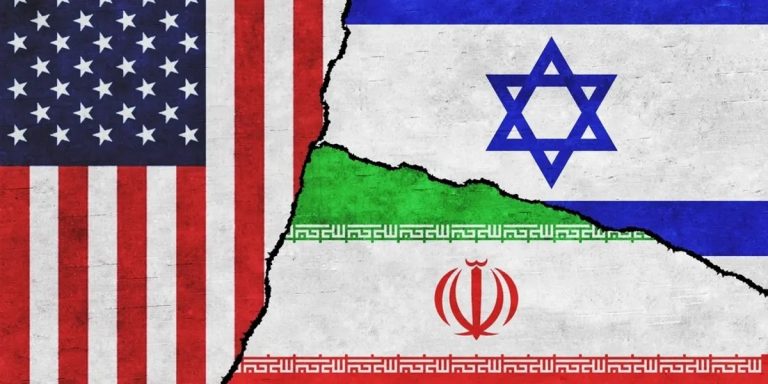
Geopolitical conflicts often produce two simultaneous crises. One unfolds on the battlefield. The other spreads through the global information environment. The tensions between the United States, Israel, and Iran demonstrate how these two crises interact in the modern world. While military developments shape the strategic landscape, global public reaction reveals a deeper problem. The world is experiencing a moment of information shock.
Information shock occurs when events move faster than the systems designed to explain them. Governments, media institutions, and analysts struggle to provide clear narratives while the public searches for immediate answers. In such situations, uncertainty becomes the dominant feature of public discourse. The conflict involving the United States, Israel, and Iran illustrates how quickly global attention can shift from awareness to confusion and then to economic concern.
Public search behaviour reveals a striking pattern. Many people around the world are not yet debating strategy or historical context. Instead, they are asking very basic questions. Queries focus on why the United States attacked Iran, whether the United States is officially at war with Iran, and whether war has actually been declared. The prevalence of these questions indicates that the global public is still trying to verify the reality of the situation.
Register for Tekedia Mini-MBA edition 20 (June 8 – Sept 5, 2026).
Register for Tekedia AI in Business Masterclass.
Join Tekedia Capital Syndicate and co-invest in great global startups.
Register for Tekedia AI Lab.
This pattern is typical in the early stages of geopolitical escalation. When major powers appear to enter direct confrontation, the public response begins with verification. People want to confirm that the event is real before they attempt to understand its causes or consequences. In this phase, the demand for information grows rapidly while the supply of verified explanations remains limited.
Once people begin to accept that a conflict is underway, attention shifts toward the potential consequences. Search patterns show increasing concern about military strikes, casualties, and retaliation. Interest in queries related to bombing campaigns, soldiers killed, and ongoing attacks suggests that audiences are trying to gauge the scale of the conflict. At the same time, other queries point to growing fears about escalation.
Questions about sleeper cells, possible attacks on the United States, and the risk of wider war indicate that public concern is expanding beyond the immediate battlefield. When conflicts involve major military powers, the public often begins to imagine worst case scenarios. The appearance of queries about global war reflects a broader psychological response to geopolitical instability.

In the digital era, this reaction spreads quickly. Social media platforms accelerate the circulation of speculation and rumors. As a result, people turn to search platforms not only to find information but also to confirm or challenge what they have already encountered online. The global information ecosystem becomes crowded with fragmented narratives. Some of these narratives are based on verified reporting, while others originate from speculation or misinterpretation.
Another important pattern emerges in the geographic focus of public attention. Many queries relate to locations across the Middle East, including diplomatic missions and regional infrastructure. This suggests that the public is already linking the conflict to broader regional security concerns. When tensions rise in a strategically important region, people immediately begin to consider the implications for trade routes, energy supplies, and international stability.
These concerns quickly connect to economic expectations. Modern economies depend heavily on interconnected supply chains and stable transportation corridors. When conflict appears in regions that influence global trade or energy flows, uncertainty spreads through financial markets and investment decisions.

The economic impact of geopolitical crises often begins with uncertainty rather than disruption. Businesses delay investment decisions while they assess potential risks. Investors shift their capital toward assets that appear safer during periods of instability. Policymakers begin to prepare contingency measures in case economic conditions deteriorate. These reactions can slow economic momentum even if the conflict itself remains geographically limited.
The conflict between the United States, Israel, and Iran therefore presents a complex challenge for the global economy. The direct effects of military escalation remain difficult to predict. However, the indirect effects of uncertainty are already visible. When the global public struggles to understand the trajectory of a crisis, economic expectations become unstable.
Emerging markets may feel these pressures most strongly. Many developing economies rely heavily on predictable energy prices and stable global trade conditions. If geopolitical tensions raise energy costs or disrupt supply chains, these economies could experience inflationary pressure and slower growth. Even advanced economies may face challenges if prolonged uncertainty reduces investment and consumer confidence.
The conflict also highlights the importance of narrative stability in the digital age. Military power remains central to geopolitical competition, but information management has become equally important. Public perception shapes political pressure, market sentiment, and diplomatic positioning. When narratives remain fragmented or unclear, uncertainty intensifies.
The wide variety of global search queries reflects this fragmented information environment. Some people seek explanations for military actions. Others focus on the possibility of retaliation or wider war. Still others search for regional security alerts or diplomatic updates. These different concerns illustrate how rapidly the public attempts to map the consequences of a crisis that is still unfolding.
The broader lesson is that geopolitical events now unfold in an information environment that is faster and more complex than ever before. In earlier eras, governments and traditional media institutions controlled much of the narrative surrounding international conflict. Today information moves across digital networks at extraordinary speed, often before reliable verification is available.
As a result, crises increasingly begin with confusion before clarity emerges. The United States, Israel, and Iran conflict represents a powerful example of this phenomenon. The world is not only responding to military developments but also attempting to interpret them in real time.
For policymakers, business leaders, and global institutions, the central challenge is managing uncertainty. Economic systems depend on predictability. When geopolitical developments create sustained ambiguity, growth projections become difficult to maintain. Investment slows and markets become more volatile.
Until clearer signals emerge about the direction of the conflict, the global environment will likely remain characterized by caution. Governments will monitor developments closely. Investors will continue to assess risk. Businesses will weigh strategic decisions carefully.
The defining feature of the current moment is therefore not only the conflict itself but the widespread information shock that surrounds it. In an interconnected world where perception travels as quickly as events, uncertainty can become one of the most powerful forces shaping economic outcomes.