

Politics is increasingly being shaped by the same forces that unsettle markets: public dissatisfaction, economic pressure and geopolitical uncertainty.
In the United States, Brazil and the Middle East, developments that appear separate are connected by a common question—how governments respond when citizens and markets begin demanding visible results.
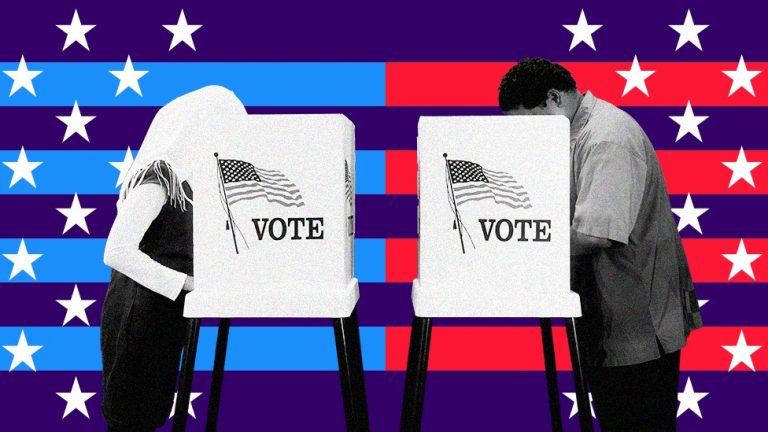
In the United States, the November 3 midterm elections are approaching with Democrats showing strength in polling for the House of Representatives. Recent analysis from Chatham House notes that Republicans currently hold a narrow House majority, while Democrats have 212 seats and need 218 for control.
Register for the next Tekedia Mini-MBA.
Register for Tekedia AI in Business Masterclass.
Join Tekedia Capital Syndicate and co-invest in great global startups.
National generic-ballot surveys have recently given Democrats an advantage, while President Donald Trump’s approval ratings have remained weak. Economic concerns are particularly important.
Pew Research Center found in July that 42% of registered voters viewed their congressional vote as primarily a vote against Trump, compared with 22% who viewed it as a vote for him.
Cost-of-living pressures, including healthcare, food, housing and gasoline, have become significant political concerns. Still, polling is not an election result. Turnout, district-level contests, late developments and the strength of individual candidates can alter the final balance.

The significance of the current numbers is therefore less about predicting an outcome than showing how dissatisfaction with the administration could influence congressional voting. Brazil presents another consequential political contest.
Its presidential election is scheduled for October 4, with a potential runoff on October 25. President Luiz Inácio Lula da Silva is seeking another term against Senator Flávio Bolsonaro, son of former president Jair Bolsonaro, amid a closely contested campaign.
Reuters reports that the race has become increasingly competitive, with economic concerns, crime and political polarization shaping the debate. The consequences extend beyond Brazil’s borders. Brazil is Latin America’s largest economy and an influential diplomatic actor.

A change in leadership could affect its relationships with China, the United States, Europe and neighboring governments, particularly as the region experiences competing political currents.
The election therefore carries significance not only for domestic policy but also for South America’s diplomatic and economic orientation. Meanwhile, the Strait of Hormuz remains a critical test of whether diplomacy can convert geopolitical tension into practical stability.
Any agreement to reopen the strategic waterway would need to go far beyond a broad political promise. Chatham House argues that a durable arrangement should establish specific shipping routes, vessel eligibility, communications procedures, inspection rules and mechanisms for dealing with violations.
Reciprocity would be central. Iran could reduce interference with commercial shipping while the United States and its partners could adjust blockade measures in response to verified compliance. Mine-clearance operations, navigation protocols and independent monitoring would provide additional safeguards.
The broader lesson is that political agreements increasingly depend on implementation. Whether in Washington, Brasília or the Persian Gulf, public confidence is shaped not simply by promises but by whether institutions can translate those promises into predictable outcomes.
For investors and businesses, that distinction matters. Elections can alter policy direction, while disruptions around Hormuz can affect energy prices, inflation and global trade.
In an interconnected economy, political uncertainty rarely remains confined to politics. It travels through currencies, commodities, supply chains and financial markets—making the coming weeks consequential far beyond the ballot box.