

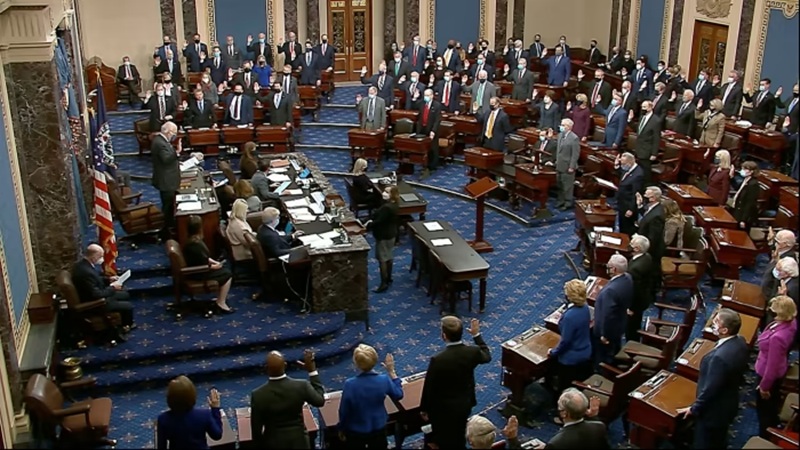
The United States midterm elections have delivered a historic political earthquake, with Democrats achieving their biggest electoral victory in half a century.
By reclaiming control of both chambers of Congress and flipping several governorships, the opposition has dealt President Donald Trump one of the most damaging political defeats of his presidency.
The results signal growing frustration with the administration and raise important questions about the future of American politics, the Republican Party and the country’s international standing.
Register for the next Tekedia Mini-MBA.
Register for Tekedia AI in Business Masterclass.
Join Tekedia Capital Syndicate and co-invest in great global startups.
Democrats have not only recaptured the House of Representatives but also secured the Senate, giving them significant influence over the legislative agenda.
They have additionally flipped at least five governors’ mansions, demonstrating that dissatisfaction with the administration extends beyond congressional politics.
Perhaps most strikingly, every statewide office contested in traditionally Republican Texas has turned blue. In North Carolina, a Trump-backed Senate candidate suffered a crushing 20-point defeat.

While Mississippi, one of America’s most reliably Republican states, appeared increasingly likely to elect a Democratic senator. Such results represent an extraordinary rejection of the political direction established under Trump.
The election outcome reflects voters’ growing frustration with government incompetence, corruption allegations and perceived self-enrichment among political leaders.
Americans appear increasingly unwilling to tolerate an administration accused of prioritizing personal interests over public responsibilities.

Concerns about corruption have become particularly significant, with public perceptions of widespread government misconduct reaching levels comparable to those recorded in countries such as Nigeria.
The message from voters is unmistakable: they want accountability, transparency and a government more focused on improving everyday life. For Democrats, electoral success brings considerable responsibility.
Their newly acquired congressional power provides an opportunity to investigate alleged misconduct, expose questionable financial dealings and establish stronger safeguards against corruption.
Holding the administration accountable will be essential to restoring public confidence in American institutions. Democrats must avoid allowing political investigations to consume their entire legislative agenda.
Voters are concerned about practical economic challenges, including living costs, employment opportunities, healthcare affordability and household financial security.
Addressing these problems will require Democrats to find areas of cooperation with the president, despite their political differences.
Their ability to balance oversight with constructive policymaking could determine whether their electoral victory develops into a lasting political realignment.
Republicans face an uncomfortable internal battle over the party’s identity and future leadership. Some members will attempt to preserve Trump’s influence and maintain the populist MAGA movement.
While others may argue that the election demonstrates the need to restore traditional conservative principles, institutional responsibility and personal character in public office. How Republicans resolve these competing priorities could reshape the party for years.
Despite the Democratic victory, Trump remains president and retains substantial executive authority, particularly in foreign policy. His administration can still influence international trade, diplomatic relationships, military commitments and geopolitical negotiations.
A divided political environment could therefore create uncertainty for America’s allies, competitors and financial markets. The midterm results represent more than a setback for one political administration.
They demonstrate that voters remain capable of demanding accountability and changing the country’s political direction. Democrats now have an opportunity to rebuild trust, while Republicans must confront difficult questions about leadership and political character.
For America and the wider world, however, the transition promises a period of uncertainty, intense political competition and potentially turbulent international relations.