

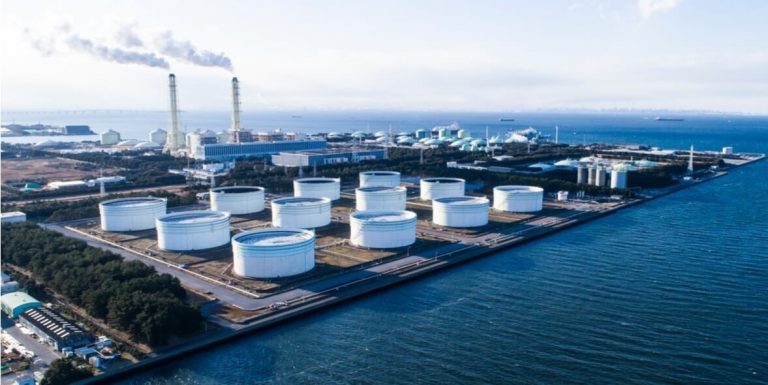
The United States is stepping up its energy diplomacy in Southeast Asia, offering access to strategic energy reserves, expanding exports of liquefied petroleum gas (LPG) and liquefied natural gas (LNG), and deepening cooperation on critical minerals and digital infrastructure as geopolitical competition in the region intensifies.
Speaking at the ASEAN Future Forum in Hanoi, U.S. Deputy Secretary of State Christopher Landau said Washington is seeking to help Southeast Asian nations navigate the current energy crisis while strengthening long-term energy security.
“The current energy crisis has clearly ?outlined the need for countries to diversify energy ?resources, and the United States wants to work ?with you to help ASEAN member states not ?only navigate the current situation, but also to support ?long-term energy security and resilience,” Landau said at an ASEAN Future forum in Hanoi.
Register for the next Tekedia Mini-MBA.
Register for Tekedia AI in Business Masterclass.
Join Tekedia Capital Syndicate and co-invest in great global startups.
The U.S. has been making efforts to boost economic and strategic ties with the Association of Southeast Asian Nations (ASEAN) at a time when energy supply disruptions, growing electricity demand, and geopolitical tensions are reshaping regional priorities.
Landau said the United States is exploring the release of portions of its strategic energy reserves and wants to increase exports of LPG and LNG to ASEAN member states.
The proposal comes as many Southeast Asian economies face mounting energy challenges. Rapid industrialization, population growth, rising electricity consumption, and volatility in global fuel markets have increased concerns about supply reliability.

Washington has already taken steps to support regional partners. According to Landau, the United States recently supplied shipments of crude oil and LPG to the Philippines to help ease supply shortages.
Following disruptions linked to conflicts in the Middle East and ongoing concerns about shipping routes and fuel availability, countries are increasingly seeking diversified energy suppliers rather than relying heavily on a limited number of sources.
For ASEAN countries, access to additional U.S. LNG could become particularly important as governments attempt to balance energy security with efforts to reduce reliance on coal.

The United States also expressed support for expanding the ASEAN Power Agreement, part of a longstanding regional effort to create an integrated cross-border electricity network.
The ASEAN Power Grid project aims to connect national electricity systems across Southeast Asia, allowing countries to share power resources, improve reliability, and lower energy costs.
Support for regional energy integration offers Washington an opportunity to deepen engagement in Southeast Asia while promoting infrastructure standards and investment frameworks aligned with U.S. interests.
Critical minerals emerge as a new strategic battleground
Beyond traditional energy cooperation, Landau highlighted potential collaboration on critical minerals investment. The issue has become important as global demand surges for minerals such as nickel, cobalt, lithium, and rare earth elements used in electric vehicles, batteries, semiconductors, and advanced defense systems.
Several ASEAN countries occupy strategically important positions in global supply chains. Indonesia is a leading producer of nickel, while Vietnam possesses significant rare-earth reserves. Malaysia and the Philippines also play important roles in critical mineral production and processing.
Washington’s interest is seen as part of growing efforts by the United States and its allies to diversify supply chains and reduce dependence on China, which dominates many segments of the global critical minerals market.
Landau encouraged ASEAN nations to work with what he described as “trusted suppliers” for critical communications and information technology systems, emphasizing that infrastructure decisions made today will shape economic and security outcomes for decades.
“The ?choices you all make today about infrastructure ?partners will ?shape your security and prosperity for decades to come,” he said.
Although China was not mentioned directly, the remarks align with longstanding U.S. concerns about Chinese involvement in telecommunications networks, digital infrastructure, and emerging technologies.
Southeast Asia has become a key arena in the competition between Washington and Beijing for technological influence. Governments across the region are increasingly weighing security considerations alongside cost and investment opportunities when selecting technology partners.
South China Sea remains a strategic priority
The energy and technology initiatives were accompanied by renewed U.S. support for freedom of navigation and regional stability in the South China Sea.
Landau reiterated Washington’s commitment to working with Vietnam and other ASEAN members to ensure that the strategic waterway remains open and accessible.
The South China Sea remains one of the world’s most important maritime trade routes, carrying trillions of dollars in annual commerce and serving as a critical artery for global energy shipments.
For many ASEAN countries, maritime security and energy security are closely linked. Any disruption in the South China Sea could affect fuel imports, trade flows, and broader economic stability.
Additionally, Washington is no longer competing solely on military or diplomatic fronts. Instead, energy supplies, LNG exports, critical mineral investments, digital infrastructure, and supply-chain resilience have become central tools of influence.
For ASEAN nations, the challenge will be balancing deeper engagement with the United States while maintaining economic ties with China, the region’s largest trading partner.
The latest U.S. outreach suggests that Southeast Asia will remain a critical battleground in the competition for influence over the future of energy systems, technology networks, and strategic supply chains. As demand for power, AI infrastructure, and critical minerals accelerates, ASEAN’s role in the global economy is likely to become even more important, drawing increased attention from both Washington and Beijing.