

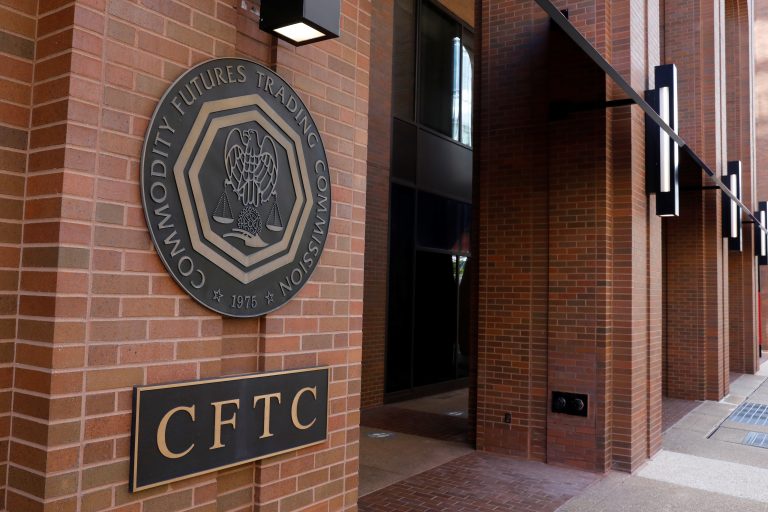
The U.S. Securities and Exchange Commission (SEC) and the Commodity Futures Trading Commission (CFTC) have issued a joint interpretive guidance clarifying the application of federal securities laws to certain crypto assets and related transactions.
This marks a significant shift toward regulatory clarity in the U.S. digital asset space, following years of uncertainty and enforcement-focused approaches under prior leadership. Most crypto assets are not securities: SEC Chairman Paul Atkins explicitly stated that the interpretation “acknowledges what the former administration refused to recognize—that most crypto assets are not themselves securities.”
This applies to the assets themselves in many cases, distinguishing them from investment contracts that might trigger securities laws. The guidance provides a framework often described as a “token taxonomy” for classifying digital assets, including categories like commodities, utility tokens, collectibles, stablecoins, and securities.
It addresses how a “non-security crypto asset” one not inherently a security can become subject to securities laws if involved in an investment contract via Howey Test factors, and how such status can end when issuer promises are fulfilled or fail. Specific activities clarified as generally outside securities regulation include staking, airdrops, protocol mining, wrapping of non-security assets, and secondary market trading of many tokens.
Register for Tekedia Mini-MBA edition 20 (June 8 – Sept 5, 2026).
Register for Tekedia AI in Business Masterclass.
Join Tekedia Capital Syndicate and co-invest in great global startups.
Register for Tekedia AI Lab.
The CFTC aligns with this view and confirms it will administer the Commodity Exchange Act (CEA) consistently, treating many non-security crypto assets as commodities under its jurisdiction. This builds on earlier 2025-2026 efforts, including: A Memorandum of Understanding (MOU) between the SEC and CFTC to harmonize oversight, reduce turf issues, and support innovation.
The joint “Project Crypto” (SEC) and “Crypto Sprint” (CFTC) initiative for coordinated regulation. Reports indicate the guidance classifies major tokens like Bitcoin, Ether, Solana, XRP, Cardano, and others as non-securities and digital commodities at least 16 named in some coverage. This is seen as a pro-innovation move, providing clearer jurisdictional lines between the SEC and CFTC.
By clarifying that most crypto assets are not securities and providing a structured “token taxonomy,” it ends much of the prior enforcement-heavy uncertainty under the Howey Test. This has broad implications across markets, innovation, compliance, and global competitiveness.
The guidance has been viewed as strongly pro-crypto, boosting investor confidence and reducing perceived regulatory risk for non-security tokens. While immediate price surges were muted, analysts describe it as removing a major overhang. Long-term effects include: Increased institutional adoption and capital inflows, as clearer lines encourage participation from traditional finance.

Potential for higher valuations of major tokens classified as digital commodities. Reduced fear of SEC enforcement actions, which previously suppressed activity and drove projects offshore. Market reaction has been positive but cautious, with commentary highlighting this as a step toward the U.S. becoming the crypto capital of the world.
The SEC focuses primarily on “digital securities”, while the CFTC oversees most others as commodities under the Commodity Exchange Act. This reduces turf wars and duplicative oversight, building on the March 11, 2026, Memorandum of Understanding (MOU) and Joint Harmonization Initiative. Safe harbors and innovation exemptions anticipated: Chairman Atkins indicated upcoming proposals for “bespoke pathways” for capital raising with investor protections, plus temporary exemptions for novel platforms.
Eased compliance for activities like Staking, airdrops, protocol mining, wrapping non-security assets, and secondary trading of many tokens are generally outside securities laws, lowering barriers for DeFi, layer-1 protocols, and on-chain innovation. End of regulation by enforcement.
Shifts to transparent guidance and rulemaking, superseding prior staff statements and reducing litigation risk. Projects can build domestically without constant SEC scrutiny, fostering growth in DeFi, NFTs as digital collectibles, utility tokens as “digital tools” and stablecoins.

Token taxonomy framework: Divides assets into categories like digital commodities, collectibles, tools, stablecoins, and securities—providing a roadmap for issuers to design compliant products. Support for on-chain activities: Clarifications enable broader staking, mining, and wrapping without triggering registration requirements.
Global competitiveness: Aligns with goals to attract talent and capital back to the U.S., countering offshore migration during prior uncertainty. This complements ongoing congressional efforts by providing interim clarity via existing authority. It signals coordinated oversight between agencies, potentially streamlining future rules for exchanges, intermediaries, and tokenized assets.
The guidance is seen as a foundational win for the crypto sector—offering the “regulatory sanity” long demanded—while still requiring case-by-case review as it’s interpretive, not binding law. This could accelerate mainstream integration of digital assets into U.S. finance.
Market participants are advised to review the full interpretation for their specific cases, as it reflects agency views rather than new binding rules though highly influential. This development has been widely covered as a landmark step toward regulatory sanity in the sector.