

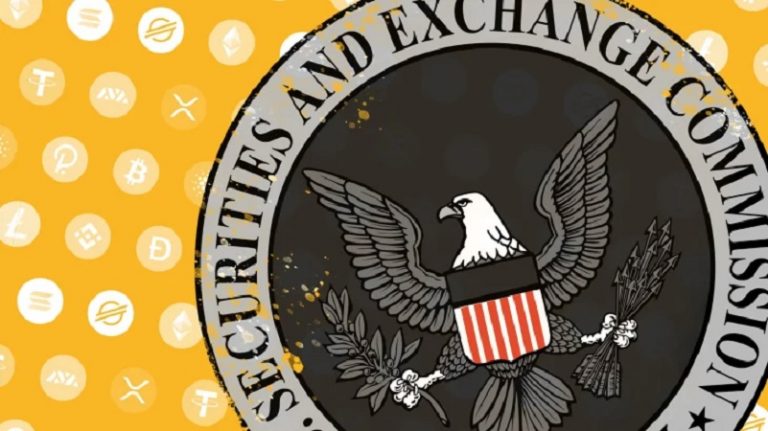
The United States Securities and Exchange Commission (SEC) is preparing what could become one of the most important regulatory shifts in modern financial markets: an innovation exemption designed to support the growth of tokenized stocks and blockchain-based securities infrastructure. The proposal signals that regulators are beginning to acknowledge that financial markets are rapidly evolving beyond traditional brokerage rails and centralized clearing systems.
Rather than resisting the trend, the SEC appears increasingly interested in creating controlled pathways for experimentation within compliant regulatory boundaries. Tokenized stocks are digital representations of traditional equities issued and traded on blockchain networks. These assets allow shares of companies to move across decentralized infrastructure with near-instant settlement, greater transparency, programmability, and potentially global accessibility.
Advocates argue that tokenization could modernize capital markets in the same way the internet transformed communication and commerce. However, existing securities laws were written decades before blockchain technology emerged, creating significant friction for companies attempting to build tokenized financial products in the United States.
The SEC’s proposed innovation exemption would reportedly provide temporary regulatory flexibility for firms developing blockchain-based trading systems, tokenized equities, and decentralized financial infrastructure.
Register for the next Tekedia Mini-MBA.
Register for Tekedia AI in Business Masterclass.
Join Tekedia Capital Syndicate and co-invest in great global startups.
Instead of forcing emerging platforms to comply immediately with every legacy market rule designed for traditional exchanges and intermediaries, the exemption could allow firms to test new models under tailored supervision. This resembles the regulatory sandbox approach already used in jurisdictions such as Singapore, the United Kingdom, and the United Arab Emirates.
The move comes amid intensifying global competition in digital finance. Financial institutions, fintech firms, and crypto-native platforms are increasingly exploring tokenized versions of stocks, bonds, money market funds, and real-world assets. Major firms including BlackRock, Franklin Templeton, and JPMorgan Chase have already launched or experimented with tokenized financial products.
At the same time, crypto exchanges and decentralized protocols continue building infrastructure that could eventually compete with traditional trading venues. Supporters of tokenized stocks believe blockchain rails can solve several inefficiencies embedded within current financial markets. Traditional stock settlement often requires multiple intermediaries, delayed clearing periods, and costly reconciliation systems.

Tokenization could enable real-time settlement, reduced counterparty risk, fractional ownership, and 24/7 trading markets. For retail investors, the technology may lower barriers to entry by enabling micro-investing and broader access to global assets. Yet regulators remain cautious for good reason. Tokenized securities raise questions surrounding investor protection, custody, cybersecurity, market manipulation, anti-money laundering compliance, and systemic financial risk.
If tokenized stocks become widely tradable across decentralized ecosystems, regulators will need mechanisms to ensure transparency and accountability without undermining innovation itself. The SEC’s innovation exemption therefore represents an attempt to strike a balance between modernization and oversight. Instead of applying an outright permissive or restrictive stance, regulators appear to be exploring a framework where innovation can occur under monitored conditions.
Such a system could encourage institutional participation while giving policymakers time to observe risks before implementing permanent rules. The broader implications could be enormous. If successful, tokenized equities may eventually integrate with decentralized finance protocols, programmable settlement systems, and global digital identity networks. This could fundamentally reshape how capital formation, investing, and ownership function in the digital age.
The line separating traditional finance and crypto infrastructure would become increasingly blurred. For the crypto industry, the SEC’s evolving posture may also signal a larger philosophical shift. After years dominated by enforcement actions and regulatory uncertainty, policymakers now appear more willing to engage with blockchain technology as a legitimate component of future financial infrastructure.
