

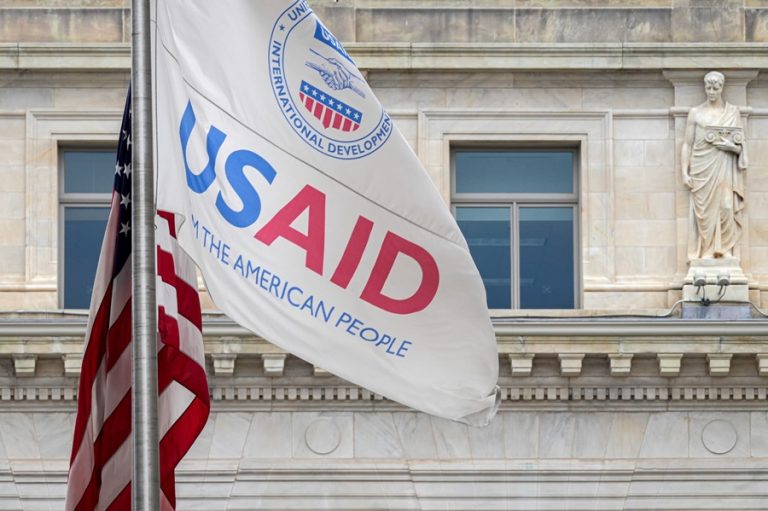
The Nigerian government has announced plans to absorb 28,000 health workers whose salaries were previously funded by the United States Agency for International Development (USAID) following the suspension of the agency’s activities under US President Donald Trump.
This move, aimed at preventing mass job losses in Nigeria’s already overburdened and understaffed healthcare sector, has been applauded. However, concerns have emerged regarding pay disparities, as affected health workers may face salary reductions once fully integrated into the national system.
Speaking on Channels Television’s Hard Copy programme on Friday, Coordinating Minister of Health and Social Welfare, Muhammad Pate, stated that the government is committed to reducing reliance on foreign aid and taking ownership of its healthcare workforce.
Register for Tekedia Mini-MBA edition 20 (June 8 – Sept 5, 2026).
Register for Tekedia AI in Business Masterclass.
Join Tekedia Capital Syndicate and co-invest in great global startups.
Register for Tekedia AI Lab.
“There are health workers, 28,000 of them, who were being paid through US government support. While it has been appreciated, those health workers are Nigerians. We have to find ways to transit them,” Pate said.
The decision has been praised due to the severe shortage of health professionals in Nigeria. Over the past decade, thousands of Nigerian doctors and nurses have left the country in search of better pay and working conditions abroad—a phenomenon commonly referred to as the “Japa” wave. The World Health Organization (WHO) has repeatedly warned that Nigeria is facing a critical shortfall of healthcare workers, with the country falling far short of the minimum doctor-to-patient ratio recommended by the WHO. According to the Nigerian Medical Association (NMA), Nigeria’s doctor-patient ratio is approximately 1,000 percent. The WHO recommends a doctor-patient ratio of 1:600.
With USAID’s exit and the US government’s policy shift, the loss of these 28,000 health workers would have exacerbated Nigeria’s healthcare crisis, overwhelming already overstretched hospitals, clinics, and primary health centers across the country.

While the government’s plan to absorb the workers has been seen as a lifeline, many affected staff will have to accept significant pay cuts, as salaries under USAID-funded programs are said to be generally higher than those offered by Nigeria’s government hospitals and public health institutions.
The Nigerian healthcare sector is considered one of the most underpaying in the world, with poor remuneration, unpaid salaries, and lack of incentives being major reasons for the mass exodus of medical professionals. The USAID-funded programs provided better wages, allowances, and improved working conditions, making the transition to government payroll a downgrade in earnings for many affected workers.
Historically, Nigerian healthcare professionals have gone on strike multiple times over poor wages, lack of equipment, and hazardous working conditions. Experts fear that if the government fails to offer competitive salaries, some of these absorbed workers may choose to leave the sector entirely or migrate abroad in search of better opportunities.

US Policy Shift: How Trump’s Aid Cuts Are Disrupting Nigeria’s Health System
The USAID crisis stems from executive orders signed by President Trump upon assuming office on January 20, 2025, which halted the disbursement of foreign aid for three months. This directive suspended all USAID-funded interventions globally, including in Nigeria, where the agency played a critical role in tackling HIV/AIDS, Tuberculosis, and Malaria.
Although PEPFAR was issued a limited waiver a week later, allowing some services to resume, the situation remains uncertain. The full-scale suspension of USAID activities in Nigeria has disrupted numerous health programs, raising concerns about funding for essential treatments and vaccinations.
To mitigate the impact, the Nigerian Senate has allocated an additional N300 billion in the 2025 budget to sustain healthcare workers and prevent service disruptions. Additionally, the Federal Executive Council (FEC) recently approved nearly $1 billion to boost healthcare funding across states.
“We’ve seen deliberate efforts to mobilize resources to invest in health. Just last week, the Federal Executive Council approved almost a billion dollars in terms of financing for the programme. That is a significant resource that states will implement. It’s a programme for results that will deliver better, but it will take time,” Pate explained.
Beyond Absorption: Addressing the Underfunding of Nigeria’s Healthcare System
While absorbing the 28,000 workers is a necessary short-term fix, experts warn that it does not address the deeper structural problems facing Nigeria’s healthcare sector.
Nigeria spends far less than recommended on healthcare, with only 30% of total health expenditure coming from public sources, while 70% is funded through private spending, mostly out-of-pocket payments by citizens. This has led to a situation where many Nigerians cannot afford basic medical care, further straining the system.
“Our total health spends in Nigeria, the total health expenditure: 30 percent is public, 70 percent is private,” Pate noted.
With donor funding now inconsistent and unreliable, the Nigerian government has been advised to increase domestic healthcare financing, improve health worker salaries, and enhance working conditions to prevent further brain drain.
While the Nigerian government’s decision to retain 28,000 health workers is commendable, the real challenge lies in ensuring these professionals do not leave due to poor pay and working conditions. Between 2019 and 2023, the Medical and Dental Consultants Association of Nigeria reported that 1,056 consultants left the country for greener pastures. Similarly, the Nigerian Association of Resident Doctors revealed that over 900 members emigrated to Europe between January and September 2023 alone.
Many health experts believe that without a long-term strategy to offer competitive wages, incentives, and career development opportunities, the country risks losing more health workers to better-paying nations.